Goldstar Pediatrics Brings Comprehensive Care to California’s Inland Empire
Goldstar PediatricsFontana, Calif.

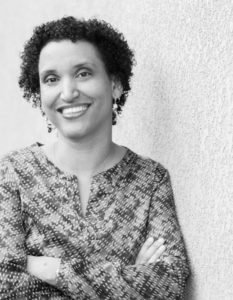
Goldstar Pediatrics, founded in 2016, emphasizes comprehensive care for families in Fontana, California. As the practice’s founder and sole pediatrician, Dr. Irmgard Tackie develops lasting relationships with her patients and goes above and beyond to help them connect with services and resources they need.
Dr. Irmgard Tackie wants families to feel comfortable coming to her for the full spectrum of care, no matter the day of the week or time of day. It’s in part why she took the leap and established her own practice in Fontana, California, in 2016.
“I don’t believe in running my practice like a fast food joint with a drive-through,” she laughs. “I think that one has to really work as a team with your families.”
This emphasis on comprehensive care serves as the foundation for Goldstar Pediatrics. As the practice’s sole pediatrician, Dr. Tackie gets to know every patient who walks in the door. She typically sees about 300 patients per month and anywhere from 10 to 20 families per day, although as a young practice the numbers can fluctuate. “We’ve had a lot of growth because of word of mouth,” she says. “It takes time.”
Dr. Tackie comes to the work of building a practice from the ground up driven by a particular vision for pediatric care. Before founding Goldstar, she worked in a multi-specialty group with several locations across San Bernardino and Riverside counties. As one of four pediatricians in the group, she found that she had little time or space to get to know the patients she was seeing. The emphasis was on volume, with expectations around the number of patient visits physicians should be completing per day. The experience left Dr. Tackie dissatisfied with the quality of care she was able to provide.
Eventually, she enrolled in continuing medical education classes focused on the business side of practicing medicine and joined the American Academy of Pediatrics Section on Administration and Practice Management (SOAPM). She began to jot notes about what her own practice would look like and started to dream big.
“It took me a year to decide on exactly what I wanted,” she says. “I kept a little red notebook where I wrote everything I could think of down.”
The leap from words on a page into the real world happened when she signed a contract for a space in Fontana, as she describes it: “in a strip mall in between a CVS and a 24-hour fitness [gym].” Her husband did the legwork to find the location; she was so busy in her previous practice that she never even set foot in the building before it was a done deal.
Although she considered buying an existing practice, she ultimately decided against it.
“I realized that there will always be people leaving you when you take over someone’s practice because you do things differently,” she says. “And I knew that when I opened my doors I was going to be different. At that point I realized that buying out someone was not going to work. If I was really going to do what I wanted to do, I would have to start from scratch.”
An emphasis on education and partnership sets Goldstar Pediatrics apart.
“I believe in teaching the parent what is normal and what is not,” she says, so that parents can feel confident in assessing their child’s health. All after-hours calls are routed to her cellphone, which she answers day or night, confident that if a family is contacting her, they’ve exhausted all other options and really do need medical attention or advice.
This commitment to continuity of care means that she counsels families to contact her first; although she maintains a positive relationship with a pediatric urgent care in the area, it’s not an option she suggests families rely on.
“We don’t encourage them to use the emergency room either,” she says. “If we find that there’s a family using the emergency room for reasons that they shouldn’t be, we will call them up and educate them.”

“My families like the fact that when they pick up the phone and call, they get me.”Dr. Irmgard Tackie
Well-child visits are key to her approach. She takes time with families to answer all of their questions and develop a thorough understanding of any issues or challenges. This allows her to create comprehensive care plans, as well as seek out resources for the family, be it through social services agencies, community organizations or insurance companies.
Dr. Tackie sees her fair share of patients with acute and complex needs. San Bernardino County – part of what is known as the Inland Empire outside of Los Angeles – suffers from a poverty rate of 19.1 percent, with nearly one-third of children living at or below the poverty level.1 Many families speak Spanish as a primary language; according to the U.S. Census Bureau data, almost 38 percent of residents speak English “less than very well.”2
Goldstar Pediatrics takes these needs into consideration: The practice’s three employees speak fluent Spanish. For Dr. Tackie, deploying what she calls her “broken” Spanish sometimes prompts a chuckle from kids, but she makes it work.
“Everyone here is bilingual, so I am able to get help with translation,” she says. “The parents like it. They are happy to come in.”
For many families, a constellation of challenges may be affecting their children’s health.
“I have a lot of children who are also in foster care, so sometimes coordinating what they need is difficult,” she says. “Sometimes parents are not making it to appointments because they have difficulty with just getting gas in the car. We also have some immigrant families – we have some who may not show up for appointments because they’re having issues with immigration and they’ve had to leave the area.”
Dr. Tackie sees it as her mission to help tackle all of these issues, as they directly impact the health and well-being of children.
“Sometimes the parents bring the child to the visit, but you can tell that the parents are themselves struggling,” she says. “I want to point them to resources that they need, so that they can start to concentrate on what they need to do for their children.”
Dr. Tackie has also taken on additional training to help address gaps in care. After she had patients experience long wait times upon referral to mental health services, she decided to enroll in a mini-fellowship focused on providing mental health care in a pediatric primary care setting. The accredited distance learning program gave her the tools to diagnose and treat common pediatric behavioral health problems including depression, anxiety, ADHD, and oppositional and conduct disorders.
“I can immediately step in and get them the help they need,” she says. “It’s made a big difference.”
Goldstar Pediatrics has branched out into other areas as well, including fluoride varnishes and developmental screenings. Dr. Tackie even triages and splints broken bones in her office, and coordinates follow-up care with the appropriate specialists.
“My families like the fact that when they pick up the phone and call, they get me,” she says. “They don’t have to go to the ER to get splinting done.”
Born to a Ghanian mother and a German father, Dr. Tackie grew up in the coastal town of Teshie-Nungua in Accra, Ghana. Buoyed by a lifelong dream to become a physician, she graduated from the University of Ghana Medical School in 2005. Her eight years of schooling included three years of pre-medical work, three years of medical training and two years of what is known as housemanship, or rotations in different specialty areas. She also completed one year of pediatrics residency in her home country.
Her move to the United States was prompted by love: Shortly after finishing medical school she married her now-husband, whom she describes as “someone I’ve known for more than half my life.” When they were growing up, he lived down the road from her aunt. He had come to the United States while she was still in university in Ghana, so after medical school she joined him in San Diego, California.
Their reunification was short-lived, however; when she received an offer to do her pediatric residency at Hurley Medical Center in Flint, Michigan, she left California to take the opportunity, seeing it as a short-term sacrifice to realize a long-term goal. She had to start her residency from scratch in the United States.
During her residency, the contrasts between her training in Ghana and the realities of the U.S. medical system came into sharp relief. Her time in Ghana gave her clinical exam skills she says she now cherishes.
“You learned to trust your hands, to trust your ears and your nose, and your eyes,” she says. “You saw people do amazing things with very, very, very little. We didn’t have fancy gadgets.”
She also learned how to make the most of what she had available; she became adept at finding innovative approaches to solving problems with limited resources.
“I know it’s not the same as working on the battlefield. It’s a totally different kind of medicine, but in many ways, you had to improvise,” she says. “You had to learn to use the few things you had and make it work.”
Despite her broad skill set and deep clinical knowledge, the emphasis in United States residency programs on teaching and didactics proved to be a challenge, in part because she had never had much time to pause and reflect on her decision-making.
“I had been in an environment where you had to keep going,” she says. “It was a lot of experience, but when you had to back it up and explain why you did what you did – that’s where I struggled.”
Another challenge: Teenagers.
“I came from a culture where once a child was 12 years-old they moved up to the adult side of the medical world,” she says. “And suddenly here I was with full grown men and women. I didn’t know how to talk to them.”
She turned to American television – in particular the popular show “Hannah Montana” – in an attempt to “understand what went on in the kids’ minds,” she laughs.
As Dr. Tackie worked hard to overcome these cross-cultural challenges, her efforts didn’t go unnoticed by her teachers and mentors at Hurley. In addition to serving as pediatric chief resident in her final year, she was awarded the Amithabha Banerjee Award for Leadership in Outstanding Clinical Skills, Professional Behavior and Commitment to Lifelong Learning.
“Being able to do things on my own – I like that…I feel like I can take chances, try, and see if things work or they don’t.”Dr. Irmgard Tackie
As she looks to the future of Goldstar Pediatrics, Dr. Tackie feels a certain tension between seizing opportunities for growth and maintaining a positive work-life balance.
“With the way healthcare is going I’ll either have to build the brand as being an office with one pediatrician and families that are loyal and happy, or get big and bring on others,” she says. “Right now, I honestly don’t know.”
With a son who is almost five years-old, she’s focused on spending time with him and her husband, which means balancing the ideas she generates with the time she has to accomplish them.
“I still have that red notebook,” she says. “I ask myself: ‘what more can I do in the office?’”
When she feels ready, her first new staff hires may be a dietician or nutritionist, or perhaps a licensed mental health counselor, although it may be some time before she is ready to take those next steps.
Right now, she’s focused on continuing to bring in families from the community so that she can provide the care they need for their children to thrive. Even as she continues to work out the trajectory for Goldstar Pediatrics, she is certain of one thing: She’ll always maintain her independence.
“The rat race was just not for me,” she says. “Being able to do things on my own – I like that. Being able to make mistakes without somebody pointing at it and saying you know I told you that was not going to work – I like that. I feel like I can take chances, try, and see if things work or they don’t.”
Although some of these decisions may be small in scale, they add up to benefit the children she serves in tangible ways.
“For example, we keep popsicles in the freezer, and we give them to the kids after they have their shots,” she says. “We are able to give books to all of our kids from six months to five years-old. I know that if I were elsewhere, making the case for spending that money would be difficult. But because we started off that way, it is not an expense that is optional.”
Perhaps most importantly, maintaining her independence allows her to be right there on the front lines with families. She’s ready to help them navigate all of the complex situations they may encounter as they raise their children.
“Because I’m on my own, I can do what I need to do for these families,” she says.
[1] Community Facts, Poverty, United States Census Bureau, 2016
https://factfinder.census.gov/faces/tableservices/jsf/pages/productview.xhtml?src=CF ↑
[2] Community Facts, Languages Spoken at Home, United States Census Bureau, 2016
https://factfinder.census.gov/faces/nav/jsf/pages/community_facts.xhtml?src=bkmk ↑
A resident of Burlington, VT, Erin Post has a BA degree in English from Hamilton College, and is a graduate of the writing program at the Salt Institute for Documentary Studies. She is currently working on her master’s in public health at the University of Vermont. In her spare time, she likes to bike, ski, hike, and generally enjoy the Green Mountains of Vermont.
Pediatric care is complex enough — navigating for the future shouldn’t be a solo journey. Join host Chip Hart and learn from pediatricians, industry leaders, and policymakers who are shaping the future of pediatric care. Every episode, we explore their stories, their dreams, and the joy they find in medicine. Together, we’re charting the future of children’s healthcare.

The Independent Pediatrician is brought to you by PCC, which provides tools and services to help pediatricians remain independent and in control of their practices.
PCC itself is a fiercely independent business. As a Benefit Corporation, it puts the interests of its clients, community, and employees on an equal footing with those of its shareholders.


 Education, Relationships, and Expert Care: Dr. Nneka Unachukwu’s Approach...