Rural America’s Invisible Patients, Part I: The South
Dr. Janice Loeffler, MDValdosta, GA


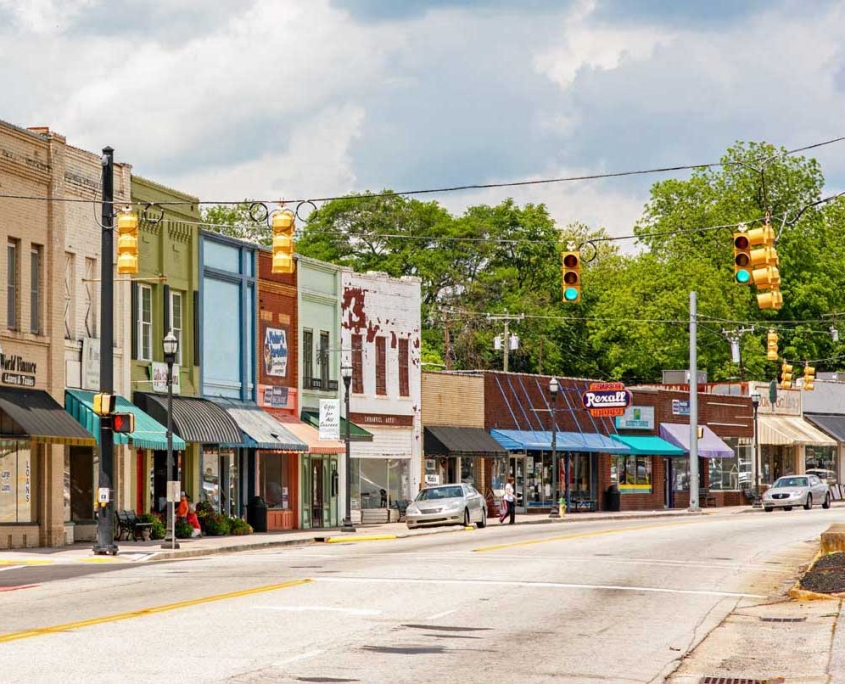
The first installment in a series, this piece explores the factors that limit rural communities in realizing access to quality pediatric care. Three distinct regions of the U.S. offer an examination of the questions: In rural poor communities, who is going, or not going, to the pediatrician? What factors prevent families from making it to the pediatrician’s office? And how are independent pediatricians stepping up and stepping in?
Rural poor communities face a unique set of challenges in securing quality health care. There may be too few providers in a given area. Specialists may be hours away by car. Families might be unable to afford gas to get them there. Issues of race and socioeconomic status are at play, as practitioners struggle to secure payments for Medicaid and low-income patients.
This series examines the massive impediments that limit providers’ ability to serve children affected by rural poverty. An exploration of three distinct regions of the country—the rural South, Appalachia, and tribal lands—sheds light on the questions: in rural poor communities, who is going, or not going, to the pediatrician? What factors prevent families from making it to the pediatrician’s office? And how are independent pediatricians stepping up and stepping in? This article covers a small population of independent pediatricians, but it seeks to bring perspective to the work of bringing quality care to all communities, regardless of location and size.
Decades of research show that life expectancy in the U.S. is shorter for those living in poverty. A slew of social determinants converge to create health disparities, and teasing those factors apart is a complex puzzle indeed. One significant piece, however, is access, or lack of access, to health care.
A 2018 Lancet Global Health study notes that, “In the USA, a 14 year gap in life expectancy has been reported between the richest 1% of the population and poorest 1%.” The author goes on to explain that higher levels of poverty are encountered in the very young and the very old. Access to care at these ages, then, is one piece of this puzzle. Increased access to pediatric care for poor populations could alter the course of children’s lives, and widespread access could change a community’s future.
A study in the The American Journal of Preventive Medicine concludes that, “The rural poor and rural blacks currently experience survival probabilities that urban rich and urban whites enjoyed 4 decades earlier [emphasis added].” The study continues, “Causes of death contributing most to the increasing rural-urban disparity and lower life expectancy in rural areas include heart disease, unintentional injuries, COPD, lung cancer, stroke, suicide, and diabetes.” The study presents a disquieting list of conditions that could be mitigated by primary care and preventive medicine; in other words, regular visits to a physician, starting in childhood and adolescence, lead to poor health outcomes. This research, published in 2014, predicts a widening gap.
A child’s health is shaped by factors largely outside of their control, and while health care professionals cannot yet change income inequality, county line designations, or access to good education, they do have the power to fight for equal access to quality care. Increasing the number of rural pediatricians, and building structures to help families get to them, is an essential step in the movement to lift children, families, and communities out of poverty in the United States. In the first installment in the series, we spoke to a pediatrician in rural Georgia who is doing just that.
Dr. Janice Loeffler, an independent pediatrician practicing in Valdosta, GA, has done her research. “Approximately 35% of Lowndes County’s population of 110,000 is below the federal poverty line,” she begins. “The median income is $40,000. 70% of the county’s population is on some type of Medicaid.”1 Adding to her litany of statistics, 40.6% of children in Valdosta live below the poverty line, as opposed to 22.6% statewide.
Born and trained in Canada, Dr. Loeffler has been practicing in Valdosta for 36 years. Located about 250 miles South of Atlanta, Loeffler describes Valdosta as essentially different from the rest of the state. “There’s Atlanta, then there’s Georgia,” she says. “Development is stagnant here overall. In Atlanta there are ongoing new construction projects, and new doctors are being encouraged to say at their training facilities in the city. That’s not happening here.”
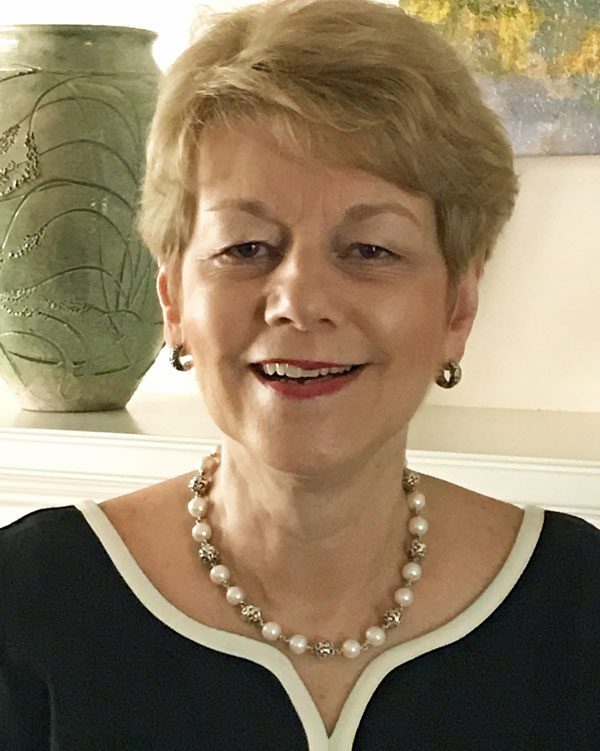
Dr. Janice Loeffler“I’m a general pediatrician, but I’m a subspecialist in most everything. I was trained that way— I’m your PCP, and I am your medical home; I will do whatever possible to try and get you the help you need.”
Dr. Janice Loeffler“I’m a general pediatrician, but I’m a subspecialist in most everything. I was trained that way— I’m your PCP, and I am your medical home; I will do whatever possible to try and get you the help you need.”
In Valdosta, the issues of both utilization and supply of pediatric care are at play. Dr. Loeffler explains that Valdosta now has “metropolitan status;” until recently Valdosta was designated as a rural area. Under several federal programs, some of which promise professional trainings and loan forgiveness, recently graduated medical professionals are incentivized to move to rural areas with underserved populations. The American Medical Association’s AMA Journal of Ethics reports that, “Health professions workforce shortages are exacerbated in rural areas, where communities struggle to attract and keep well-trained clinicians.” Dr. Loeffler’s stories corroborate this finding, but Valdosta’s redesignation as “metropolitan” has only made it more difficult to attract practitioners.
“The metropolitan status has made it harder for providers in the area to recruit new providers, who can earn more when they serve areas with a rural designation,” says Dr. Loeffler. “Because we are no longer ‘rural,’ even though I serve a rural population, we don’t get as many incentives for patient care. We can’t recruit people to come to Valdosta because within a 60 mile radius there are numerous rural communities that receive more federal help.”
No longer eligible for rural incentives but lacking the draw of a larger city, Valdosta has found itself in a perilous middle ground. But even though she sees more patients than she can keep up with, Dr. Loeffler maintains her standard of care.
Dr. Janice Loeffler“There’s no rhyme or reason to how Medicaid is divvying up patients. Patients that I’ve been seeing for years all of a sudden get assigned another provider. The rules have changed constantly and there is no consistent formulary.”
Valdosta serves as case-study into the logistical hurdles rural patients face. Lacking nearby hospitals or affordable transportation, the infrastructure just isn’t there to support patients in getting to specialists. Dr. Loeffler describes how she used to have more options for patient referrals, but in the past few years has found it more difficult due to limited availability of specialists.
One of the greatest impediments to getting kids to the pediatrician, of course, is insurance coverage. “If you lose your Medicaid status at any point in time, it could take 3 months to get it back,” says Loeffler. “So guess what else stops? Your medicine and your care.”
“Insurance companies and Medicaid consume the majority of a provider’s day. Payment is less than desirable. We are required to do more for kids in each visit, but we are not being reimbursed.” She offers the example of one payor that offers some Medicaid coverage in Georgia. “This insurance company, for whatever reason, has no contract with our hospital right now,” says Loeffler. “So, say your child needs a simple x-ray. It can take up to 6 months to get approved. Or I can send you 20-40 miles, where I don’t have privileges, and get it done the same day. But then, of course, that family has to drive these distances.” This payor, incidentally, is a subsidiary of the private insurance giant, Anthem.
While Dr. Loeffler tries to provide as many services as possible in her office, her patients who need surgeries or other specialized care must be referred to hospitals hours away. “Getting a ride to our main referral area is often difficult. It’s about five hours away, and then if you’re turned away when you get there, it doesn’t seem worth it to families to go back.” The process can be long and arduous, and families often worry that, even if they make it to the appointment, they won’t get the care they need on the same day. Dr. Loeffler also explains that, “Medicaid’s public transportation system is less than desirable. They won’t take anybody less than the parent and the patient. They often don’t have car seats or availability for wheelchairs, yet they say there are no problems with the system.” The necessity of driving, in a rural area with little to no public transportation, is daunting to many families.
“There’s no rhyme or reason to how Medicaid is divvying up patients,” Dr. Loeffler says. “Patients that I’ve been seeing for years all of a sudden get assigned another provider. What happened? They don’t live in my ‘service area’ anymore. The rules have changed constantly and there is no consistent formulary.” This constant fluctuation takes its toll on families, who will often forego seeing a provider to avoid the painful and often thankless work of securing coverage.
Describing an uptick in mental health diagnoses in her patients, Dr. Loeffler notes again the lack of subspecialists in Valdosta. “We are seeing tremendous increases in mental health issues. We are seeing anxiety and depression in kids as young as 7-years-old,” she says. “I do my best to take care of these patients at my own practice.”
Mental health is a daunting issue across rural America. In nearby Alabama, a group of rural counties known as the Black Belt, comprised of a 64% African American population, have the worst shortage of mental health professionals in that state.2 The actual number of citizens in need of mental health care versus those who report that need is difficult to measure. A study in the journal of Mental Health Services Research explains that, “Because a high proportion of African Americans are incarcerated… and live among the inner-city and rural poor, African Americans with significant mental health needs will be underrepresented in household surveys.”
This finding is troubling particularly in the Deep South; in both Alabama and Georgia the percentage of the population that is African American is well above the national average, and thus the extent of the mental health crisis may not be known. The advocacy group Voices for Georgia’s Children identifies a “severe shortage of children and adolescent psychiatrists” statewide, especially outside of metro Atlanta and in rural areas.3
Dr. Loeffler’s stories support this data. “Sometimes, schools are going behind the PCP and just sends them off to a mental health facility without first consulting their pediatrician,” she says. “Some children are ending up in adult offices— with providers who aren’t trained in children’s mental health— and that’s not what we want for our patients. This is happening to both insured and uninsured patients.”
Dr. Loeffler has a message about rural care that she hopes other providers will hear, and it starts with her own story: “You can make a huge impact in communities like Valdosta,” she begins. “I’m proud of my past 20 years of work to combat child abuse, and advocate for foster kids. Here, I was able to help educate social workers and police, and helped in establishing our advocacy center. I found a need here and was able to fill it.”
“Move to small towns!” Dr. Loeffler says passionately. “Don’t be afraid to move to small towns and look at our populations, and get to know them.”
It may be easier to see urban poverty. For those of us living in urban areas, we see it on our daily commutes or at our local food banks. Urban poverty reveals itself in over-crowded affordable housing, or at marches and rallies; it is evident on our sidewalks and in subway cars. Urban poverty is made visible in frequent news coverage of certain U.S. cities: Chicago’s struggle with poverty and gang violence has been profiled by the Atlantic, NPR, the New York Times, and many others; Detroit offers state and federal incentives compelling businesses to move to that city; anti-poverty initiatives are focusing their efforts in New York and Baltimore. While this coverage is essential to national awareness, the stories of rural communities are often lost. Reform is needed for all systems that limit the health care access of certain populations, but in the case of the rural poor, lack of visibility mean change is slow in coming.
On a cold night on the Pine Ridge Reservation, a family of six hunkers around a wood stove, the only source of heat in their mobile home. Out on the Western plains, miles down a nameless dirt road, their situation is less visible, but no less dire. The next story in the series discusses access to care on Native American tribal lands, as well as the social and economic factors that limit care for Native peoples. Clinicians and advocates working with Native Americans share their stories of harsh realities, hard work, and building hope.
Emily Graf is a freelance writer, wilderness educator, and English teacher living in Colorado. She is passionate about telling stories that promote equal access to quality health care. She can be contacted at emgraf11@gmail.com for inquiries.
Pediatric care is complex enough — navigating for the future shouldn’t be a solo journey. Join host Chip Hart and learn from pediatricians, industry leaders, and policymakers who are shaping the future of pediatric care. Every episode, we explore their stories, their dreams, and the joy they find in medicine. Together, we’re charting the future of children’s healthcare.

The Independent Pediatrician is brought to you by PCC, which provides tools and services to help pediatricians remain independent and in control of their practices.
PCC itself is a fiercely independent business. As a Benefit Corporation, it puts the interests of its clients, community, and employees on an equal footing with those of its shareholders.


 Rural America’s Invisible Patients, Part II: Tribal Lands