Rural America’s Invisible Patients, Part II: Tribal Lands
Committee on Native American Child HealthPine Ridge, SD


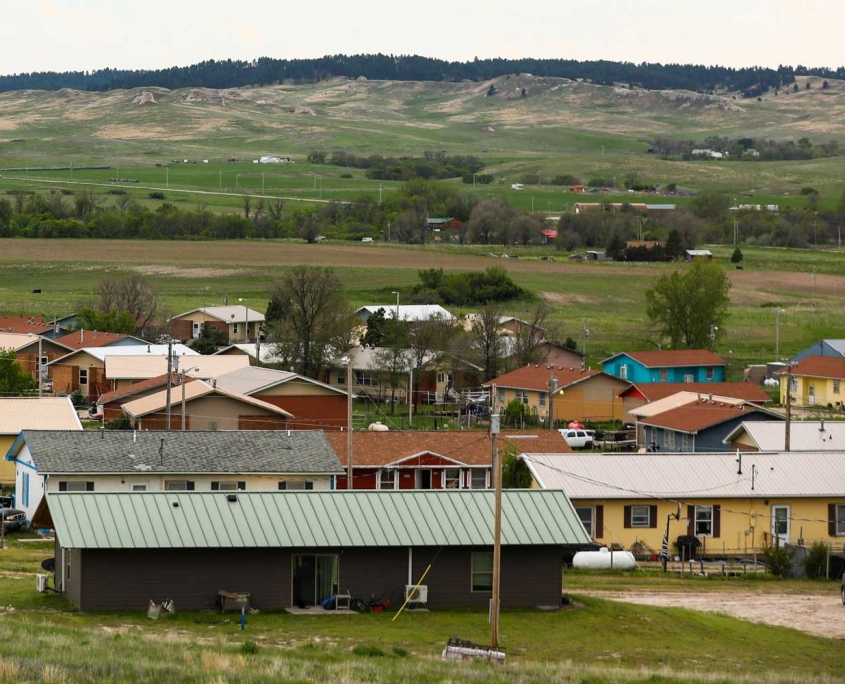
The second installment in a series, this piece explores the factors that limit indigenous communities from realizing access to quality pediatric care. Three distinct regions of the U.S. offer an examination of the questions: In rural poor communities, who is going, or not going, to the pediatrician? What factors prevent families from making it to the pediatrician’s office? And how are independent pediatricians stepping up and stepping in?
Rural poor communities face a unique set of challenges in securing quality health care. There may be too few providers in a given area. Specialists may be hours away by car. Families might be unable to afford gas to get them there. Issues of race and socioeconomic status are at play, as practitioners struggle to secure payments for Medicaid and low-income patients.
This series examines the massive impediments that limit providers’ ability to serve children affected by rural poverty. An exploration of three distinct regions of the country—the rural South, Appalachia, and tribal lands—sheds light on the questions: in rural poor communities, who is going, or not going, to the pediatrician? What factors prevent families from making it to the pediatrician’s office? And how are independent pediatricians stepping up and stepping in? This article covers a small population of independent pediatricians, but it seeks to bring perspective to the work of bringing quality care to all communities, regardless of location or size.
Austin Forbes, a medical student at the University of Colorado Denver School of Medicine, spent a short stint at a clinic on the Pine Ridge Reservation in South Dakota in the spring of 2018.
“Over three days, we saw only one patient,” says Forbes. “Basically, it’s really frustrating to go up there.” While this reservation in particular experiences a swath of health issues—among them soaring rates of diabetes, fetal alcohol syndrome (FAS/E), and malnutrition—patients may struggle to take advantage of specialists who make the trip to Pine Ridge. This phenomenon can be explained, in part, by this country’s historical and present-day mistreatment and neglect of Native peoples.
NPR journalist Eric Whitney reports that, “About a quarter of Native Americans reported experiencing discrimination when going to a doctor or health clinic.” That statistic is staggering, especially in the context of the devastating poverty affecting Native Americans. In the rural community of Pine Ridge, 57% of children live below the federal poverty line,1 and infant mortality is 300% higher than the national average.
Whitney continues, “Congress has long failed to allocate enough money to meet Native American health needs. In 2016 it set the Indian Health Service (IHS) budget at $4.8 billion. Spread across the US population of 3.7 million American Indians and Alaska Natives, that’s $1,297 per person. That compares to $6,973 per inmate in the federal prison system.” This calculation shows that the government spends five times more on its inmates than its Native populations.
Forbes explains: “The bottom line is that people on Pine Ridge didn’t trust us. Nothing they’ve heard tells them they should trust a white doctor from out of town. That’s a big part of why they don’t come to the clinic.” Nationally, there is a shortage of health care professionals of Native origin. In 2017 the Washington Post reported that, “Of the nearly 19,000 graduates of medical school last year in the U.S., only 31 were Native American.”
While Native Americans might prefer to be seen by Native practitioners, recruiting any medical professionals to work on reservations proves challenging. Dr. Jim Jarvis, a pediatric rheumatologist, a mentor to native students, and a citizen of the Mohawk Nation, spoke to this problem. “One obvious barrier to care,” he says, “is that most reservations are far away from any city center. Young physicians who may be committed to helping resource-deprived communities find it very challenging to move into native communities because they are outsiders.”
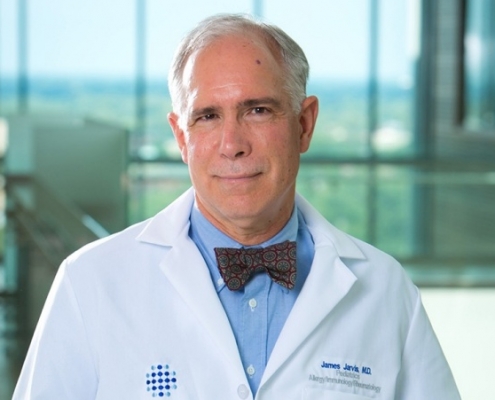
“We’re increasingly coming to recognize that the problems in indigenous communities, including the issues that are most vexing in child health, have as their basis historical and ongoing trauma.”Dr. Jim Jarvis
Dr. Jarvis has conducted research in the field of epigenetics, studied rheumatologic conditions that disproportionately affect Native American communities, and has worked at academic centers that serve Native American children. Throughout his career, including his work with Indian Health Services (IHS), Dr. Jarvis has gleaned a nuanced perspective on Native peoples’ relationship with U.S. medical practices. He offers insights into the present day reality of these vulnerable rural communities, as well as stories of both heartache and hope.
Dr. Jarvis seemed to resonate with Forbes’s experience on Pine Ridge. “It takes the community a long time to trust somebody,” he begins. “Particularly when its trust has been historically violated and is violated today. I would submit that if that physician had stayed longer, lived in the community, and learned some of the Oglala language, the waiting room would’ve gotten busier.”
Dr. Jarvis knows the power of living and learning with native communities. His great-grandmother was born in Mohawk Nation, and he says, “even though I was raised Anglo and French-Canadian up in Vermont, I have native blood and native family, and Mohawk Nation was part of the family lore. I had a strong interest in it as a child that carried me into my career.” This interest inspired him to move from Michigan to Oklahoma to pursue a career in Native health.
In his 14 years at the University of Oklahoma, Dr. Jarvis worked with IHS and the Cherokee Nation, treating Cherokee patients and training Native health care professionals. He is currently at the University of Buffalo Jacob School of Medicine and Biomedical Science, and is deeply familiar with the shared struggle of rural America and tribal lands.
“The required humility that characterizes traditional healers is so lacking in many conventionally trained doctors. Any whisper of arrogance or condescension can be poisonous to developing trust with a community.”Dr. Jim Jarvis
While tribal codes of conduct bar him from sharing specifics, Dr. Jarvis says that indigenous healing traditions are still practiced on reservations, and those traditions are being passed down to younger generations. “These practices are a rich source of healing in many of our communities; they are a source of resilience and goodness for our people,” he explains.
Although traditions differ widely across tribes, commonalities exist. Dr. Jarvis explains that in many indigenous healing traditions, healers are chosen because of their humility. “If you are not humble, it’s very easy for communities to think that you must not be a true healer,” he says. “The required humility that characterizes traditional healers is so lacking in many conventionally trained doctors. Any whisper of arrogance or condescension can be poisonous to developing trust with a community.”
“When white doctors show lack of respect for the indigenous view of health and wellness, that’s poison,” Dr. Jarvis explains. “On the other hand, I don’t think the best or only solution is to staff native health facilities with only native physicians.” Having more native physicians with cultural experience and cultural empathy is highly desirable, but not at the exclusion of everyone else. “Someone isn’t necessarily going to be a better physician in a native community just because they are native. Is an Oglala physician really going to understand Navajo tradition? The most important piece is respect for the culture.” The diversity of tribes and the nuanced nature of their various traditions can be lost on a non-Native public that sees all Native Americans as a homogenous entity.
Just as individual practitioners need to spend time getting to know communities, Dr. Jarvis advocates that social programs need to do the same. “People are fond of saying that social programs just don’t work,” says Jarvis. “In fact they do work, we just need to give them time and resources. They don’t work if you set up a two year demonstration program and then cut the funding.” In indigenous cultures, whose understanding of time can be radically different from Western “clock time,” spending weeks, months, or years in communities could make all the difference.
While he is a staunch realist and advocate for Native rights, Dr. Jarvis also prioritizes solutions-oriented conversations. “What we need to do in this conversation,” he says, “is find the notes of hope and resilience.” But before finding hope and resilience, we need to understand the scope of the systemic causes of poor health for many Native families and their children.
While a large urban indigenous population exists in the U.S., health problems prevalent in rural America correlate strongly with health problems for Native Americans. The First Nations Development Institute states that 54% of American Indian and Alaska Native (AIAN) people live in rural areas, and 68% live “on or near their tribal homelands.”2 The study asserts: “Unfortunately, in an era of data-driven decision-making and increased demands for efficiency and impact, small and rural Native communities are often left behind—twice invisible.”
This double invisibility is born out of the compounding forces of both rural and Reservation living. On reservations like Pine Ridge, many roads do not have street signs, and thus many homes do not have addresses. Census data struggles to accurately capture the reality of populations that live in such hard-to-reach locales.
Dr. Jarvis agrees: “The broader problems of rural America overlap with the broader problems of our native communities, and one of the biggest problems is invisibility.” He continues, “The shift of wealth from rural areas into cities, one of the major demographic shifts that has occurred in this country over the last 100 years, has meant that rural communities in general, but native communities especially, suffer the effects of the transfer of resources away from rural areas.” Invisibility means resources are not flowing to these communities, and lack of resources perpetuates invisibility—a vicious cycle.
Dr. Jarvis cites poverty and policy—which are deeply intertwined—as impediments to providing quality care for Native communities. “Rural America suffers from not being visible to people developing health policy,” he asserts. “We know now that the biggest predictor of health outcomes is income, and the determinants of income are entirely based on public policies about who’s going to have, and who is not.” He offers an example from tribal lands: “If you are a Cherokee family living in a trailer in Oklahoma, you pay higher taxes on your food than an oil millionaire living in Tulsa pays on his stock dividends. And that is legal—it’s public policy.”
Another major barrier to accessing pediatric care, which exists across rural communities, is geography. On Pine Ridge and other reservations, “People may be entirely dependent on hitchhiking to reach their clinic,” says Dr. Jarvis. “And what about pediatric subspecialty care? What happens if you have leukemia and you live on Pine Ridge? The closest specialist may be in Rapid City two hours away.”
Dr. Jarvis shares an anecdote from his time in Oklahoma: “We had a young woman patient from a tribe in Oklahoma, and she had an illness where she needed to be seen regularly. I asked her if it was possible if we could see her in six weeks, and she said ‘Dr. Jarvis, we drive Indian cars!’” Dr. Jarvis explains that “Indian cars” are likely to be ancient, missing parts, and ill-equipped for highway driving.
While issues of policy, poverty, and geography affect many rural communities, pediatric care for Native children necessitates a specific approach, one that accounts for history and the ongoing disenfranchisement of Native peoples.
To understand the widespread health issues affecting Native children, it is essential to understand their historical context. “We’re increasingly coming to recognize that the problems in indigenous communities, including the issues that are most vexing in child health, have as their basis historical and ongoing trauma,” says Dr. Jarvis.
Dr. Jarvis cites the Adverse Childhood Experiences (ACEs) study, which was first conducted in 1995 by Kaiser Permanente in Southern California. The study concludes that ACEs have been linked to risky health behaviors, chronic health conditions, low life potential, and early death.3 Prior to the ACEs study, medical professionals did not necessarily see the link between childhood trauma and an issue like obesity. As Dr. Jarvis tells it, Dr. Vince Fellini, one of the study’s major researchers, asked a patient when she had started gaining weight. She responded that her weight gain started when she was eleven years old.
“It turns out that when she was eleven, she was sexually abused by two of her uncles,” Dr. Jarvis explains. “So this patient’s response was to start eating, and she noticed that when she gained weight and became obese, her uncles left her alone.” The ACEs study found that many adult health outcomes correlate highly with childhood traumas, “including things you think couldn’t possibly be linked,” says Dr. Jarvis, “Like developing lupus, or developing rheumatoid arthritis, or having a child with developmental disabilities.”
“Tribal elders have been saying this for a long time,” Dr. Jarvis continues. Years ago, Dr. Jarvis traveled to the Cheyenne Reservation to study the high prevalence of rheumatic diseases there, and a Cheyenne elder told him, “If you want to know why we’re having such high rates of disease, look at our history.” In this case, history refers to the individual and the collective—a collective that has experienced centuries of pain.
In the treatment of Native American children, honoring both childhood and historical trauma is essential to providing quality healthcare. “We can take a trauma-informed approach to dealing with a whole community,” Dr. Jarvis explains. He offers the story of the Menominee Nation in Wisconsin: tribal elders, health care professionals, and community leaders have shifted to asking “What happened to you?” rather than, “‘What’s wrong with you?’ This approach has been implemented across the Menominee health system, in their schools, and even in their court systems. “You assume you are dealing with a traumatized population, and all of your interactions reflect that,” says Dr. Jarvis. “Dealing with the trauma as it exists, instead of pretending it’s only in the past, has been shown to be incredibly successful.” The Menominee Nation considers trauma dating back to the 1860s, when American Indian children were forcibly sent to boarding schools to be “Westernized,” in their present-day approach to healing.4
In partnership with tribal leadership, Dr. Jarvis says that medical professionals “are beginning to develop strategies for trying to prevent adverse childhood experiences.” In many communities, the prevention model begins with the development of sex education programs for young people. Programs such as Family Spirit, run out of the Johns Hopkins Center for Native American Health, focus on maternal health and intergenerational behavioral health problems as a means to improve outcomes for children. Essential to Family Spirit’s program is its honoring of an indigenous understanding of health; culture and community are integrated to support young parents as they navigate pregnancy and early childcare. “More and more, tribal nations are trying to take control of their health systems, taking them out of the hands of the federal government,” says Dr. Jarvis. “And if this means we are empowering indigenous people to improve their health through indigenous practices, then this is wholly a good thing.”
Dr. Jim Jarvis“You have amazing people who devote their careers to working in child health in native communities. But the brilliance and commitment of a small number of individuals does not take the place of systematic health care overhaul.”
The plight of Native communities in this country is a sobering case study into the relationship between child health and social justice. 21% of American children live below the federal poverty line, and this measurement has been shown to underestimate families’ income needs.5
The odds are worse for children of color: around one in three black, Hispanic, and Native-American children lives below the poverty line, compared to just over one in ten white children.6
“The very idea that we would let our children live in poverty when we have billionaires who can bribe their way into the nation’s best colleges is nonsense,” exclaims Dr. Jarvis. While he is quick to celebrate the work of practitioners in struggling communities, he is adamant about the need for economic and social change: “You have amazing people who devote their careers to working in child health in Native communities. But the brilliance and commitment of a small number of individuals does not take the place of systemic health care overhaul.”
For people living in relatively affluent urban or suburban areas, Dr. Jarvis explains the importance of understanding Native American health care issues. “People reading this may never have been to a reservation. Heck, they may never have been to Minnesota or South Dakota!” he says. “So why should they care about the disenfranchisement of native and rural communities? We have shown over and over again that our Native communities are the canary in the coal mine. If a problem is going to be a problem in broader society, it’s going to show up in Native communities first. No one was talking about childhood obesity 20 years ago, except people in our communities. Opioid epidemics—no one was talking about them except in our communities.”
The U.S. population at large could learn from the collectivist worldview of indigenous peoples. “This country has retreated in a disastrous way from the notion that there is a public space in which we all operate and in which we all have an equal stake,” says Dr. Jarvis. “But because we are beginning to understand the link between resource availability and health, many physicians are becoming much more involved in public policy. Physicians can help lawmakers understand that things they don’t think impact health have a huge impact on health.” The AAP offers a specific example of physicians’ impacts on lawmakers. The American Academy of Pediatrics (AAP) has established the AAP Committee on Native American Child Health (CONACH), a committee comprised of pediatricians with experience with and ties to Native American communities. The committee connects with tribal elders and IHS programs, and meets with leaders on Capitol Hill as well as officials from IHS for site visits.
Here we find both a call to action, but also a call to see. Yes, there is certainly more to be done in the struggle to provide equal access to health care for Native communities. And yet, we would be remiss to overlook the healing practices and collective action taking place at the heart of these communities now. Instead of coming to vulnerable communities with the intention of “saving” them, outsiders must work in these communities as allies. The revolutionary education philosopher Paulo Freire writes that, “[The educator’s] efforts must be imbued with a profound trust in the people and their creative power.”7 Positive change in health care must also begin with a profound trust in the people and their creative power, in the paths already forged by Native peoples all over the country. Resource-rich outsiders will be worthy partners in lasting change when we allow space for the disenfranchised to speak their authentic needs.
[1] http://www.medicinewhl.org/situatione.htm ↑
[2] https://www.usetinc.org/wp-content/uploads/bvenuti/WWS/2017/May%202017/May%208/Twice%20Invisible%20-%20Research%20Note.pdf ↑
[3] https://www.cdc.gov/violenceprevention/childabuseandneglect/acestudy/aboutace.html ↑
[4] https://www.ruralhealthinfo.org/project-examples/924 ↑
[5] http://www.nccp.org/publications/pub_1081.html ↑
[6] http://www.nccp.org/media/releases/release_200.html ↑
[7] Freire, Paulo. Pedagogy of the Oppressed. Bloomsbury, 1970. ↑
Emily Graf is a freelance writer, wilderness educator, and English teacher living in Colorado. She is passionate about telling stories that promote equal access to quality health care. She can be contacted at emgraf11@gmail.com for inquiries.
Pediatric care is complex enough — navigating for the future shouldn’t be a solo journey. Join host Chip Hart and learn from pediatricians, industry leaders, and policymakers who are shaping the future of pediatric care. Every episode, we explore their stories, their dreams, and the joy they find in medicine. Together, we’re charting the future of children’s healthcare.

The Independent Pediatrician is brought to you by PCC, which provides tools and services to help pediatricians remain independent and in control of their practices.
PCC itself is a fiercely independent business. As a Benefit Corporation, it puts the interests of its clients, community, and employees on an equal footing with those of its shareholders.


 Rural America’s Invisible Patients, Part III: Appalachia