Tackling Taboo Topics: Girlology Brings Families Together to Support Girls’ Health
Girlology



In the early 2000s, Dr. Melisa Holmes and Dr. Trish Hutchison got a group of girls and their mothers together in their hometown of Charleston, South Carolina, to talk about thorny issues related to adolescence. They wanted to dive deep: Everything from menstruation and body hair to bras and sex was on the table.
They had heard from too many parents who doubted their ability to have these conversations – parents who wanted to connect with their daughters but were worried about saying the wrong thing or imparting incorrect information. Instead of intervening directly in their capacity as clinicians – Holmes is a pediatric and adolescent gynecologist and Hutchison is a pediatrician – they decided to empower families to address questions girls had about their bodies.
As it turns out, the need was more widespread than they realized.
Says Dr. Holmes: “We were just going to do this once for this group of friends, but we got all these phone calls that week from other moms saying, ‘Can you do this for our soccer team? For the Girl Scouts? Will you do this again?’ We realized we had struck a chord in the community, and that moms were really desperate for help.”
Their company, called Girlology, grew from this grassroots effort to share information about health and adolescence with families. In the 17 years since its founding, Girlology has evolved from its roots in the local community into a company with national reach through live events and speaking engagements. They’ve also developed an online space featuring a wealth of medically accurate information that is accessible and fun. Mom Minute Tips are videos that feature topics ranging from “Know your Ovaries” and “Are Her Labia Normal?” to “When She Needs Help Inserting a Tampon” and “Is She Embarrassed to Go Bra Shopping?” Classes include a series of three to eight short videos that cover the science of reproduction, managing body odor, treating period cramps, and more.
While some content is available free of charge, subscribers have access to the full library, which now boasts over 200 video tips and 15 online classes. They also offer downloadable information sheets and infographics for parents and healthcare professionals as well as a 30 page period e-book. Pediatricians find the online content helpful for their practices – both the video tips, which they can share with patients and families, and the downloadable material, which helps to educate even with limited time during an office visit. Pediatricians can extend their patient outreach through working with Girlology on social media as well.
“We’ll do some co-branding with some of our partners, and it helps them with their patient engagement,” says Dr. Holmes.
Both doctors have long been advocates for adolescent health. Dr. Holmes, who until last year practiced pediatric and adolescent gynecology at the Medical College of South Carolina, has served on the American College of Obstetricians and Gynecologists’ Committee on Adolescent Health Care and worked with the National Campaign to Prevent Teen Pregnancy. She also serves on the Advisory Board for Amaze.org, a global sexuality education project. After completing her pediatrics residency at Vanderbilt University, Dr. Hutchison founded and directed a young women’s health center for the Department of Adolescent Medicine at the Medical University of South Carolina. She continues to see patients at the Student Health Center at the College of Charleston, giving her a unique perspective on the needs of college-aged women.
With Girlology, they hope to bring the “taboo” topics related to puberty and adolescence out in the open, making it easier for girls to get the answers they need as they grow up.
“One of our missions is to normalize our bodies and our biology,” says Dr. Holmes. “There’s no reason to be ashamed of our biology, right? Half the world has periods, but there’s always been a stigma attached to it.”
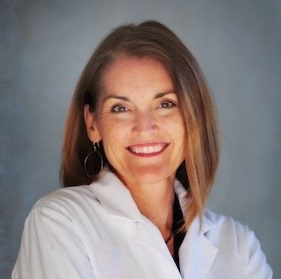
“One of our missions is to normalize our bodies and our biology. There’s no reason to be ashamed of our biology, right? Half the world has periods, but there’s always been a stigma attached to it.”Dr. Melisa Holmes
As Dr. Hutchison and Dr. Holmes forge ahead educating girls and parents, they’ve also increased their ranks: Girlologists are physicians and other healthcare professionals across the country who have gone through a training program that prepares them to answer questions about puberty and adolescence.
“We had someone help us write up the curriculum, we packaged it, and had a training staff build it out,” says Dr. Hutchison. “So now we have Girlologists across the country.”
Although the COVID-19 pandemic has slowed down live events, their roughly 40 Girlologists have been hosting livestream events and recording videos to continue to connect with girls and families. Holmes and Hutchison also did live events until the pandemic put a halt to many in-person gatherings. Their Girlology Live series includes three topics: “Something New About You,” focused on what girls need to know heading into puberty; “Just the Facts,” geared towards pre-pubescent boys; and “RePROduction,” which boys and girls attend together.
“Those are co-ed because we think that kids should learn about each other,” says Dr. Hutchison. “I think it teaches respect and communication between them.”
They recently recorded the “Something New About You” program and packaged it with a downloadable activity book to make it available online even while in-person classes are on hiatus. “Just the Facts” for boys is also available digitally.
They also use Facebook, Twitter and Instagram to reach families. Every other week, they do a 30-minute live interview with an expert in the field, aired so anyone can tune in on Facebook Live. Guests have included a behavioral pediatrician for a discussion about back to school issues; an author and parenting expert who talked about social dynamics in middle school; a patient advocate for a conversation about building a strong patient-doctor relationship, and more.
The goal is to find the girls and families who need guidance, whether it is through the subscription model or social media. “[Girlology TV episodes] are free because we wanted to increase accessibility,” says Dr. Holmes.
Another initiative to help at-risk girls and families is The Girlology Foundation, a 501 (c) (3) non-profit organization focused on expanding access to quality health information by offering low or no-cost programs where they are needed the most. The foundation has partnered with Tampax and local medical schools to sponsor sessions on period education. These evening presentations are often held at community centers or parks and recreation buildings, with dinner offered to girls and family members in attendance.
“It’s led by medical students, which is really fun for them and also helps them get better at having these conversations,” says Dr. Holmes.
“Our videos are not just to hand to your daughter. They’re really to watch with her. Every child needs an adult that they can talk to about these things. They can watch our video, but if they can’t ask questions and follow up, they’re missing out. Having that trusted adult with them is really important. Improving conversations at home is really important.”Dr. Melisa Holmes
In this age of TikTok and viral memes, adolescent girls ages eight through 14 may seem like an intimidating audience to reach, especially with information related to topics that could be difficult to talk about with adults.
But Dr. Holmes and Dr. Hutchison have honed their “on-screen personalities” over time, perfecting jokes and trying out lines.
“It has been a little trial-and-error and a lot of feedback from the girls and the parents,” says Dr. Hutchison.
Although girls are keen to know the details when it comes to their changing bodies, Drs. Hutchison and Holmes know the delivery is important. For example, through so many live sessions they’ve learned to choose their words carefully when talking about menstruation, with “bloody fluid” preferable to “blood.”
“When you talk about bloody fluid, they handle it a little bit easier,” laughs Dr. Holmes.
As for production, the filming process is decidedly low-tech: No elaborate sets or staging. The signature yellow lockers that appear in many of the Girlology videos are actually in Dr. Holmes’ home. They typically work with a video producer who will film and do final edits and graphics, although since the pandemic began they’ve been setting the camera up themselves. Props, like a large hand puppet shaped like a vulva and an ovary pillow, often appear to help illustrate a point.
Despite the pizzaz, the messages are all grounded in facts.
“We definitely keep it medically accurate,” says Dr. Hutchison. “Melisa and I are reading and researching constantly. We are evidence-based in everything that we talk about.”
All of the Girlology material – whether digital or live – is also meant to bring families together, building relationships so that girls can grow up healthy with a solid foundation of support.
“Our videos are not just to hand to your daughter,” says Dr. Holmes. “They’re really to watch with her. Every child needs an adult that they can talk to about these things. They can watch our video, but if they can’t ask questions and follow up, they’re missing out. Having that trusted adult with them is really important. Improving conversations at home is really important.”
Both Dr. Holmes and Dr. Hutchison have daughters of their own – five between them – so they’ve been in the thick of many conversations about adolescence in their own families.
Right now, they’re from age 15 to 26,” says Dr. Holmes. “They’ve been our guinea pigs for the whole time we’ve been doing this.”
That feedback from their daughters – and input from the hundreds of girls and parents who have attended sessions over the years – has helped to fine tune programs so that the needs of families are met. According to surveys of participants, Girlology is making a difference.
“We ask parents before the program what their daughter’s attitude is towards talking about puberty or reproduction, and usually it’s avoidance or grossed out or clueless,” says Dr. Holmes. “Then we follow up with them two weeks after the program and ask: ‘Has it increased their conversations, and what is their daughter’s attitude now?’ Their attitude following is very accepting and somewhat excited. And they’re definitely having more conversations at home.”
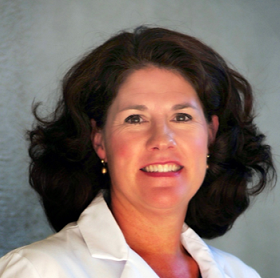
“We want to be a resource that [pediatricians] feel comfortable giving to the parents to say: ‘Okay, we really couldn’t touch on this too much today, but here’s a great resource that you can learn together at home.’”Dr. Trish Hutchison
Beyond training as an official Girlologist, pediatricians and other health professionals can also benefit from Girlology’s offerings. Holmes and Hutchison say they’ve heard feedback from physicians about how helpful it is to have a wealth of information designed for girls and families at their fingertips.
“We’ve had a lot of physicians that say their practice has really changed just by looking at our content,” says Dr. Hutchison. “It helps them talk to a girl about how to wear a tampon or talk to a boy about a nocturnal emission.”
Digital downloadable content can be printed in the office and offered to patients to answer questions and foster conversation. A puberty timeline covers everything from breast buds and growth spurts to oily skin and acne in an approachable way. A one-sheet checklist helps patients assess their anxiety level; another offers questions and tips for a patient to prepare for a telehealth visit. Some pediatricians use Girlology videos in their office; for example, to prepare a patient for her HPV vaccine, they may send the link to Girlology’s video tip on the vaccine’s safety. Girlology also offers clinicians quick, shareable tips to populate a practice’s social media channels.
They partner with institutions large and small. For instance, they’re working with the pediatric residency program at Massachusetts General Hospital and with pediatricians at Children’s of Alabama hospital. At the University of Arkansas, the training is through their OB/GYN department. Smaller, independent practices also benefit from partnership with Girlology. A nurse practitioner at a private practice in Greenville, South Carolina, has trained as a Girlologist and holds regular classes that “always sell out,” says Dr. Holmes.
Dr. Holmes and Dr. Hutchison hope to continue to help pediatricians educate patients and families. With so many demands on clinicians’ time, and with well visits often limited to half an hour or less, the goal is to provide accurate information about adolescence and open the door to questions and conversation.
“We want to be a resource that [pediatricians] feel comfortable giving to the parents to say: ‘Okay, we really couldn’t touch on this too much today, but here’s a great resource that you can learn together at home,’” says Dr. Hutchison. “We help them get more patients in the door and become more efficient with these conversations in their practice.”
As these discussions proliferate in pediatricians’ offices and at kitchen tables and in living rooms across the country, Dr. Holmes and Dr. Hutchison hope that women’s health benefits as a result. If women grow up comfortable talking about their bodies, they’ll be better able to take charge of their sexual and reproductive health as adults.
“If we can start with girls, we can fill in some of those gaps in women’s health that have created disparities,” says Dr. Holmes. “We will never have women’s health until we have girls’ health.”
A resident of Burlington, VT, Erin Post has a BA degree in English from Hamilton College, and is a graduate of the writing program at the Salt Institute for Documentary Studies. She is currently working on her master’s in public health at the University of Vermont. In her spare time, she likes to bike, ski, hike, and generally enjoy the Green Mountains of Vermont.
Pediatric care is complex enough — navigating for the future shouldn’t be a solo journey. Join host Chip Hart and learn from pediatricians, industry leaders, and policymakers who are shaping the future of pediatric care. Every episode, we explore their stories, their dreams, and the joy they find in medicine. Together, we’re charting the future of children’s healthcare.

The Independent Pediatrician is brought to you by PCC, which provides tools and services to help pediatricians remain independent and in control of their practices.
PCC itself is a fiercely independent business. As a Benefit Corporation, it puts the interests of its clients, community, and employees on an equal footing with those of its shareholders.


 Making Decisions Together: A Web-Based Approach to Screening and Early Inte...