Building Community Ties in the Spindle City: Pediatric Associates of Fall River
Pediatric Associates of Fall RiverFall River, MA



For Pediatric Associates of Fall River, the first day of school is special. Every year, staff join with police officers, firefighters and other community members to line the entrances to local grade schools. As the kids enter the building to start off the new year, they get high-fives and encouraging words from adults they look up to.
“We make sure we have somebody at every school,” says Judy Rapoza, practice administrator. “When the kids come back in [to the office], they’ll recognize us and say ‘Oh, they were at my school. My doctor was there.’ They get all excited.”
These community ties are critical for the practice as they work to meet the needs of children in Fall River, Mass., located in the southern part of the state 18 miles away from Providence, R.I. As part of the Providence metro area with over 1.6 million residents, Fall River struggles with challenges that plague many urban areas across the country, including drug use, homelessness, and gang violence.
“It’s definitely a big city with all of its issues and problems,” says Rapoza.
The practice’s eight pediatricians, one nurse practitioner and roughly 50 staff members – many of whom are locals – are united in a common goal to bring high quality health care to this underserved city.
“We feel that we make a difference in these children’s lives,” Rapoza says. “So that’s why we’re here.”
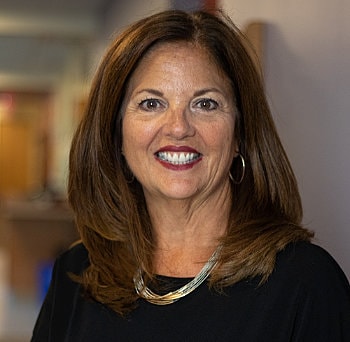
“We feel that we make a difference in these children’s lives. So that’s why we’re here.”Judy Rapoza, Pediatric Associates of Fall River Practice Administrator
In Fall River’s heyday in the mid 19th century, textile mills lined the Quequechan River. The city teemed with Portuguese, French Canadian, and Irish immigrants, drawn to the prospect of steady jobs and a regular paycheck. The booming population led to infrastructure and growth: Frederick Law Olmstead designed three parks in the city. Fall River is also the hometown of the infamous Lizzie Borden, who in the late 1800s was acquitted of murdering her parents, a story that inspired the well-known nursery rhyme. By 1860, Fall River was the largest textile producer in the United States. “Spindle City,” as Fall River came to be known, produced half of all cotton cloth in the United States in 1876. Only Manchester, England, bested the city in textile production globally.
The city’s fortunes took a turn in the 1920s, when textile companies began to move to the southern United States. The Great Depression further cemented Fall River’s economic woes. Like many former manufacturing towns in the United States, the city has struggled to find its economic footing post-World War II. Although Rapoza points to several regional hospitals and Amazon as major employers, the numbers tell a stark story. Fall River is experiencing 5.6 percent unemployment, as compared to the state of Massachusetts at 3.3 percent. The city’s poverty rate is 19.7 percent, well above the national average of 10.5 percent according to 2019 figures from the U.S. Census Bureau.
All of these needs put pressure on the city’s social services and public infrastructure at a time when Fall River struggles to raise the tax dollars for critical services.
“Most people that grew up in the city years ago have moved out to the suburbs,” Rapoza says. “They still work here but they don’t really live here.”
Pediatric Associates of Fall River is there to help fill in the gaps. She says many families walk to the office from several housing projects in the neighborhood. They serve patients experiencing homelessness, and until recently, had a social worker available to help them one day per week.
“She was getting them services, trying to find shelter for them, dealing with some food issues,” says Rapoza. “I know it’s hard to believe in this day and age, but unfortunately you can’t get services if you don’t have an address.”
The COVID-19 pandemic resulted in the elimination of a nutritionist position that was funded through Steward MassHealth ACO. A social worker, also employed through the ACO, scaled back from four days per week with the practice to one. Rapoza is hopeful both positions may be fully reinstated once the patient volume is back to normal.
“We could actually use somebody in this office as a social worker or behavioral health person five days a week,” she says. “There’s so much need.”
Drug use in the community is a challenge – Rapoza says they have in the past had to deal with heroin use in the parking lot and office bathroom. The practice often treats babies born dependent on opioids, which requires close coordination with the NICU and a team of health professionals. Although the challenge is still there, Rapoza says outreach and increased treatment options are beginning to pay off as the number of opioid-dependent newborns has decreased in recent years.
“A lot of it is education and trying to get people connected to the right places with their addiction,” she says. “I think that that’s probably one of the biggest things we’ve seen.”
Gangs also threaten the health and well-being of Fall River patients. A 2017 report from the Crime and Justice Institute at Community Resources for Justice found that “across demographic, economic, and educational dimensions, Fall River youth are at greater risk for many of the factors associated with gang involvement and delinquency.” The report notes 33 active gangs with over 400 members, many of whom are “school-aged youth.” Although the city has implemented several programs to provide alternatives to joining gangs, Rapoza and her colleagues continue to see fall-out from the violence.
“We’ve had a couple of shootings the next corner up, where one 14-year-old was killed,” she says. “It’s tough.”
Over the last year, the COVID-19 pandemic hit the children and adolescents of Fall River particularly hard. For many, school is where they get nutritious food and have a cadre of adults ready to help. When schools transitioned to remote learning in the spring of 2020, those resources and connections went away. Two suicide attempts by adolescents in the neighborhood in one week, during the height of the pandemic, hammered home the importance of schools as a check on kids at-risk.
“They didn’t have the social connection,” says Rapoza. “They didn’t have the teachers. They didn’t have somebody making sure everything was okay.”
The staff at Pediatric Associates of Fall River felt consequences from the closure of schools as well, as they work closely with teachers and school nurses to understand what is happening with their patients at home. Often, it’s a teacher who will be able to identify a child in need of mental health services or other medical attention. Without that additional window into the lives of kids, it became more challenging to provide holistic care.
“We have a great relationship with the teachers,” says Rapoza. “They do pick up on a lot of things with kids and their home life. When the kids weren’t going to school because of the pandemic, that was a big loss.”
Now that schools are moving back to in-person learning, Rapoza is optimistic that the practice will once again be able to work with teachers and nurses to identify children in need and get them appropriate help, whether it is nutritious food, a visit to the eye doctor, or more serious interventions related to abuse or neglect.
“Hopefully everything will resume like it used to be in September,” she says. “That’s what we’re hoping for.”
Reliable access to pediatricians goes a long way towards building strong relationships with families in Fall River.
“We’re here every day of the week,” says Rapoza. “Every holiday except Christmas and Thanksgiving. We’re here every evening. We are open all the time. I think that’s always built strength in our relationship with our patients, that they know that when their kids are sick, they’re going to see their doc or they’re going to see a pediatrician. They don’t have to go to the ER. They don’t have to go to the pharmacy.”
“The biggest thing that I’ve learned over the past 25 years is to listen to your patients. Sometimes things are not always what they seem.”Judy Rapoza
To help address some of the challenges facing the community, Rapoza and her colleagues approach their work with an emphasis on forging connections. When patients walk through the doors at Pediatric Associates of Fall River, they experience a microcosm of their hometown. The practice has been designed with a sense of place in mind.
“Everywhere in our office is [named for] somewhere in Fall River,” says Rapoza.
A waiting room is named Kennedy Park. A hallway: Plymouth Avenue. The nurses’ station is called Battleship Cove, a well-known park and museum by the Taunton River.
“We try to give [patients] the feeling that this is your community,” she says. “This is yours.”
The practice uses their space to send important messages about school attendance; in a city with a drop-out rate that is triple the state’s average, the goal is to reach kids however and wherever they can.
“In our waiting room, we have an empty chair saying, ‘This is important. You need to be at school. Don’t have an empty chair in your classroom,’” says Rapoza. “We just try to promote education.”
Above all, Rapoza points to staff as the lynchpin for all of the work the group does to serve kids’ medical needs and beyond.
“We have a staff that is very, very in tune with our patients,” she says. “They know what’s going on in people’s lives just by talking to them. Sometimes they’ll open up with them even more than they’ll open up with the doctor.”
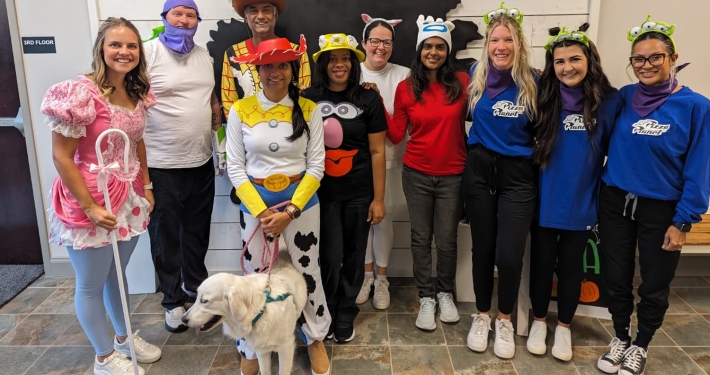
She cites a fundraiser staff held to help a family who lost their house in a fire. If they know of a child who needs new clothes, the staff will organize a drive. Families experiencing a difficult time over the holidays – whether it is job loss or an ill parent – will receive gifts from the practice for their children.
“It’s a great place to work. There’s a camaraderie,” she says. “There’s always something that we’re doing. The doctors have a big part in that too because they’re very generous. They’re great to work for and they truly care.”
This sense of solidarity translates into loyal employees; Rapoza says many staff have been working at the practice for decades. Rapoza herself has been with Pediatric Associates of Fall River for 25 years.
“I have staff that started as file clerks when they were in high school and they’re now 50 years old,” she says. “A lot of people have been here 25, 30 years.”
Rapoza says the practice’s clinical manager, Terry Ferland, has been key to building ties with the community. A registered nurse, she’s been at Pediatrics Associates of Fall River for 50 years. In that time, she’s made house calls, organized volunteer efforts, counseled new employees and more.
“She is amazing,” says Rapoza. “She’s been around here forever. She plays a very big part in training staff to know the patients.”
Five of the practice’s eight pediatricians have also been on staff for over 20 years. To start preparing for retirements, they’ve started to bring in the next generation, with two new physicians who just came on board in June of 2021.
As Pediatric Associates of Fall River continues to adapt to the needs of the community, Rapoza sees a huge need for in-house pediatric behavioral health services.
“There are not enough therapists or behavioral health [specialists],” says Rapoza. “A lot of times by the time you get [patients] connected with somebody, they don’t go to the appointment. We’ve lost them. I think that’s probably something that every pediatrician around the country’s dealing with, but we really do see a need here.”
Childhood obesity is another serious concern. Although they’ve had limited success with nutrition classes in the past, Rapoza points to continued education about healthy eating as important.
In the near future, she’s hopeful the practice will be able to resume their walk-in clinic as COVID-19 vaccination efforts continue and restrictions are lifted. They had to shut it down at the height of the pandemic, which was a blow to many of their patients.
“The patients loved it,” she says. “They could come in between 8 and 10 if they had a sick kid. They didn’t have to wait on the phone. They could just come in and the doc would see them.”
Ultimately, in a city with myriad complex needs, the practice relies more than anything on staff and pediatricians who take the time to get to know Fall River and the people they serve.
“The biggest thing that I’ve learned over the past 25 years is to listen to your patients,” says Rapoza. “Sometimes things are not always what they seem. Sometimes you have to dig down and listen to if there’s something going on with your patients. I do think that that’s probably the success of our practice. We are very fortunate to work for physicians that are compassionate and really care about the patients.”
A resident of Burlington, VT, Erin Post has a BA degree in English from Hamilton College, and is a graduate of the writing program at the Salt Institute for Documentary Studies. She is currently working on her master’s in public health at the University of Vermont. In her spare time, she likes to bike, ski, hike, and generally enjoy the Green Mountains of Vermont.
Pediatric care is complex enough — navigating for the future shouldn’t be a solo journey. Join host Chip Hart and learn from pediatricians, industry leaders, and policymakers who are shaping the future of pediatric care. Every episode, we explore their stories, their dreams, and the joy they find in medicine. Together, we’re charting the future of children’s healthcare.

The Independent Pediatrician is brought to you by PCC, which provides tools and services to help pediatricians remain independent and in control of their practices.
PCC itself is a fiercely independent business. As a Benefit Corporation, it puts the interests of its clients, community, and employees on an equal footing with those of its shareholders.


 A Female-Driven Future: Six Essential Tips for Success