Investing in Community to Nourish Within: A Conversation with PMI Founder Paul Vanchiere
Pediatric Management Institute


The foundation of any practice, particularly those of independent pediatricians, should be built on fundamental connections between providers and their communities, families, patients, and staff. Through building these relationships, independent practitioners can enjoy a better work/life balance, reduce stress, and avoid physician burnout. This interview with Paul Vanchiere, founder of the Pediatric Management Institute, explores the importance of strong bonds for the well-being of the provider and the success of the practice. Topics in the interview include using technology to help rather than hinder patient engagement as well as adopting the right mindset to form better relationships with staff and other practice stakeholders.
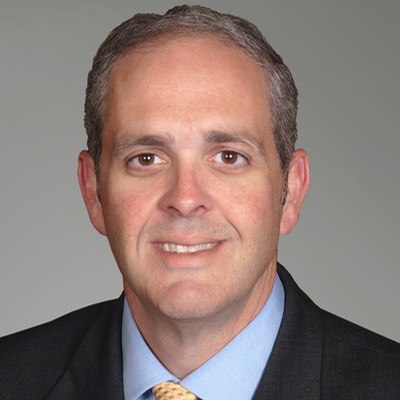
From a family-run, small-town pediatric office to the largest, hospital-owned, not-for-profit hospital network in Texas, Paul Vanchiere has seen it all in his roles as a practice administrator, acquisitions expert, and consultant. While he has enjoyed his work in all settings, his true passion lies in assisting independent pediatric practices in finding their footing and trusting themselves to make the correct decisions for success. This mission is what led him to found the Pediatric Management Institute (PMI) in 2012 after presenting at a conference with practicing pediatrician and friend, Brian Sibley.
“The goal of PMI is really to bring people in, form connections, and educate,” says Vanchiere. “Pediatricians are very intelligent and caring individuals who typically know exactly what they need to do to create a successful practice. In fact, I’d say 90 out of 100 people we talk to already know their next best steps. Our role is really just assuring them that their instincts are correct and providing some foundational knowledge in unfamiliar territory.”
According to Vanchiere, the bedrock of any practice, particularly those of independent pediatricians, should be built on fundamental connections between providers and their communities, families, patients, and staff.

“The goal of PMI is really to bring people in, form connections, and educate.”Paul Vanchiere, Pediatric Management Institute
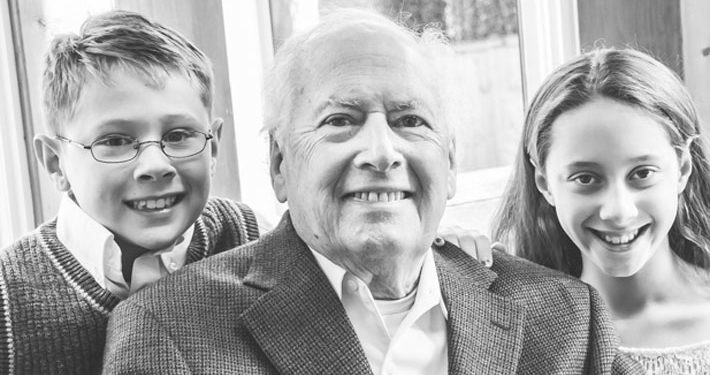
Vanchiere’s own strong family background in the world of independent pediatric practice is likely what has driven his career focus. The youngest of five children, Paul was raised in Lake Charles, LA by his father, Buzzy, a pediatrician with a military background, and his mother, a nurse.
Buzzy was heavily involved in the community in Lake Charles, where he ran an eight-location independent pediatric practice. It was through Buzzy’s contributions to the community that he almost inadvertently developed an effective grass-roots marketing approach. “It wasn’t an intentional marketing effort,” explained Vanchiere, “it was more about just being deeply involved. In a small town, the pediatrician is really at the heart of the community, getting to know the parents, children, and families that live there over the course of generations. You don’t see that as much these days. It’s a shame because that sense of connection increases quality of life and reduces physician burnout.”
Even before the rigors of the pandemic, physician burnout was reaching alarming levels. According to a New England Journal of Medicine Catalyst collection entitled, “Physician Burnout: The Root of the Problem and the Path to Solutions,” more than half of practicing physicians were already experiencing symptoms of burnout in 2018, a number which has only increased since with the added stresses of Covid-19 on the healthcare industry.
While there are many factors that contribute to physician burnout, one strong mitigator is meaningful interactions with family, civic, and religious organizations, and positive relationships with colleagues in the workplace.1
Vanchiere credits a great deal of his father’s practice success to the fact it was steeped in the bonds of family. “Children from all the provider families helped to varying degrees with the running of the practice. We all spent time helping out during the summers of our high school and college years. One Saturday a month, the whole family would go to the office to process paper statements together.” As the Vanchiere children assisted in their father’s office, they got to know the families of the other providers. “There was a strong sense of camaraderie there. All the families involved in the practice had a genuine liking and respect for each other.”
Forming strong connections with one’s community is undoubtedly beneficial to the individual physician, but it also has far-reaching advantages for the healthcare industry itself. A broad study by The Annals of Internal Medicine found that physician burnout costs the industry approximately $4.6 billion annually due to turnover and other associated expenses. Reaching out to the surrounding community and involving family whenever possible goes a long way to combat the feeling of disconnectedness that so often drives burnout.
For Vanchiere, the positive feelings and bonds he formed growing up laid the groundwork to which he found himself returning during his college years. “I spent some time in college unsure of my career path. As I continued to work for my father, the path became clearer. I certainly felt the call to be involved in pediatrics in some sense.” Rather than go the route of becoming an M.D. like his father or brother, Paul Vanchiere was called to work on the business end of things.
Vanchiere attributes his business acumen to seeing his parents run a specialty gourmet food store in his hometown of Lake Charles. Vanchiere’s Market Place provided unique gift baskets with various foods from around the world. Going back further, Buzzy’s family had a general store in a community of fewer than 2,000 people outside Baton Rouge that provided everything from milk, to shoes, to plumbing parts, and even hunting equipment. “The experience from running these types of stores instilled within us the basics of business. Those basics are really straightforward and don’t change much even when the scale increases.” The lessons learned in both family businesses are now Paul’s to impart to independent practitioners through his work with PMI.

One of the major lessons Vanchiere has learned both from his father’s practice and his experience in the field is how technology can be used to streamline operations without taking away from interpersonal connections with patients. These days, nearly every healthcare provider in the U.S. uses some sort of electronic health record (EHR) to reduce costs while providing better care coordination.
Even before the events of 2020 drove the adoption of technology such as telehealth, experts predicted that 85% of all customer service interactions would be handled without a human agent in that year. Even as the healthcare industry embraced this trend, a 2019 Harris Poll revealed only 20% of Americans were comfortable with AI-generated healthcare advice, and would, in general, prefer a human face to accompany any customer service-related concerns. This begs the question: how do healthcare providers gain the advantages of technology while still delivering a personalized patient experience?
Vanchiere’s father had an eye to the future even as he remained grounded in old-fashioned family values. In the late 1970s, Vanchiere’s father and his partners hired a programmer to build one of the first computerized registration and billing systems for his practice.
“The computer was a DEC system that couldn’t even fit in a typical exam room,” laughed Vanchiere, “but the foresight to build it was ahead of the times. Developing the computerized system to handle some of the back-office tasks freed up more time for personal interaction with patients because information was much more organized and easily retrievable. It also helped with our planning and budgeting.” Operational benefits aside, Vanchiere maintains the true purpose behind technological advancements should be to complement the interaction between provider and patient by helping keep information properly organized.
The continued advancement of technology in the healthcare industry has led to some very positive outcomes, particularly in relation to the maintenance of health records and increasing patient engagement. For example, the digitalization of health records has reduced medical errors by providing a consistent patient history and delivered other advancements such as electronic prescribing, medical alerts, and clinical flags that can reduce medication errors and increase patient safety, as reported by Healthcare Innovation. The pandemic has certainly turned more patients to digital communication tools with their healthcare providers, with a high degree of success. A recent Accenture survey found that 60% of the patients who used these tools for the first time during COVID plan to continue using them due to their positive experiences.
According to Vanchiere, the role of technology in medicine can be a great thing, if it is used mindfully — to boost engagement with patients without detracting from those relational aspects that are so important. “Think about what often happens when you visit a medical practice these days,” he says. “Your doctor may be so bogged down in trying to take notes on a computer screen, it can be hard to even maintain consistent eye contact with the patient. The biggest opportunity for medical technology companies is to free up physicians from some of those tasks so they can be more socially engaged with their patients. It is that social interaction with patients that drives so much of patient satisfaction and reducing physician burnout.”
“Let’s face it, pediatrics can sometimes feel like the Walmart of healthcare with the high patient volume and low margins. That’s why it’s so important to have a team that values and trusts each other.”Paul Vanchiere, Pediatric Management Institute
While community and family bonds are vital, some of the most rewarding bonds for physicians happen with colleagues in the workplace—those people who are there to face the challenges and enjoy the rewards of caring for children every day. There’s no doubt that independent pediatric practices face unique challenges separate from those of physicians employed by a larger hospital or health system.
As Vanchiere puts it, “Let’s face it, pediatrics can sometimes feel like the Walmart of healthcare with the high patient volume and low margins. That’s why it’s so important to have a team that values and trusts each other.” What’s the secret to building the right workplace culture? According to Vanchiere, it may require physicians to take themselves out of the equation once in a while.
An independent physician running a medical practice makes many decisions a day pertaining to staffing, compensation, insurance, expenses, investments, and more, in addition to clinical concerns for patients. In the course of one day, an independent pediatrician may be examining a newborn and calming a nervous first-time mother or recommending mental health treatment for a teen with an eating disorder, then changing roles entirely to deal with something as mundane as building maintenance, or as complicated as human resource issues.
“It’s easy to get fixated on the day-to-day operations side of things,” cautions Vanchiere. “That’s why it is so important to be intentional in whatever you are doing. It is essential to know when to take a step back and look at the big picture instead of just being swept along by [the] daily grind.” It can be difficult to be objective when you are too close to the action, so to speak.
To be an effective practice leader or CEO, Vanchiere recommends adopting a “veil of ignorance”—a term first coined by American philosopher John Rawls in 1971. “The concept of a ‘veil of ignorance’ really resonated with me when I first came upon it in my readings. Basically, a person imagines themselves behind a veil that erases their own biases and knowledge of their own natural abilities or position in society.” It is from behind this veil that any leader can best make decisions on the collective group benefit, rather than on any kind of personal benefit.
“It’s basic Psych 101 that when people make any decision, their first thought is how that decision will affect them,” explains Vanchiere. “Often in independently-run medical practices where the physician is also running the business, it is natural to think, ‘How will this change affect me and my workflows?’ I encourage clients to take themselves out of the equation and see issues from a position outside themselves to determine what is best for the whole rather than just the part.”
One example he provided was when considering compensation models, the managing physician could potentially find themselves choosing between a model with a higher personal benefit and one with a lower personal benefit, but a higher group benefit. “Always choose the direction with the best group benefit, even if it looks like a short-term personal loss. Investing in the group will always pay dividends in the long run.”
Working as an independent pediatrician can be stressful, but the numbers show it is often more satisfying and rewarding. “The main difference between independent and employed practitioners,” said Vanchiere, “is their initiative.” The initiative to take more control, to be a clinician and a business person, requires a leap of faith, but independent physicians actually have lower levels of burnout than those employed by large hospitals or health systems. In fact, the trend towards more employed physicians versus independent physicians is not only slowing but appears to be turning back. According to the AMA, the reasons more doctors are choosing the independent route is that with independence comes increased autonomy, the opportunity for more time spent with their own family and in the community, and the opportunity to form deeper relationships with patients.
According to Vanchiere, “What I see in my work with dozens of independent practices is this: when you provide good care to children, spend time with your family & the community, show care for your staff, and take time once in a while for yourself, the success of your practice naturally follows.”
[1] West CP, Dyrbye LN, Erwin PJ, Shanafelt TD. Interventions to prevent and reduce physician burnout: A systematic review and meta-analysis. Lancet. 2016;388(10057):2272-2281. ↑
Allyson Howard is a firm believer that well-crafted stories can redefine brands and organizations, reinvigorate internal and external business communications, and engage and inform consumers in groundbreaking ways. Her BA in English and Education from the University of Iowa, as well as her MS in Professional Writing from NYU, have positioned her to create a wide range of content tailored to communicate unique brand voices and messages. She lives outside Chicago with her family and enjoys cooking for loved ones and reading.
Pediatric care is complex enough — navigating for the future shouldn’t be a solo journey. Join host Chip Hart and learn from pediatricians, industry leaders, and policymakers who are shaping the future of pediatric care. Every episode, we explore their stories, their dreams, and the joy they find in medicine. Together, we’re charting the future of children’s healthcare.

The Independent Pediatrician is brought to you by PCC, which provides tools and services to help pediatricians remain independent and in control of their practices.
PCC itself is a fiercely independent business. As a Benefit Corporation, it puts the interests of its clients, community, and employees on an equal footing with those of its shareholders.


 Parental Choice, Public Health, and Vaccine Hesitancy in Tennessee