Close Communities from Far Away: Glacier Pediatrics in Juneau, Alaska
Glacier PediatricsJuneau, AK



The “Close Communities from Far Away” series features pediatricians working in a diversity of geographic locations, from Alaska to Hawaii and everywhere in between. Learn more about what they love about their communities and the opportunities and challenges they face.
At Glacier Pediatrics in Juneau, Alaska, it’s not uncommon to have patients arrive by ferry, float plane, or sometimes even Coast Guard helicopter. The Alaska Marine Highway – which snakes along 3,500 miles of coastline from Bellingham, Washington, to Dutch Harbor in the Aleutian Chain – features a ferry service provided by the state of Alaska to connect 30 communities along the route. And since Juneau sits on an island in the Gastineau Channel, and is one of only two state capitals in the United States with no roads connecting it to the mainland, transport by air is also critical.
For kids with complex medical needs, this geography poses unique challenges, says Amy Dressel, MD.
“Let’s say [your community] doesn’t have home health services. Trying to get your wheelchair worked on, or get urgent physical therapy appointments, can be challenging,” she says. “Sometimes we have to rely on float planes for delivering medication, and if the weather’s bad people are not getting their medication.”
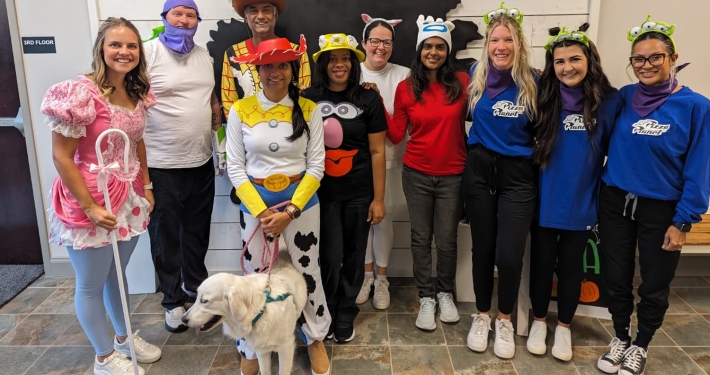
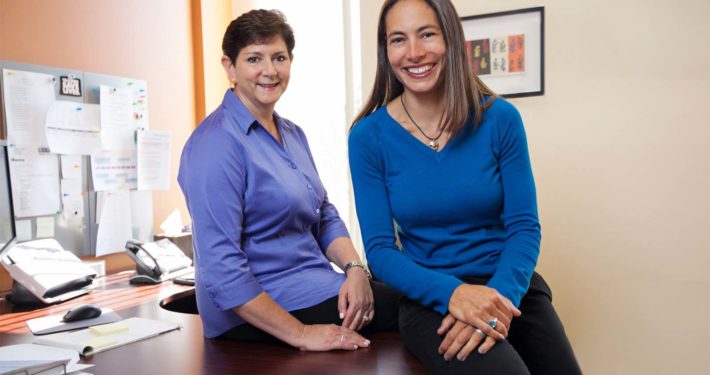
Glacier Pediatrics has been a hub and resource for families across this remote region for decades. It began as a solo practice before transitioning to a multi-provider team. Dr. Dressel joined the practice 22 years ago. She now runs the practice with Kim Gardner, a family nurse practitioner, along with office manager Thea Paddleford and pediatric nurse practitioner Lauren Hopson. Also joining the team are a licensed practical nurse, a certified medical assistant and four office staff.
“We have basically been one of two pediatric-specific offices in Juneau for more than 30 years,” says Dr. Dressel.
As the practice looks to the future, the goal is to continue to build long-term relationships with families while expanding healthcare access to patients in the region’s many rural communities.
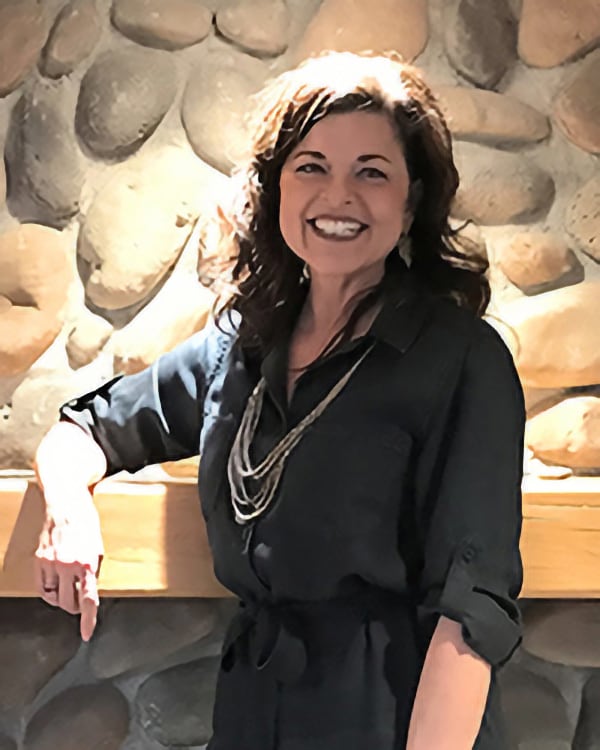
“It’s hard down south, but imagine your deliveries only being able to be flown here or barged here. And we have limited access – there is a limit to who will actually deliver or ship to Alaska. Some of that is very hard, [along with] the costs to have those items shipped to Alaska. It can be astronomical and quite difficult.”Kim Gardner, FNP
The city of Juneau, with a population of about 35,000, relies on a few key industries to drive their economic engine.
“We don’t have a ton of room for growth,” says Dr. Dressel. “Fishing is a big industry and tourism is the other big industry, so for a couple of years it’s been kind of hard for people. We have a lot of Coast Guard families that change every couple of years.”
The one hospital in the city, Bartlett Regional Hospital, has 60 beds and no designated pediatric ward. When it comes to certain types of specialty care, families rely on major medical centers hundreds of miles away, like Seattle Children’s Hospital or Providence in Anchorage.
“The specialty care…is tricky,” says Gardner. “We only have a couple [of specialists] that will come here. The pediatric cardiologists — they are housed in our building when they visit. They’ll hold an onsite clinic from Seattle Children’s.”
A team from Alaska Pediatric Surgery also comes to Juneau, and an allergist has in the past treated patients at Glacier Pediatrics.
Dr. Dressel and Gardner say they feel fortunate to have strong partnerships with an array of providers, whether it’s Seattle Children’s Hospital or specialists in Anchorage, about 850 miles away.
“They’re all pretty good about helping us out,” says Gardner. “Most of them realize what it’s like to be in a rural area without backup.”
Newborn babies who need specialized attention often leave by plane for the NICU in Anchorage.
“They have a team that comes down, so that’s helpful,” says Gardner. “They have a couple of jets that come [to] get some babies.”
Dr. Dressel has in past years traveled about four times annually to a few of the communities along the Alaska Marine Highway, which requires either a four-hour boat ride or a 45-minute plane trip. The Glacier Pediatrics team is in regular contact with community health aides, a network of federally-funded professionals who provide access to primary care across Alaska’s hundreds of rural villages. Alaska Native youth have been identified by the American Academy of Pediatrics as a population experiencing “substantial health disparities,” including higher rates of obesity, toxic stress, mental health and substance use disorders as compared to the general pediatric population, according to an April 2021 policy statement. Children in rural Alaska depend on the community health aide network and their connections to pediatricians for care.
“We do a lot of phone triage…and then we talk to some of the community health aides about the kids, and what we would do if they were here,” says Dr. Dressel.
But for chronic conditions or serious issues that require complex specialty care, many families are faced with extensive travel to Seattle or other points south. The front office at Glacier Pediatrics spends a significant amount of time helping to make arrangements, says Paddleford.
“They’ll call and get travel approval through Alaska Medicaid, for the patients that have it, and we help them through that process to set up reservations,” she says. “That’s something our office deals with a lot. For patients who don’t have Alaska Medicaid, there are forms through their insurance. Usually they have to pay up front for airline tickets, and then they have to be reimbursed, so it can be difficult.”
The introduction of telehealth – and the expanded opportunities for insurance reimbursement the pandemic has afforded – has been a game changer for the populations Glacier Pediatrics serves.
“Before the pandemic, working with the insurance [companies] when it came to telemedicine was definitely somewhat of a barrier,” says Dr. Dressel. “We’d already had some of the conversations, but it happened kind of overnight and it was trial by fire a little bit, like everybody else.”
Prior to the pandemic, the practice had experimented with offering behavioral health services in cooperation with a provider in Anchorage; patients would come to Glacier Pediatrics and then conduct appointments virtually. Now, patients are able to download an app and sign up for the telehealth service on the practice’s website. Telehealth appointments are available for providers with Glacier Pediatrics as well as with certain specialists in Seattle, which has been key to getting children seen by a physician more quickly.
“The wait list went down severely,” says Dr. Dressel. “Instead of months wait list, [specialists were able to say] ‘we’ll get you at the end of this week.’” I think that was one nice thing that came out [of the pandemic.]”
Prescribing medications also became easier. For families in outlying communities up the Alaska Marine Highway, it could be challenging to travel to refill a prescription in-person. Changes brought about by the pandemic has allowed Glacier Pediatrics to electronically send scheduled prescriptions to a pharmacy in a patient’s community. “Rather than making people come in to get their prescriptions on a regular basis,” says Dr. Dressel.
And on weekends, when a staff member is on call, telehealth has improved access to healthcare. For certain conditions that can be triaged with a video consult as opposed to a phone call – like pink eye, for example – a patient can receive a diagnosis and prescription without leaving home, avoiding the ferry ride they may otherwise be facing.
The team is optimistic that the changes to telehealth payment will outlast the pandemic.
“I believe it’s here to stay. I think it’s a very valuable option,” says Gardner. “We hope we’ll still get reimbursed, that insurance companies will see it the same way.”
Even as telehealth improves patient care, the practice continues to deal with pandemic-related challenges. Supply chains have been disrupted worldwide; in Alaska, that issue is magnified.
“It’s hard down south, but imagine your deliveries only being able to be flown here or barged here,” says Gardner. “And we have limited access – there is a limit to who will actually deliver or ship to Alaska. Some of that is very hard, [along with] the costs to have those items shipped to Alaska. It can be astronomical and quite difficult.”
Glacier Pediatrics has adapted as best they can, in part by providing services that they know the community needs. With CARES Act funding, they were able to purchase equipment to offer in-house testing for COVID-19 as well as certain common viruses.
“For a lot of our testing we would swab here, and then have to send them to the hospital at various hours to get the tests run,” says Gardner. “[Families] had to be their own courier so to speak. It’s nice to test for COVID, flu, RSV, and strep right here rapidly, and be able to give them an answer and treat on the spot rather than wait.”
Glacier Pediatrics is also seeing more patients for behavioral or developmental issues that were missed during the early days of the pandemic, or managed in a family’s home, says Gardner. The goal now is to diagnose and set them up with what they need.
“Let’s get some evaluations going and actual diagnostics, so they can get some services,” she says.
They’ve been adjusting to a new schedule as well, one that doesn’t seem to have the same ebb and flow as in previous years. For example, August and September has generally been a time that Glacier Pediatrics is focused largely on physicals and well visits, as families get ready for the return to school. That hasn’t been the case this year, as the practice has had to balance that late summer workflow with COVID-19 testing along with an uptick in patients coming in for treatment of illnesses, including a surge in COVID-19 cases thanks to the rise of the Delta variant.
“Previously, you would know which would be our busy days and which would be our slow days, and I feel like during this last year and a half I can’t predict,” says Dr. Dressel.

“I wanted to be in a smaller community and it’s kind of kept me here as far as it’s like family. It’s a very unique place to live and to work.”Amy Dressel, MD
For children who grow up in Juneau, encounters with wildlife are part of their everyday experience. Ravens are likely to “take your groceries right out of the back of your truck,” says Gardner. Eagles are regularly spotted in town. If you’re on a boat, it’s important to keep an eye out for whales. The landscape breeds a certain resourcefulness borne out of necessity.
“[Kids] learn their bear safety at school, like what do you do when you’re crossing the street to go to school and a bear is hanging out in the road or playground,” Gardner says.
Many at Glacier Pediatrics cite this proximity to nature as one reason they came to Juneau; the tight-knit community keeps them there. For Dr. Dressel, her desire to build a life in Alaska dates back to childhood.
“I told my mom in third grade that I was going to become a pediatrician and live in Alaska, so that’s always been my focus,” she laughs.
She’s volunteered for a host of causes during her more than two decades in Juneau, including advocating for Alaska’s Vaccine Assessment Program; founding a center to serve children who have been neglected or abused; and serving on the local arts council as well as a myriad of other boards.
“I wanted to be in a smaller community and it’s kind of kept me here,” she says. “It’s like family.”
A South Carolina native, Gardner came to Juneau after about 20 years as a pediatric NICU nurse. She earned her Master’s degree in nursing and was living with her family in Wyoming when the opportunity became available in Juneau. She first worked in a family practice office at Valley Medical Care and transitioned to serving the community at Glacier Pediatrics for the past seven years.
“This is a great place to raise children,” she says. “We’ve been here 12 years altogether and raised our girls. My youngest has just graduated from high school and it’s been amazing.”
Paddleford arrived from Utah when her husband got a job at the airport in Juneau. Thirteen years later, she’s settled into life in Alaska and cites the strong bonds the team at Glacier Pediatrics has as a stabilizing force, especially with no family in the area.
“I started at the front desk and worked at the front desk for a few years, and then moved into billing,” she says. “I’m now managing the clinic. I’ve loved it here — I haven’t considered leaving. They were here when I got married and had babies, so they’re like my extended family.”
Looking ahead, Glacier Pediatrics plans to continue to expand health care access to outlying towns and villages via telehealth, while building relationships with specialists willing to serve children throughout the region.
“I’m always hopeful that we can eventually expand the specialty program and get more specialists to come through on a more regular basis — be a hub for pediatrics for the southeast,” says Gardner. “And then I think just continuing to offer good community support.”
No matter what the future holds, the team’s commitment to the children of Juneau and the communities along the Alaska Marine Highway runs deep. Glacier Pediatrics has become part of the fabric of life in southern Alaska – built by staff who can’t imagine living elsewhere.
“One thing they say about Juneau – you either love it or you hate it,” says Paddleford. “You’ll know within that first year whether you are going to live there or not. I never expected I’d live away from my large family and leave, but this is where we’ve made our home. It’s an amazing place to raise a family.”
A resident of Burlington, VT, Erin Post has a BA degree in English from Hamilton College, and is a graduate of the writing program at the Salt Institute for Documentary Studies. She is currently working on her master’s in public health at the University of Vermont. In her spare time, she likes to bike, ski, hike, and generally enjoy the Green Mountains of Vermont.
Pediatric care is complex enough — navigating for the future shouldn’t be a solo journey. Join host Chip Hart and learn from pediatricians, industry leaders, and policymakers who are shaping the future of pediatric care. Every episode, we explore their stories, their dreams, and the joy they find in medicine. Together, we’re charting the future of children’s healthcare.

The Independent Pediatrician is brought to you by PCC, which provides tools and services to help pediatricians remain independent and in control of their practices.
PCC itself is a fiercely independent business. As a Benefit Corporation, it puts the interests of its clients, community, and employees on an equal footing with those of its shareholders.


 Dr. Seth Kaplan: A Warrior for Children’s Mental Healthcare in Texas and ...