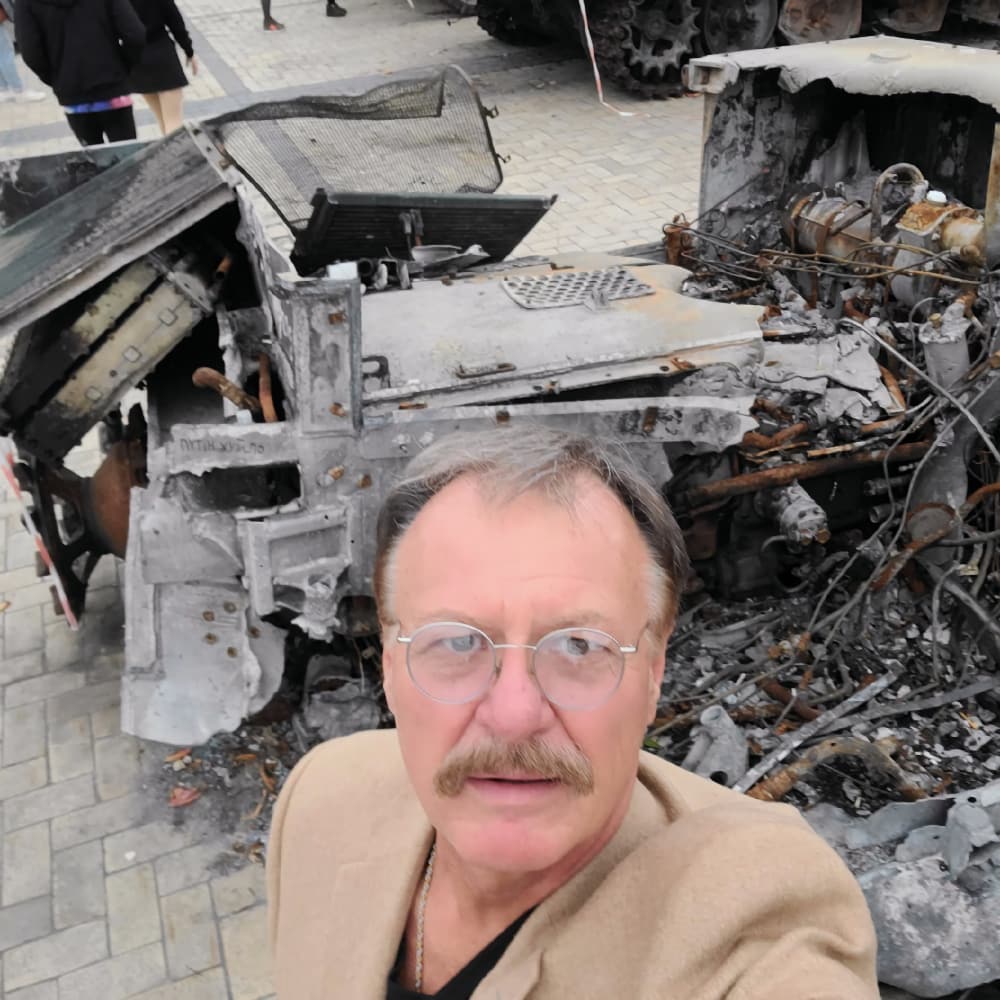
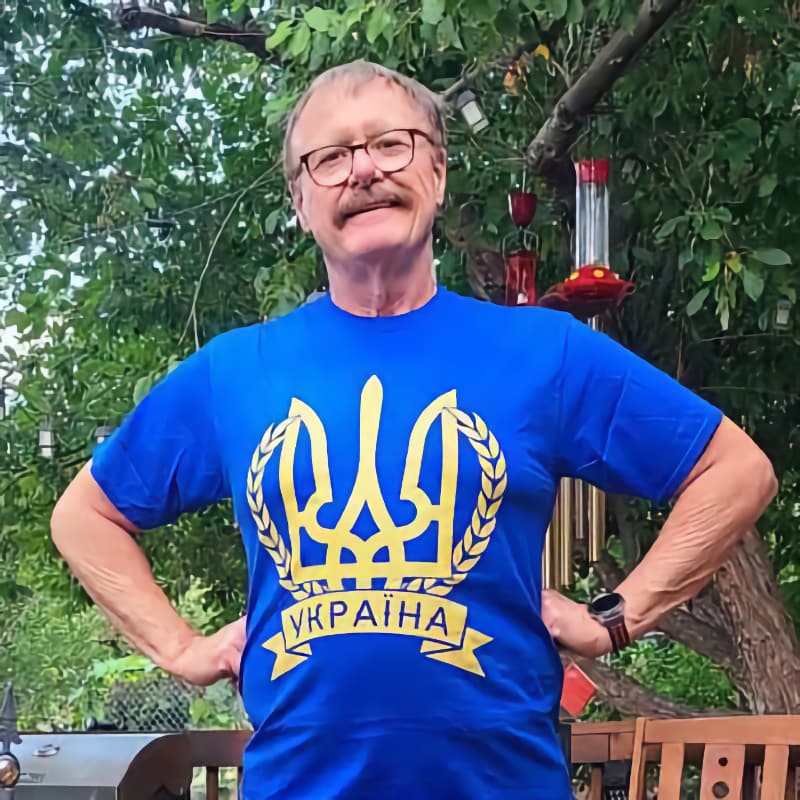
Crazy idea or not, Klep began to Google. He found the website for the Kyiv government and found the number for the Ministry of Health. Abandoning hesitation, he gave the office a call to offer his assistance, however it was needed. After an exchange with the woman who answered (who didn’t speak English, nor does Klep speak Ukrainian) Klep found himself on the phone with the nearest English-speaking person: who just so happened to be the Deputy Minister of Health himself.
“Just come,” the Minister told him, at Klep’s request to help. Just in case, he called around to Kyiv hospitals, and the refrain was the same: Ukrainian doctors needed the help and nobody had time to waste. And that’s all the Laramie doctor needed to hear.
Without further ado, Klep was off to Kyiv and got to work. He saw patients and families. He disliked the volunteer requirements of 6 hour shifts of 16 patients a day. The Poland refugee center he worked in saw over 2,000 families a day. He wanted to work 7 days a week and see patients as often as he could. He wanted to contribute more.
Klep quickly found that while the hands-on pediatric work he offered was appreciated, the issues the doctors he worked with faced day-to-day had systemic roots. The Ukrainian neonatologists, pediatric anesthesiologists, and pediatricians wanted education, training, lectures. They had a desperate need for equipment, as displaced hospitals and civilians and bombings meant that equipment was either unavailable or had been damaged.
He recalls that one day, late in the afternoon, a doctor approached him and asked if he was American. When Klep answered yes, he was asked to join the man on a trip to the hospital, “So we – this short 6’5” man and I – got into his tiny car and off we went.” At the hospital, he found his companion was named Oleg, and he was the head of OB-GYN of Kyiv Oblast (the province which includes Kyiv in Ukraine). They also met with Anastasia, head of neonatology for the Kyiv region.
The Kyiv doctors emphasized their need for education, and asked Klep – would he be willing to give lectures to their residents? “They admire the American healthcare system,” he explains. “They want to be just like us. They want protocols for infant antibiotics, and they need ventilators, they need high-speed canulas.”
So, once he returned to the United States, Klep began to make a list. He began work with Denver Children’s Hospital to arrange for equipment to be transferred to Kyiv, where it was needed most. He plans a return visit to Ukraine to give lectures, and hopes to wrangle a few more pediatricians to offer the same for Ukrainian residents. He hopes to convince the American Academy of Pediatrics to offer Ukrainian pediatricians a free temporary membership so that the doctors can access the journals, training, and assistance they need.
He firmly believes that his story is best viewed as a lesson for all pediatricians. He fears too much emphasis on his personal contribution will prevent other doctors from seeing the power they already possess to enact powerful change for all children in need. More than once, he remarked, “It’s not about me. It’s about them – the kids and the docs.”
Despite the extreme challenges facing the families and pediatricians of Ukraine as a direct result of the conflict, Klep is glad he took the journey to help however he could. “It was amazing to be there, and wonderful to work with [the Ukrainian doctors], and they appreciate anything anyone does for them. They want to be appreciated and treated with dignity. That’s an important message for people to understand.”
“The other side, from a personal standpoint: “At some point in time, you’ll be tapped on the shoulder to do an adventure. Just go with it, enjoy it. It’s an amazing feeling to be on one of these crazy adventures, and you just remember every second because it’s so cool. Resist the urge to tell yourself rational reasons why you shouldn’t do it, and just go for it. Pack your bag and go along with the dwarves and the wizard and have fun!’”