A Coach Helps Women Physicians Shift Old Patterns and Thrive
Thought Work, MDRichmond, VA



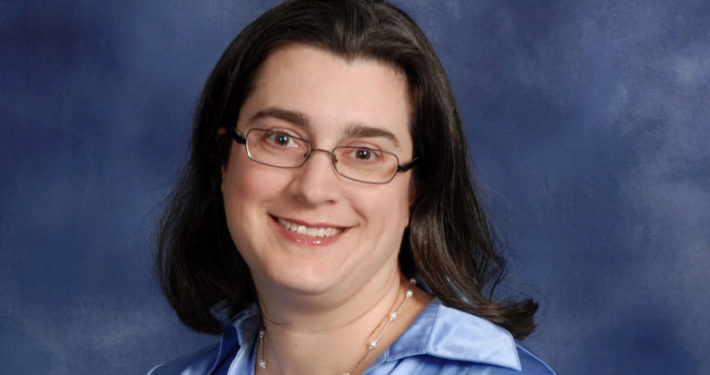
Four years ago, Dr. Arpita Gupta DePalma realized she was overwhelmed, frustrated, and disconnected from her “why” as she worked managing her family’s pediatric practice. This catalyzed her to begin a transformative journey of building awareness, shifting her mindset, regulating her emotions, and creating greater balance and fulfillment in her life.Now, she supports other women physicians in building their awareness, expanding their perspectives, and using that open-mindedness to create exactly what they want in their lives.
Dr. Arpita Gupta DePalma feels great satisfaction in her days. When she wakes up, she engages in somatic and mindfulness practices before spending time with her clients. There are no rounds to do, and her inbox is full of inspiring conversations, in addition to the usual administrative to-do’s. But this hasn’t always been the case.
In 2021, Dr. Arpita Gupta DePalma realized she needed to make some major changes. Despite working in a role meant to allow her to spend more time with her family, she felt overworked, overextended, and frustrated. She worked 10+ hour days and found herself regularly snapping at those closest to her. How had she gotten to this place?
Dr. DePalma graduated from Nationwide Children’s Hospital in 2002. After finishing her training, she worked in pediatric urgent care before moving to Richmond, VA, with her husband and joining a practice there. In Richmond, she worked part-time as a pediatrician while caring for her children. She reached a crossroads when she was presented with an ultimatum to practice full-time, but she still wanted to prioritize time with her kids. So, DePalma decided to join her husband at his practice, Virginia iSpine Physicians, in an administrative role.
“I was meant to be working only part-time at Virginia iSpine Physicians,” Dr. DePalma explains. “But it quickly became a full-time job, even though this wasn’t my intention. And the next thing I knew, ten years had passed.”
Dr. DePalma had never intended for this role to become so all-consuming. “I reflected later that my overworking in this role had become my way of proving my value to the family,” she says. “I felt I had to make a bigger contribution to my household in some way because I was no longer practicing pediatrics.”
“I fell into micromanagement and perfectionism around things having to be done a certain way,” Dr. DePalma continues. “I felt that it was our reputation on the line, so it had to be ‘perfect.’ These patterns really drove the way I was working—actually overworking, and I was slowly killing myself without realizing it.” This pattern was leading Dr. DePalma deeper into burnout, and she noticed herself becoming angrier and more reactionary at home.
While these patterns were brewing under the surface, Dr. DePalma did not become cognizant of them until the changes brought on by COVID-19 confronted her. In 2020, Dr. DePalma and her husband were forced to shut down their in-person practice. While they converted to telemedicine temporarily, it generated nowhere near the revenue needed to support their employees and other expenses of their medical practice. During this time, Dr. DePalma and her husband stopped taking their own salaries and put their business on the line to keep their employees on board.
“Then, months later, when we were finally able to return to in-person practice and get back into our routine, almost all of our employees began to leave,” Arpita says. “I was enraged!”
During and after the COVID-19 pandemic, many Americans changed jobs or relocated. “People didn’t want to do medicine anymore, people were moving out of state,” says Dr. DePalma. “Whatever their reasons were, we were falsely taking it as a personal attack on us. These were the thoughts that really weren’t serving me, and I found myself becoming more and more upset every day.”
In frustration, Dr. DePalma reached out to a friend from residency who was also a mindset coach. “I told her how I was always angry, not showing up as a happy mom for my kids,” Dr. DePalma explains. “I said to her, ‘I’m sick of my dependability being dependent on others.’ My friend then asked: ‘Well, do you think you are being dependable for your kids? Do they know which mom they are getting when they come home each day?’” This was a lightbulb moment for Dr. DePalma. “I realized that I needed to consider making some changes,” she says.
DePalma had some preconceptions towards and resistance to her friend’s path as a coach. “Why would a badass physician and mom need a coach, much less want to be one?” she says of her initial doubt. “Why would we need a coach to teach us how to do life when we seem to be doing it so well?”
Yet, in this one phone call, DePalma felt such resonance with her friend’s words that she decided to explore the world of mindset coaching more deeply. Her friend shared the Life Coach School Podcast, and Dr. DePalma listened to 300 episodes in just a few months. She eventually embarked on her coaching training through this same school. “At first I enrolled to become certified as a coach just for my own sake, for my own healing and self-development,” says DePalma. “And then within a couple of months I realized I needed to share these tools with the world.”
“I created this business without really intending to, in February of 2021, and it’s grown from there,” says Dr. DePalma. “My intent was never really to leave medicine — it just unfolded the way life does.”
“Why would a badass physician and mom need a coach, much less want to be one? Why would we need a coach to teach us how to do life when we’re doctors, and for the most part have been able to manage all the things on our own pretty well so far?”Dr. Arpita Gupta DePalma
In her coaching practice, Dr. DePalma’s niche is working with women physicians, though she works with women in other professions as well. “I can deeply relate to the challenges that women physicians in particular, have had to overcome,” she shares.
Dr. DePalma was drawn to working with women physicians because of her own experiences in pediatrics. “I looked at myself. I’m a physician and a woman professional, and I do so many things, not just doctoring,” she explains. “I realized that no matter how successful and productive and badass women are, we still have many challenges and struggles that no one wants to talk about. We believe we’re the only ones who feel this way: we’re not good enough at parenting, we’re not doing the best we can to juggle all the things. We can be really mean self-talkers.”
One inroad to change for Dr. DePalma was looking at her own relationship with her anger. “I was so angry about everything.” she says. “Screaming at the Verizon guy on the phone or getting irritated with my husband. It wasn’t who I was before I went into medicine and it wasn’t who I wanted to be, and I felt ashamed about that. I’m a pediatrician, I shouldn’t be yelling at people. This is part of the block for many women — we don’t want to admit that the anger is happening because it feels embarrassing or taboo to do so.”
Psychological literature supports that women have a harder time expressing their anger than men. In a 2023 article in Time Magazine, Maytal Eyal writes: “It seems that the very virtues our culture rewards in women — agreeability, extreme selflessness, and suppression of anger—may predispose us to chronic illness and disease.” A longitudinal study from Jack Dana, a Harvard psychologist, found that self-silencing, or self-censoring, led to depression and negative mental health outcomes for women across all demographics. A 2018 study found connections between self-silencing in women and diseases like IBS, chronic fatigue, and even cancer. And shockingly, a ten year study found that women who didn’t express anger when they had fights with their partners were four times more likely to die prematurely than those who did.
“A male-centered world tells women who they are or who they should be, especially in intimate relationships,” writes Jack Dana. “Self-silencing is prescribed by norms, values, and images dictating what women are ‘supposed’ to be like: pleasing, unselfish, loving.”
Since relationships are central to most work in healthcare, is it any wonder that women pediatricians and physicians might engage in self-silencing behaviors, both with colleagues and at home?
In her own life, Dr. DePalma has integrated practices that support her in releasing anger through movement, meditation, rewiring old thought patterns, and creating more space to tend to herself.
Following her own journey with anger, Dr. DePalma wants women to know they’re not alone. “I wanted to normalize for women that this isn’t just happening to you,” she says. “Outbursts of anger are a normal human response to resisting our emotions and keeping them bottled up. We oftentimes do not want to feel uncomfortable emotions such as shame, disappointment, fear, or urgency, so we choose to feel some other emotion, such as anger, because overall the anger feels better to us in that moment. It makes us feel like we have some sort of control in the situation. It makes us feel like we are retaining some sort of power. And, this isn’t just pertinent to anger, it applies to many uncomfortable emotions. But with anger, if we can find healthy ways to notice it, acknowledge it, and process it, rather than repressing it, our minds will be much lighter and our lives more enjoyable.”
While our culture encourages women in general to suppress their emotions, women physicians receive additional reinforcement in this area. Dr. DePalma speaks to the training, both overt and subtle, that physicians receive regarding suppressing their emotions.
“I don’t think as physicians we even know what we’re feeling a lot of the time,” says Dr. DePalma. “We’re taught to push our emotions down and not feel them because we have to focus on dealing with difficult situations and patient cases. We have to go in and take care of very sick patients, take care of their families, and then move on to the next patient with a smile on our face. We aren’t given the space and time to process our own emotions when things are hard.” — even if it was a terminal or bad diagnosis we had to explain and deliver news about.”
“In my coaching I really want to give women physicians an opportunity to recognize that we don’t necessarily know what we’re feeling, and it might take time and reflection, or some help, to learn how to acknowledge our emotions,” Dr. DePalma says. “And, it’s important not to make ourselves wrong for having these negative emotions so that we can process them and heal.”
Of course, medical providers must put their emotions aside when they are interfacing with patients in order to perform competently and provide reassurance. And yet, Dr. DePalma warns that this way of relating to emotions can trickle out into all areas of life. “When I was training, we were told: the patient comes first. The subtext is, ‘You’re the doctor. You need to show up as the expert. You need to be in control and can’t show weakness.’” She continues, “Once we learn this so deeply, we start to believe we can’t show any vulnerability or weakness. This infiltrates everything: life starts moving fast and we forget that it’s okay and essential to feel and work through our feelings.”
In a 2022 survey of American physicians, the AMA found that 57% of female respondents reported at least one symptom of burnout, as opposed to 47% in their male counterparts. Another 2022 study asserts: “Burnout poses a tremendous risk to our public’s health with its severe and debilitating effects on both physician and patient health alike.” Burnout is not simply an issue of self-care; it trickles down from the physician to their patients and into communities.
Dr. DePalma believes that suppressing emotions is one factor that contributes to higher burnout for women physicians. “Women in these high-intensity spaces need space to share and be heard,” she says. “We forget that when we show our feelings to others, we can open up a space for others to share with us too, and to build a support network with our friends and colleagues that fosters connection, vulnerability and healing.”
“I don’t think as physicians we even know what we’re feeling a lot of the time. We’re taught to push our emotions down because we have to focus on dealing with difficult situations and patients. We have to go in and take care of very sick patients, take care of their families, and then move on to the next patient and put a smile on our face. We aren’t given the space and time to process our own emotions when things are hard.”Dr. Arpita Gupta DePalma
“Most people don’t recognize that they’re in burnout,” says Dr. DePalma. “It can look like brain fog, apathy, lack of joy in seeing patients or going to work. It can be subtle or vague—but all of those things are symptoms of burnout.”
With her clients, Dr. DePalma supports them in starting with the basics. “We can combat these symptoms by first putting time in our schedules for ourselves, period,” she says. “Women need to stand for this, that this time doesn’t get moved and no one messes with it. Those boundaries allow you to start taking care of yourself.”
According to Dr. DePalma, beginning these practices in small, manageable chunks is important. “I tell my clients to set aside self-care for 15-30 minutes a week,” she says. “If we go too big immediately, it may become another thing that we ‘failed’ at and beat ourselves up over.” She shares that she started doing self-care by stretching for thirty minutes every morning followed by a 5-25 minute daily meditation. The question she asks herself and her clients is: “What does your body need and how can you honor that?”
Dr. DePalma explains that once women start making time for self-care, it will feel like there is, paradoxically, more time. “I started with meditating for five minutes a week, but once I did that I felt good and quickly began to add to my practice,” she explains. “The paradox is when we make time for ourselves, we have more time. We combat that sense of urgency in our bodies and minds, which changes our outer worlds.”
From this place, she says, “We can give to others more powerfully and authentically.”
One of Dr. DePalma’s focus areas is supporting clients in understanding and moving away from the concept of “arrival fallacy.” But what is arrival fallacy, and why is it damaging?
“We are taught that when we accomplish XYZ we’ll be happy: when I finish residency, it’ll be awesome. When I finally get partner in this practice it’s going to be amazing,” Dr. DePalma explains. “Arrival fallacy is always looking forward to the next thing and tying your happiness to that.”
But, she asserts, this is a thought error that leads to suffering. “What we don’t realize when we do this is that we’re missing the journey along the way and all of the opportunities to be happy in the present moment, because we’re so set in believing the thought: ‘I’ll be happy when…’” she says.
Arrival fallacy is important to be aware of particularly for women pediatricians, who Dr. DePalma notes can be managing intense perfectionism.
“The whole point is, wherever we are in life, it’s always going to be 50-50. There will be good and there will be challenge, no matter what situation you’re going for or what goal you’re trying to achieve,” Dr. DePalma explains.
“Life is meant to have ups and downs, so how can we embrace them rather than always striving for perfection? When we’re too busy focusing on achieving a goal because we think we’ll be able to relax and it will feel amazing when we get there, we’re missing out on the best part, the journey, and instead create more misery for ourselves.”
“There are so many!” says Dr. DePalma with a laugh.
Once again, perfectionism is one of the biggest challenges she sees for women pediatricians. “We feel things have to be done perfectly, and if it’s not done perfectly it’s a reflection on us,” she explains. “Women set the bar so high for ourselves and we don’t even recognize it’s unrealistic and often unkind.”
The next is a false sense of urgency. “We create this urgency in our lives around all the things that need to get done, and don’t realize we’re the ones who are creating the urgency.”
Finally, DePalma discusses the never-ending to-do list, and women’s fear of relinquishing these “urgent” tasks to others. “The first thing I do with clients is look at that massive to-do list and help them decide what they can get rid of,” she explains. “They have this feeling ‘I’m the only one who can do this,’ but what’s the harm in letting someone else do it? Where can you focus your visionary skills and allow other people to take on smaller tasks?” DePalma continues, “I believe this is an issue of control, so I ask people: How is the need for control holding you back?”
DePalma believes that underneath the need for control and perfectionism is a feeling of low self-worth. “If you would’ve told me when I was stuck in my workaholism that I had low self-worth, I would’ve been like ‘what are you talking about? I’m handling everything,’” she says.
“But I realized that working my ass off, working til midnight each night, was my brain’s sneaky way of proving my worth to myself. It’s so tricky how low self-worth shows up.”
DePalma sees low self-worth as an underlying issue for many women physicians. “When we’re training we come against imposter syndrome — do I really know what I’m doing? Am I good enough?” she says. “When we ruminate on these things over and over again, we start believing them.”
In her practice, Dr. DePalma doesn’t tell her clients what to do; instead, she offers a space to build awareness around their ingrained thought patterns and examine where these patterns may have originated. In this way, patterns of low self-worth can be brought to the surface, and the client is empowered to make change.

“I want to help people be more responsive rather than reactionary, and live the life of their dreams by intentionally creating more balance in their days.”Dr. Arpita Gupta DePalma
What might a coaching session look like with Dr. DePalma? “The coach doesn’t have the answers,” she says. “We show up with curiosity and with a lot of questions — potentially uncomfortable questions — that make the client reflect and think. The client is always in control and has the power.”
She also helps people to become aware of their own negativity bias. “Our brain always offers negative thoughts to us first,” she explains. “The brain is seeking out danger to keep us safe. So I encourage my clients to focus on the good so we can retrain our brains to not only notice the bad.” Indeed, our primitive brains have not yet evolved to our less-threatening modern world. Generations ago, strong attunement to negative stimuli would have helped us avoid environmental threats like predators, but today it leads to unnecessary stress and overactive nervous systems.
To overcome negativity bias, Dr. DePalma prescribes a simple practice of reflecting on what we’re thankful for and why. “The ‘why’ is really important here,” she explains. “Our brains need to understand and relish why something feels good, rather than simply listing it and moving on. If we don’t intentionally spend time in the good, we end up in these negative thoughts spirals all the time.”
Awareness is the first step to changing habits, so Dr. DePalma also encourages clients to be cognizant of their first thoughts when they wake up in the morning. “Sometimes my first thought is: oh my gosh I have so much to do today!” she says. “What feelings does that thought create? For me, it creates overwhelm and dread, which is not how I want to start my day or how I want to feel. So we can ask ourselves, is this thought true? And if it’s not, we can shift to a more realistic thought.”
Dr. DePalma is careful to add that she’s not recommending “toxic positivity,” i.e., positivity that isn’t based on reality. Rather, she wants to help people balance their biases toward negativity.
Some people might feel that their worry or perfectionism is what motivates them to succeed in life. To this Dr. DePalma says, “How would it feel to you to be motivated but without negativity? Perfectionism has urgency and pressure. How can you figure out a way to be motivated where that isn’t the driving force?”
Further, she recommends practicing kindness towards ourselves by imagining how we might try to motivate a small child. “Would you talk to a five-year-old this way?” she says. “When you catch yourself saying these negative things to yourself, ask yourself if you’d say this to a child? How would you motivate a five-year-old? Motivate yourself like that.”
Dr. DePalma is launching a new podcast this Fall called “From Pissed Off to Poised” for women physicians and professionals who are dealing with the anger and frustration of being so busy. “I want to help people be more responsive rather than reactionary and live the lives of our dreams through balance.” Her prior podcast, Doctors Living Deliberately, is also a useful resource for physicians seeking greater balance and fulfillment.
She will also soon offer small group coaching cohorts for women physicians and is still taking clients for one-on-one coaching. Part of what she loves to do, in both the group and individual spaces, is support women in connecting to their inner knowing. In particular, she helps foster spaces for women physicians to connect with each other and feel seen.
“The first step to making any positive change is giving yourself the opportunity to reflect and listen to your inner voice,” she says. “What do you really want? This comparison-itis or worrying about what others will think really holds us back. Focusing on what brings us joy will put us on a better path.”
Speaking to the reticence some people might have towards coaching, Dr. DePalma says, “There’s still a lot of skepticism around coaching. Compared to therapy, which can be more past-focused, coaching takes you from where you currently are — perhaps functioning at baseline but dissatisfied — to where you want to be. Coaching helps you reach the goals you have by optimizing your ability to utilize your abilities and resources, so you can reach your fullest potential. There’s a place for both therapy and coaching, and they serve different purposes, but there is some overlap.” She continues, “What matters is that you’re enjoying your one precious life. I want to help people commit to that.”
Emily Graf is a freelance writer, wilderness educator, and English teacher living in Colorado. She is passionate about telling stories that promote equal access to quality health care. She can be contacted at emgraf11@gmail.com for inquiries.
Pediatric care is complex enough — navigating for the future shouldn’t be a solo journey. Join host Chip Hart and learn from pediatricians, industry leaders, and policymakers who are shaping the future of pediatric care. Every episode, we explore their stories, their dreams, and the joy they find in medicine. Together, we’re charting the future of children’s healthcare.

The Independent Pediatrician is brought to you by PCC, which provides tools and services to help pediatricians remain independent and in control of their practices.
PCC itself is a fiercely independent business. As a Benefit Corporation, it puts the interests of its clients, community, and employees on an equal footing with those of its shareholders.


 Continuously Evolving in Independent Practice with Dr. Hiral Lavania