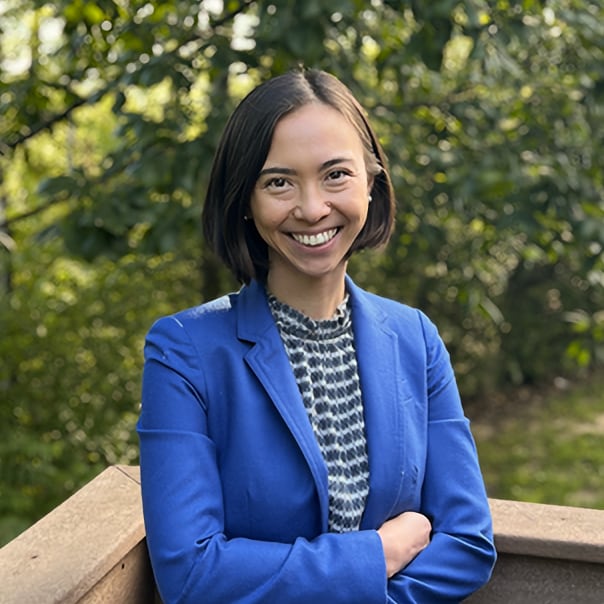
Welcome to Independent Pediatrics with Dr. Laura Hardy

Pediatric Associates of Mt. CarmelCincinnati, OH

Dr. Laura Hardy is a relatively new pediatrician at Pediatric Associates of Mt. Carmel in Cincinnati, Ohio. She is part of an increasingly rare category of early-career doctors — those who choose pediatrics and enter independent practice. Passionate about encouraging new doctors to care for children, Dr. Hardy told us about her journey and why she chose primary care.

Welcome to Independent Pediatrics with Dr. Laura Hardy

Pediatric Associates of Mt. CarmelCincinnati, OH

Dr. Laura Hardy is a relatively new pediatrician at Pediatric Associates of Mt. Carmel in Cincinnati, Ohio. She is part of an increasingly rare category of early-career doctors — those who choose pediatrics and enter independent practice. Passionate about encouraging new doctors to care for children, Dr. Hardy told us about her journey and why she chose primary care.

Discovering Pediatrics and Private Practice

Dr. Hardy discovered her love for pediatrics in medical school. She had been studying ovarian cancer and assumed she would go into obstetrics and gynecology (OB/GYN). She enjoyed her OB/GYN rotation but fell in love when she arrived in pediatrics.

She loved the positivity and energy of the specialty, so she decided to stay. She applied for her residency at Cincinnati Children’s Hospital Medical Center, a nationally ranked children’s hospital and ranked second in the country for research funding. But when the time came to begin practicing post-residency, she knew private practice was the way to go.

Choosing Independence

As a resident, Dr. Hardy particularly enjoyed the hospital’s Continuity Clinic, a weekly rotation where each resident builds their own cohort of ambulatory care patients. This clinical experience allowed Dr. Hardy to build relationships with families and support their children’s healthy growth.

She particularly enjoyed anticipatory guidance, an aspect of pediatrics in which the physician talks with parents about what to expect. The physician discusses developmental milestones, child safety, and best practices for care at each upcoming stage of development.

Anticipatory guidance is essential to preventive care in the community clinic and independent practice setting. For Dr. Hardy, it was a glimpse into the type of whole-child care she plans to provide for the rest of her career.

It’s hard not to be upbeat and happy when you’re dealing with kids. Children are resilient and there is a sense of optimism that is unique to pediatrics.”

Dr. Laura Hardy

Finding Balance in Primary Care

Dr. Hardy appreciates being part of an independent practice that can design its approach to care. She enjoys collaborating with colleagues on best practices. But as much as she appreciates that freedom, she doesn’t see herself opening her own practice anytime soon.

“You don’t get any training, really, for how to run a practice when you’re in residency,” she says. She sees those business challenges as a key reason why pediatricians join hospitals instead of opening private practices. As she puts it, “They have a whole group of people that will do the business side of things for you.”

As a physician at Mt. Carmel, Dr. Hardy appreciates having an administrative team that handles those business aspects. She refers to the practice as “a well-oiled machine” and loves focusing on care, though she’s open to learning about the business aspects over the next five years.

She admits that “you never know” what the future will bring and that she can’t permanently rule out the possibility of practice ownership. “But,” she says, “This would be a steep learning curve for me.”

Dr. Hardy is far from the only physician in her cohort to feel this way. According to a study by the American Medical Association (AMA), the number of private practice owners under 45 dropped from 44.3% to 31.7% in just 10 years.

The Struggle of Independent Pediatrics

It’s not just practice ownership that’s on the decline. The same study showed that between 2012 and 2022, the percentage of doctors in private practice dropped from 60.1% to 46.7%. Of those, nearly half were employees, and 44% were owners.

Meanwhile, the shares of hospital employees and employees in hospital-owned practices increased by three and 9.6 percentage points, respectively. Sizable practices are also on the upswing. The number of doctors in practices with 50 or more physicians grew to 18.3% from 12.2%, while those in practices of ten or fewer dropped to 51.8% from 61.4%.

The AMA attributes some of this change to economic uncertainty, which also seems partially to explain why fewer medical graduates choose pediatrics, as pediatricians tend to be paid less than other specialties.

The Numbers Problem in Pediatrics

As many independent practitioners have been aware for some time, the pediatric profession is in crisis. The Association of Medical Colleges (AAMC) reports that 8% of pediatric residency positions remained empty after the matching process, a dramatic five-point drop in a year. Although most of those positions received doctors from the supplemental match program, some trainees had less experience and needed more attention, straining training programs’ resources.

Meanwhile, the decline in pediatricians has intensified the workload of existing pediatricians and made it more difficult for families to get timely care. If the trend continues, it could affect child health outcomes on a large scale and have long-term consequences as those children grow up.

Pay Gaps and Lack of Exposure

The pediatric pay gap may be one reason the specialty is struggling. According to U.S. Bureau of Labor Statistics, the mean annual wage for pediatricians as of May 2023 was $205,860. For family medicine, the mean annual wage was $240,790.

Part of the reason behind the pay gap is that 38.8% of children in the United States have Medicaid, which the AAMC explains pays doctors less than Medicare and private health insurance. Many young doctors choose not to work in pediatrics because they worry their compensation won’t be enough to cover their student debt and family obligations.

Another issue is that most medical school programs focus on adult care. Most students’ pediatric exposure occurs in hospital settings, where they don’t have the opportunity to experience what Dr. Hardy loves so much: the joy, laughter, and bonding that happens in the doctor’s office.

Focus on the Positives

Despite the profession’s challenges, active pediatricians see plenty of reasons for students to consider pediatrics in general and private practice in particular.

Dr. Jesse Hackell, chair of the American Academy of Pediatrics’ (AAP’s) Committee on Pediatric Workforce, is one of many physicians who have always wanted to be pediatricians. He wanted to care for children even before starting medical school. His inspiration was his own childhood doctor, whose relaxed mannerisms put patients at ease.

Pediatricians like Dr. Hackell often focus on the joys and rewards of serving children, even when the logistical elements of pediatrics are challenging. In a 2024 episode of NPR’s Weekend Edition, host Ayesha Rascoe spoke to Dr. Jeanine Ronan, director of the pediatric residency program at Children’s Hospital of Philadelphia.

“I think kids are just amazing,” she mused. “They want to feel well. They want to bounce back. So, as soon as they have a little bit of feeling better, they are excited and smiling and really engaged.”

Experiences like these are everywhere in private practice, where pediatricians get to see kids grow and recover from minor illnesses — and sometimes, major ones. The year-in, year-out experience of caring for a growing child is something no other type of physician experiences, and it’s one of Dr. Hardy’s favorite parts of being a pediatrician.


A Physician’s Perspective on Recruiting

When we interviewed Dr. Hardy, we asked her how independent pediatric offices could attract newly qualified physicians. She pointed to three key features.

1. Continuity

Her immediate answer was the appeal of continuity. Pediatricians in private practice have a unique opportunity to build meaningful, long-term patient relationships.

Those relationships were a major reason why Dr. Hardy chose independent primary care pediatrics. They’re also a feature of pediatric care that medical students tend not to see first-hand.

2. Flexibility

Another feature Dr. Hardy loves about small-practice pediatrics is the ability to pursue non-clinical career interests, such as quality improvement and pediatric advocacy. She mentions her colleague, Dr. Christopher Peltier, who recently served as president of the Ohio Chapter of the AAP.

Mt. Carmel allowed Dr. Peltier the freedom to take time away from clinical practice to assume that leadership role, which he might not have been able to pursue in a hospital-based practice.

Dr. Hardy sees the freedom to develop her interests as a significant asset for newer physicians. By adopting this mindset and communicating it to young doctors, private practices may be able to attract more candidates.

3. Outpatient Exclusivity

Dr. Hardy also appreciates that she can focus exclusively on outpatient care at Mt. Carmel Pediatrics.

“Inpatient medicine is different than outpatient medicine,” she explains. “The acuity is different. There’s different management. And for me, it was a little bit too much to be doing both of those.”

At Mt. Carmel Pediatrics, Dr. Hardy can concentrate on developing her expertise in primary care.

Professional Development in Independent Practice

As an early-career pediatrician, Dr.  Hardy thinks a lot about the future. Her overarching goal is to deliver top-quality clinical care, so she makes time to stay current with guidelines and best practices.

She also prioritizes creating continuity with families. One of her main reasons for choosing primary care was the opportunity to develop relationships with children and their parents — relationships that help her understand a child’s unique needs.

“If you know the patient, you know when they’re sick; you know when they’re healthy. Being able to differentiate that is what helps make someone a really good clinician.”

Mt. Carmel Pediatrics shares Dr. Hardy’s commitment to excellent care. She proudly describes the practice’s quality improvement collaborations with Cincinnati Children’s. These projects allow Dr. Hardy and her colleagues to stay current with the best methods for delivering care so that patients always receive the best, whether in a private office or a hospital.

Reaching New Doctors: What Works for Today’s Residents

Dr. Hardy understands the job search process and media culture today’s graduating residents experience. During her interview, she shared a few insights with us.

Resident Newsletters

Hardy remembers reading newsletters from hospital coordinators who share job openings and then using those lists to decide who to contact. “I think figuring out who is at the different hospitals and giving the list of who’s hiring can be helpful,” she muses.

Her point is important for independent pediatric practices to remember. Second- and third-year residents have hectic schedules and often work irregular hours. They may not have hours of free time to research practices in their area. Independent pediatricians can reach more candidates by including information about their practice in hospital-based newsletters.

Social Media Strategies

Though she doesn’t use social media often, Dr. Hardy follows several inspiring physicians on Facebook and Instagram. She reads posts from influential colleagues like Dr. Nicole Baldwin, who uses Instagram to increase awareness of patient advocacy, and a Florida-based doctor who spreads awareness of post-hurricane needs.

Dr. Hardy believes social media recruitment would be an unusual strategy, but out-of-the-box techniques can be some of the most effective. Given that doctors don’t have much leisure time to browse online, the greatest potential lies in where they already spend time online.

“Primary care has always been what drives me. I wake up every day excited to go to work.”

Dr. Laura Hardy

Coming Full Circle

As she enters 2025, Dr. Hardy is excited to continue building relationships with patients. She also looks forward to her first experiences precepting new residents and introducing them to the fulfilling world of primary care.

It’s a full-circle moment, as she had her first day as a general pediatrician not long ago. She recalls being “beyond excited” for her first day, which she saw as the culmination of her years of training. Newly qualified to order tests, make diagnoses, and prescribe medications without an attending physician, she felt both daunted and empowered.

“Luckily for me,” she says, “I work with a group of very smart doctors who are always willing to give me advice if I get stumped with a specific case.”

That supportive atmosphere helped Dr. Hardy become the doctor she is today, and she looks forward to supporting trainee physicians. She hopes that by introducing them to the rewards of working in pediatric private practice, she can encourage more talented doctors to work with children.