The Survival of Independent Pediatricians
East Bay PediatricsBerkeley, Calif.



Dr. Rick Oken has seen more than a few things change in his 44 years as a practicing pediatrician. When he finished his residency training in the 1970s, he knew he wanted to build deep and lasting relationships with families, see kids grow up and start their own families, and maybe even treat the next generation of children. So he set up shop as a private practice in the Bay Area of San Francisco, California, and never looked back.
Now, he’s concerned that fewer and fewer young physicians are choosing this path. He sees a trend towards large entities, such as hospital and university-based systems, crowding out independent practitioners, in some cases putting pressure on them to join different tiers of employment within the system. And new physicians – motivated in part by student loan debt and a high cost of living in major metropolitan areas – are eschewing the risks involved with setting up their own business.
“Larger and larger numbers of physicians are no longer going to be independent practitioners,” says Oken. “They’re going to be employed.”
Working for a large hospital system does have its perks, including predictable, regular working hours without the hassles of handling the business side of medicine. The downside, says Oken, is that decision making is in many ways out of the hands of physicians and is driven more by the “bottom line” of the larger entity, where the needs of the patient are only one part of the equation.
“That’s going to be an eye opener for people who finish training programs,” he says.
And as young physicians continue to choose to work for university or hospital systems, patients are increasingly swayed by large advertising budgets and restrictions on where their insurance will be accepted, says Dr. Oken. As a result, independent practices face challenges when it comes to recruiting new patients as well as new doctors.
Despite these obstacles, East Bay Pediatrics continues to thrive, with 10 physicians in the practice and a patient count of nearly 15,000 active patients at two locations in Orinda and Berkeley.
A plan to transition management of the practice to Dr. Christina Vo has been enacted over the course of the last several years, and she’s now handling much of the day-to-day operation. Dr. Oken says having a physician in the group who was willing and eager to take on this role has been key to the practice’s continued success. Dr. Vo says she’s already working to lay the groundwork for a bright future.
“I want to move the practice forward,” she says, “and I want to see us changing and evolving so that we can survive even longer independently.”
Even as he has stepped away from some of the management of East Bay Pediatrics, Dr. Oken continues to sound the alarm regarding the trends he sees in pediatric practice management, and what they may mean for patient care and future pediatricians.
In October of 2010, Dr. Oken gave a talk at the annual meeting of the American Academy of Pediatrics (AAP) plenary session in San Francisco, titled “The Primary Care Physician: An Endangered Species?” In it, he outlines threats independent pediatricians face, and some potential strategies to adapt and survive.
One of the largest challenges involves becoming more comfortable addressing a topic he calls “anathema to the profession:” money. Independent pediatricians are by and large focused on taking care of sick kids, he says. They don’t want to parse out whether a phone call counseling a concerned parent is or isn’t reimbursed, or whether a certain insurance plan covers one procedure and not others. Despite the good intentions, financial concerns have to factor in to larger discussions about the field.
“Someone has to do it or you can’t survive,” he says.
In his 2010 talk, he credits the AAP with recognizing that “financial viability is essential for members to take care of the children.” The mantra of “no margin, no mission” from the AAP Section on Administration and Practice Management (SOAPM) captures the connection: The primary care model fails unless income exceeds expenses. Several factors put primary care pediatricians at a disadvantage, including payment rates that value “procedures” over prevention and “cognitive medicine.”
“We need to be rewarded for outpatient preventative medicine,” Oken says in his talk.
This means assigning appropriate value to the 20 minute phone call or the electronic communication through an online portal that reassures a concerned parent and takes the place of a trip to the emergency room. Pushing back on the methodology that sets rates – and acknowledging the players who shape the discussion, including insurance companies and specialists – is key to change.
Meanwhile, patients are also squeezed by forces outside of their control: Their insurance may be tied to a particular health care system, or they may only be able to see “preferred providers” within a certain network. Technology plays a role in the decisions families make as well, says Dr. Oken, with new expectations around immediate and constant accessibility.
“You have to be on a portal that’s encrypted where a patient can communicate with you or your representative 24/7,” he says. “In the old days it was phone calls. Now it’s answering the computer portal.”
As compared to his small group, a hospital or university-based system has an easier time maintaining this level of access and communication, says Dr. Oken, both in terms of staffing and the investment in technology.

The relatively new specialty of hospitalist medicine is also changing the dynamic between patient and provider in profound ways, and posing new challenges for primary care pediatricians.
“Within five years [from now] pediatricians in an office setting will no longer have privileges to take care of sick kids in the hospital,” says Dr. Oken.
The speed of communication in 21st century medicine has in part prompted this shift, with the system set up to rely on quick answers and feedback. Long gone are the days when leaving a message and returning a phone call in an hour is the norm in a hospital setting.
“The expectation is you can’t come in and make rounds just once a day,” he says. “You’ve got to be there two or three times a day.”
Hospitalists fill that need for round-the-clock availability, and they’re highly trained physicians well-equipped for the role, says Dr. Oken. But for primary care pediatricians, seeing their patients through thick and thin is one of their primary motivators, and that means treating them in the hospital setting.
“I got into this for prevention,” says Dr. Oken. “Because I love the relationships. I see [children] at the time they’re born. They go off to college 18 years later; they get married 10 years after that and they bring their kids back to me. That’s a continuing relationship, and I’ve got some former patients who are 40 years old now.”
For physicians who are so invested in their patients’ long-term health and well-being, ceding their care at the hospital doors can be a challenge that sometimes leads to tension between the pediatrician and the hospital team. It may also be difficult for families.
“You can comment on the care but you can’t intervene,” he says. “That will be hard for patients and for parents.”
The economics of healthcare is in part responsible for this shift. Hospitals are considering a range of costs associated with every patient, including how long they occupy a bed and the level of care they require. Staffing with hospitalists ensures these factors are considered when decisions related to treatment plans are made.
Despite the many challenges independent pediatric practices face, East Bay Pediatrics is leading the way when it comes to adapting to the new realities of the healthcare system.
For Dr. Oken, that has meant mentoring a new managing partner over the course of three years so that she’s well-versed in the nuances of running the business. Dr. Vo says she feels grateful to have inherited leadership of a practice that is thriving in many ways. After taking over as managing partner in May of 2015, she has been working to make the practice more efficient, a process that includes transitioning completely away from paper reports and records. She’s also building a solid foundation for the future by involving the entire staff in strategy sessions that are designed to tackle big picture issues like remodeling or renovating locations, or plans for nurse staffing.
“I don’t want it to be my vision,” she says. “I want it to be a practice vision.”
Her participation in the AAP’s Pediatric Leadership Alliance, a program focused on developing in pediatricians skills related to team leadership and systems thinking, has helped her learn how to bring a group together around a common goal.
East Bay Pediatrics’ team of registered nurses – many of whom do the bulk of phone triage – are a unique asset for the practice, says Dr. Vo. She sees potential for their role to grow, creating a model of collaborative teams that improves patient care and keeps costs down.
“I’d like them to focus their continuing education so that they can each become an expert, whether that’s in school health or newborn care or nutrition, so that we have those experts in our office,” she says. “I think it can really benefit how we can give care.”
With the nursing team focused on education, the physicians can handle the patient’s clinical needs, divvying duties in a cost effective way.
Despite the sustained pressure on independent practices to cede control to larger groups, Dr. Vo sees the benefits as continuing to outweigh the costs when it comes to their current practice.
A failed merger with two different independent pediatric practices cemented just how many variables need to align to make a plan like that come to fruition. Different philosophies around staffing models and compensation plans helped to contribute to the demise of the effort, says Dr. Vo. And since one of the practices did not use an electronic health record system yet, the timeline for implementation of any merger would have been a long one.
“We realized that we were way more different than we thought and it really wasn’t going to work for us,” she says. “But we made the effort because there’s definitely that sense of fear that all of this stuff is changing around us and that we’re going to get kind of pushed out.”
And although some pediatric practices in the area have joined larger systems, Dr. Vo says she continues to have concerns about compensation practices and quality measures that don’t seem to take into account the unique nature of pediatric practice.
“There was an obvious misunderstanding of where money comes from for pediatrics,” she says, “and there was an obvious lack of pediatrics in all of the groups, meaning that you would be starting from scratch.”
Plus, East Bay Pediatrics’ independence allows them to meet patients where they are; for example, when a family lost their employment in a recent economic downturn, the practice was able to work out an arrangement for payment until they got back on their feet. The goal, says Dr. Vo, was to remain “a stable medical home for the children when the rest of life dealt them a blow.” Patients benefit from the practice’s ability to remain nimble and flexible in handling difficult situations on a case-by-case basis.
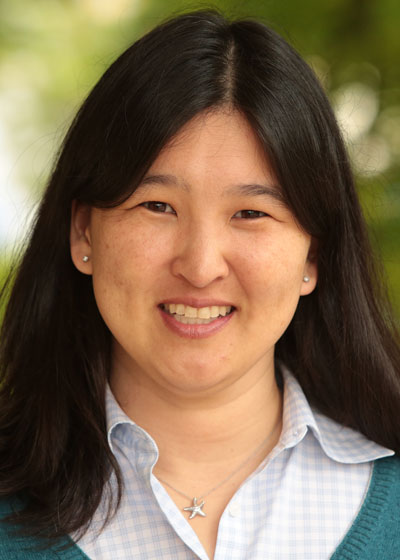
“I want to move the practice forward, and I want to see us changing and evolving so that we can survive even longer independently.”Dr. Christina Vo
While keeping a close eye on the big healthcare players in their area, East Bay Pediatrics is channeling their energy into initiatives that make the practice stronger and more competitive.
The practice collaborates with the University of California-San Francisco on two urgent care clinics, staffed by pediatricians 9 a.m. to 9 p.m. on Saturday and Sunday, and from 6 to 9:30 p.m. on weekdays. The pediatric-specific focus is important, says Dr. Oken, as traditional clinics aren’t necessarily tuned in to the needs of kids. And the practice gets to help cut down on emergency rooms visits for families, which can be stressful and expensive.
“It works out for us and it works out for the families,” says Dr. Oken.
They also use the 8 to 9 a.m. hour for drop-in visits at their office locations five days per week and on Saturdays. Families appreciate this convenience, says Dr. Oken, as parents are sometimes looking to squeeze in a visit before heading to work.
It’s all part of a continuing effort to provide excellent patient care and sustain those long-term, meaningful relationships that inspired Dr. Oken to become a pediatrician more than 40 years ago. In his 2010 AAP talk, he offered a compelling catch phrase for pediatricians: “Change or Die.”
Primary care pediatricians need to “reinvent the job description,” he said in the talk, to include a range of strategies that make the profession more sustainable for those working in it, as well as meet the expectations of families.
For example, nurse practitioners and other ancillary care providers could be taking on more patient care responsibilities where appropriate, which would help practices gain some economic efficiencies and give families another valuable source of information and education.
He also pointed to embracing electronic communication methods and figuring out how to be adequately compensated for this work as an important part of the equation. And offering part-time and flexible positions would help to recruit physicians who may be swayed by the regular hours offered by hospital systems, and make possible the easy access to care families expect.
East Bay Pediatrics isn’t moving ahead with these efforts entirely alone: A group called Brown and Toland Physicians brings together more than 1,500 independent pediatricians and primary care doctors in the San Francisco area to offer benefits for patients and providers. Patients get a network of care options, and physicians see some increased economies of scale on the business side of practice.
Dr. Oken, who is now on Brown and Toland’s board of directors after serving as president of a group that merged with it in 2011, says the group faces an “uphill battle” when competing against some of the big names in the area. He points to the advertising dollars these larger entities have to invest, as well as their name recognition, as significant challenges for the Brown and Toland network.
Even as they continue to work on new ways to recruit patients, the organization has gained recognition for top-notch care. Their Patient-Centered Medical Home was the first practice in San Francisco to earn the highest recognition from the National Committee for Quality Assurance. The group has also focused on developing tools that harness data to match patients with the best care management programs for their needs. This helps to identify gaps in care, improving the patient’s individual experience as well as meet population health goals.
For Dr. Oken, this focus on keeping children and families as healthy as possible is at the heart of the work he does. Huge strides have been made when it comes to the prevention of disease and injury, he says, and no matter how the business of pediatrics changes, a steady march towards improved health and wellness continues to form the core of the profession.
“Some of my partners have never seen epiglottitis. We’ve decreased the risk of SIDS. We’ve got car seats,” he says. “My main job is to prevent disease as well as treat it. There’s not enough money in our economy to treat all of our medical conditions. A better strategy for future generations is to prevent the problems that cost so much, such as obesity and smoking. That’s what makes pediatrics different.”
A resident of Burlington, Vermont, Erin Post has a B.A. degree in English from Hamilton College, and is a graduate of the writing program at the Salt Institute for Documentary Studies. She is currently working on her master’s in public health at the University of Vermont. In her spare time, she likes to bike, ski, hike, and generally enjoy the Green Mountains of Vermont.
Pediatric care is complex enough — navigating for the future shouldn’t be a solo journey. Join host Chip Hart and learn from pediatricians, industry leaders, and policymakers who are shaping the future of pediatric care. Every episode, we explore their stories, their dreams, and the joy they find in medicine. Together, we’re charting the future of children’s healthcare.

The Independent Pediatrician is brought to you by PCC, which provides tools and services to help pediatricians remain independent and in control of their practices.
PCC itself is a fiercely independent business. As a Benefit Corporation, it puts the interests of its clients, community, and employees on an equal footing with those of its shareholders.


 The Impact of Patient PreHistory on Pediatric Care