Dr. Richard Schwartz on the Benefits of Thinking Big and Staying Small
Advanced PediatricsVienna, Va.


With his unruly tufts of white hair and rumpled button-up shirt, Dr. Schwartz nearly looks the part of a mad scientist. He does have an obsessive need to get the right answer; never satisfied with conventional wisdom, he must test and prove it. Over the years, some colleagues and medical students have even found him gruff and unreasonable (he maintains that he has “mellowed”). But, the only thing mad about Dr. Schwartz is his work ethic.
As a pediatrician, Dr. Schwartz has a sterling reputation for expert care of patients and families. He has practiced medicine for 43 years and is the founding physician of Advanced Pediatrics in Vienna, Virginia.
He received his B.S. in zoology and then studied and trained in pediatric medicine at Georgetown University and Children’s National Medical Center in Washington D.C. He is board-certified in pediatric medicine and a fellow of the American Academy of Pediatrics. His clinical emphasis is on pediatric care from birth to adolescence, with special focus on ear, nose and throat pathology and mental health issues.
Dr. Schwartz is also a highly respected scientist. Over the course of his career, he has successfully integrated his research with his private practice, pursuing questions relevant to practicing physicians within the setting of his private clinic. “He has a little bit of everyone in his thinking and everyone will find something of interest in the work he has done,” says Dr. Russell Libby, founder and president of the Virginia Pediatric Group and chief of general pediatrics at Inova Children’s Hospital. Dr. Schwartz has published as many as 340 articles (or more—there are so many, no one is certain), many of which have improved practical clinical practice for pediatricians worldwide. He delights in making his ideas reality on paper. “It gives me great joy to learn,” he explains. “It’s [mostly] small case reports, but 35-40 percent are studies that took a lot of work to do.”
Dr. Michael Pichichero, director of the Rochester General Hospital Research Institute, calls Dr. Schwartz “a rare and special physician and scientist,” and one of a “dying breed.” He says there used to be a dozen pediatricians in private practice doing serious clinical research, but those numbers have dwindled. “It takes so much time and passion to do research when you are trying to see patients in a busy pediatric practice, but Dr. Schwartz has excelled over the years.”
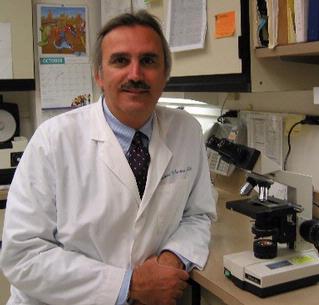
“It takes so much time and passion to do research when you are trying to see patients in a busy pediatric practice, but Dr. Schwartz has excelled over the years.”Dr. Michael Pichichero
Some of Dr. Schwartz’s most influential research is in the area of middle ear disease. “He knows more about diagnosis and management of ear and hearing disorders in children than any pediatrician I know,” says colleague and collaborator Dr. Kenneth Grundfast, chair of the Department of Otolaryngology–Head and Neck Surgery at Boston Medical Center and at Boston University School of Medicine. “He eagerly taught others how to properly examine eardrums in order to detect abnormalities in the eardrum and middle ear.”
In addition to many significant studies on ear infections, he has investigated a wide variety of other clinical topics, including throat infections, drug and alcohol use in adolescents, tympanometry as an instrument for the private office, antibiotics, and vaccine efficacy, safety and testing on children—to name a few.
Just two years ago, Dr. Pichichero and Dr. Schwartz completed a study together in which they investigated how quickly kids can return to school after being treated for strep throat, without being infectious. Dr. Schwartz wondered if children who were diagnosed and received their prescription by noon could return the following morning. “It turned out that they could because he showed that the test for strep throat was negative the next morning by 7 a.m., so the children were not contagious,” says Dr. Pichichero. “It was such a simple idea but the implications were huge since the difference for the child and the working parent was one less day of missed school.”
You’ll also find Dr. Schwartz teaching at the hospital, sitting on intake rounds to help students and residents diagnose their cases. Dr. Libby describes him as an ardent teacher: “He is earnest and impulsive, always wanting to do the best to care for patients, educate all who want to learn, and share his enthusiasm. He is a mentor, intimidator, savior, and mensch.” He enjoys the hospital setting, especially the intellectual game of solving mysterious cases and the exposure to non-standard cases he wouldn’t see in his practice. “No one is more tuned in and astute when a patient case is being discussed. His wealth of information and experience bubbles at every chance,” says Dr. Libby.
Over the years, he’s mentored countless students, visited their patients, pestered students into doing research and assisted them in publishing some 35 case reports—all for free. As Dr. Libby explains: “Somehow, in these proceedings, be them in the hospital with students and residents or at meetings with his peers, the next thing you know you are writing a paper with him, researching a patient, a trend, a curiosity.”
To recognize these many contributions to pediatric medicine, the Dr. Schwartz Pediatric Residency Research Fund was recently established in his honor, with over $100,000 in donor contributions. The fund will support joint resident and attending research projects, as well as educational sessions that further Dr. Schwartz’s passion for intellectual inquiry and lifelong learning. “I have great respect for Richard’s intellect, his inquisitive nature, his compassion, and his boundless energy. In every way Richard has been the best of colleagues—he has made significant discoveries, graciously shared his knowledge with others, inspired young doctors, and always provided for patients the best of medical care,” says Dr. Grundfast.
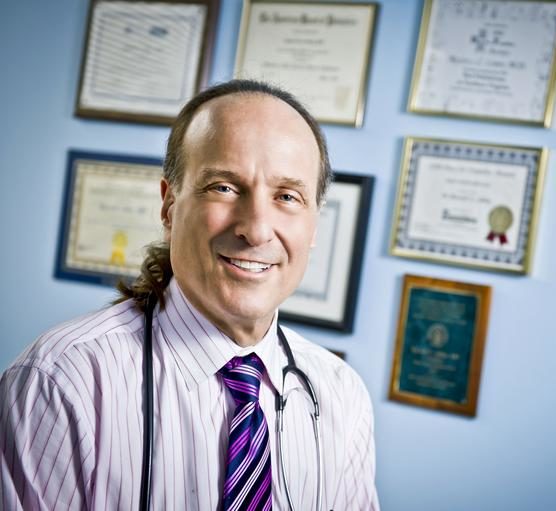
“No one is more tuned in and astute when a patient case is being discussed. His wealth of information and experience bubbles at every chance.”Dr. Russell Libby
With all that under his belt, is Dr. Schwartz looking towards retirement? Hardly. He feels that one of the greatest benefits of owning his own practice is that he’s still able to work. “Nobody said, ‘Grandpa, you put your time in.’” He notes that today he worked over half a day, and this year he’s on track to publish eight articles. “But, do you know I will have had eight publications every single year for more than 40 years?” he adds proudly.
It’s an amazing track record, but it’s utterly extraordinary when you factor in that he was also diagnosed with anaplastic thyroid cancer in March of 2016. When asked, Dr. Schwartz explains pragmatically that it’s a horrible, deadly, metastatic tumor. However, his oncologist did have an option, a combination of new drugs, originally used for metastatic melanoma, that block a gene responsible for revving up the cancer. A handful of physicians are currently trying it with other cancers and there have been some positive results.
It was unknown what effect the drugs would have on Dr. Schwartz, but he knew doing nothing was a death sentence. He realized if he tried the drugs and did his own investigation, regardless of the outcome, others would benefit. “I have records because I’m writing it up,” he says. In the end, the tumor went from 11 centimeters to below five and then he had surgery. “I didn’t mind sacrificing myself, even if it showed it didn’t work. I can win both ways.”
Now he’s eight months into treatment, and very few with his condition make it that far. He still has cancer, but it seems to be under control using the medication. Yet, he cautions: “It could take me tomorrow, but I’m still here.”
For a man at the top of his field, Dr. Schwartz’s humble beginnings almost precluded a career in medicine. “I didn’t think I could get into medical school. I was terrified of physics, especially, and organic chemistry.” He recalls passing physics with a D (“one of God’s interventions”) and says of a C in organic chemistry: “It was just very hard for me.” As a result, he was rejected the first time he applied to medical school, but he quickly applied again and was accepted into three medical schools a few months later.
He went to Georgetown University, where he worked exceptionally hard his freshman year and was awarded a scholarship. Upon receiving it, he made what he called a “deal with God: ‘Get me through this, and I will make sure I do you proud. I’ll do everything I can to become as good as I can.'” His junior year, he had a pediatric rotation at the National Naval Medical Center in Bethesda under an excellent role model and “one of the best teachers ever in pediatrics,” Dr. Andrew Margileth. By the end of the year, he said: “I think I can do this.”
Completing medical school during the Vietnam War, he had a commitment to the Army and entered into a rotating internship, after which he requested placement in a large European city. He ended up in Berlin, where he brought his family and ran the dispensary as a battalion surgeon. In the afternoons, he volunteered in the pediatric department where he gained his first outpatient experience.
After completing his service, he discovered that Dr. Margileth had taken a job at the D.C. Children’s Hospital after leaving the Navy (now called the Children’s National Medical Center). He applied for a pediatric residency there in 1971 and was accepted. He thinks the salary was about $17,000 per year—“Honestly!”—but with military benefits, his family could make it.
His first year, he was challenged by the intensive care nursery and decided to leave pediatrics for family medicine at the end of the year. “It really got to me because of the intensity and amount of responsibility you would have with those little tiny babies.” However, when the time came to switch, he realized he “had made a terrible mistake,” and he continued in pediatrics. With no job at the end of his second year, he stayed on for a third year as a fellow in child psychiatry.
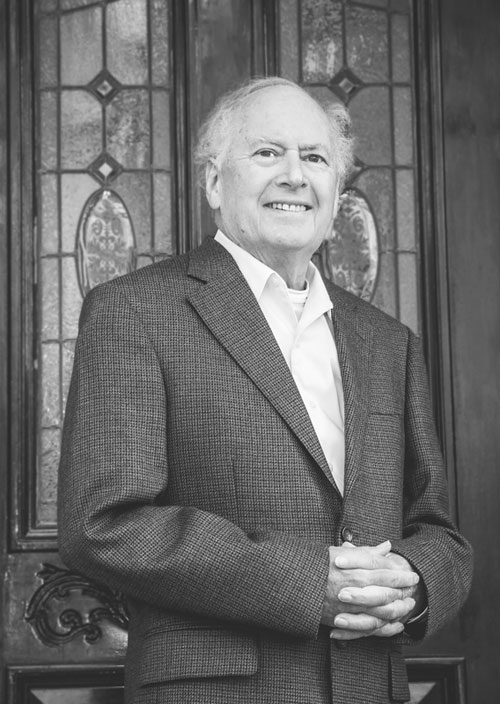
“I didn’t think I could get into medical school. I was terrified of physics, especially, and organic chemistry.”
During his residency, Dr. Schwartz’s formidable curiosity took him beyond standard duties. When he wanted to learn how to perform a tympanocentesis, he asked an ENT resident to show him. Though only ENT personnel performed them at the time, he did a handful on his own. “I did some alone, at night, asking the guard to open up the ENT suite, so I could grab some of the instruments, do my thing, then quickly put it back and wash it off, and then leave them a note that I did that. That took chutzpah!”
He also developed a love of microbiology, cultures and infectious diseases. “I loved that, I was good in that.”
He’d ask residents on the infectious disease ward if they had any interesting cases. He once earned recognition from the hospital chief by thinking outside the box and cracking an arsenic poisoning case on the ward. They had a child with vomiting, diarrhea, fevers, irritability, and “the crazy thing is the kid’s losing his hair.” Suspecting heavy metal poisoning instead of an infectious disease, he marched a urine test down to the lab and requested a hot copper wire test. It turned out that a nanny was poisoning her wards, and Dr. Schwartz saved the patient’s life with the simple bedside test. In the following Friday’s conference in infectious disease, the hospital chief said: “Schwartz? Is Schwartz in the room? I think we ought to give Schwartz a big hand.”
After his residency, Dr. Schwartz joined a pediatric primary care practice with three other physicians. With his enduring passion for microbiology and experience processing tens of thousands of cultures at Children’s under Dr. Margileth, he was eager for a lab. His colleagues were not opposed, but only lukewarm on the idea. So, he paid to set it up himself. “My first incubator was from Sears; it was a chicken egg incubator, and that was my start.”
However, it wasn’t long before his colleagues had an epiphany. The practice only charged $7 for an office visit ($8 if you had to come in on the weekend), and Dr. Schwartz charged $5 for a culture. “So, they said: ‘This is good.’” Soon, they all learned to process cultures, and the practice enlarged the lab.
He maintained an academic social link with several people in microbiology at D.C. Children’s Hospital after he left, which led to perhaps a thousand referrals once he was in private practice. “Every antibiotic that came out, I would get referrals from Children’s because nobody at Children’s besides ENT could lance an eardrum—and culture it. I didn’t have to take them to the operating room, which was their way of doing it. I just did them in the office.”
It was during this time that Dr. Schwartz somewhat inadvertently began his research and publishing career. The combination of his extensive work with ear infections, antibiotics and cultures led him to question a standard protocol and then prove it wrong.
The practice at the time was to treat patients with ear infections who were under age 5 with ampicillin, and treat patients over age 5 with penicillin. Physicians used ampicillin to treat Haemophilus influenza, which caused ear infections. However, there was a widely-held misconception that H.influenzae rarely caused infections in children over 5. Therefore, they assumed patients over 5 had pneumococcus and treated them with the appropriate antibiotic, penicillin. However, Dr. Schwartz was finding a lot of H.influenzae in the cultures he performed on older children. “So, I said: ‘This is nonsense!’ But nobody else had done [the research].” By completing studies that proved that H.influenzae did cause infections in patients over 5, he stopped the protocol of switching antibiotics.
When Dr. Schwartz reported his findings, they were published in the Journal of the American Medical Association (JAMA). “When I did my first publication, it was in JAMA. That’s unheard of, a first publication in JAMA.” He added, “That made me a big person right away.”
He loved that he had made a small contribution to the field and changed the way pediatrics was practiced. He started attending ENT conferences and networking with others from universities across the U.S. “I kept on thinking of things—‘How can I improve it?’ I would sit in my chair, I’d go in the shower, and I’d think: ‘This sounds like it would be a neat thing to try.’ I’d scratch out a diagram of how to do the study.”
Dr. Pichichero agrees: “He asks practical questions that every pediatrician asks themselves. The difference is that, when there is a question to be answered and the answer is not known, then he does a study to answer it.”
There were very few grants for his research, so he funded almost all of his studies himself. “Funding was difficult, but we could underwrite ourselves using our other successful pharmaceutical grants.”
Throughout his research career, he has continued to undertake evidence-based studies that challenge unproven protocols and paradigms. With the recent legalization of marijuana, many studies he completed in the 1980s, 1990s and 2000s about the underestimation of the effects of marijuana on adolescents and its efficacy as medicine are part of the public dialog.
He believes people become addicted to pot very quickly and develop lifestyles that are compatible with the drug. “If you start smoking [pot] at a time when it’s going to affect you [developmentally], or you become a daily smoker, it’s going to erode your ability to function at your highest. It’s going to erode your goal seeking behavior. You don’t give a damn.”
“You don’t have to deal with the bureaucracy of large factories or hospitals that tell you the best way to practice. Not that the ideas are wrong, but it’s going to be cookie-cutter.”
Research is not the only place where Dr. Schwartz has been outspoken in his work. After 28 years with his first practice, “My mouth got me into trouble,” he begins.
In the late 1990s, his practice joined five other practices and venture capitalists in a pediatric practice management group. The group promised financial stability and success in an environment that many independent practices were finding increasingly volatile. In the meantime, the practice management company managed all the money. “I feel like it was built on a pyramid system,” he says. “They struck me as bullshitters from the beginning. I asked them several questions on this and that, and it seemed like they were going to milk the cow, keep the cream, and give us skim.” However, he was alone in his opposition, so he went along.
In the end, his instincts were right. Dr. Schwartz thought they had inadequate managers, a bloated administrative staff, made poor investments and drove the business into the ground. “When I started really mouthing off, we were actually making, month by month, less than the nurses. Less than the nurses! It wasn’t one month, it was like five months.”
Many of his colleagues had to buy their way out of their practices, but Dr. Schwartz was fired. Though he had been diligent in his contract negotiations to ensure that he protected his research and had no restrictions on his employment should he leave, he overlooked the stipulation that he could be fired without reason. Representatives for the management company pulled out his contract and showed him the highlighted section. “We have the legal right to do this,” they said.
His firing turned out to be quite a blessing. He left and immediately started his own practice in 2000. “I was 60! I was not a young guy,” he says. But, he had two key assets: “I had people and had the money. I had a good amount of money saved up, so that was not a problem, and I had real good people who helped me.” Those people were a handful of treasured nursing, business and research staff who came with him when he left the pediatric practice management group, and ultimately worked alongside him for 20, 30—even 40—years. “They’re like family; I love ‘em,” he says gratefully.
He also credits patient loyalty for making it on his own, because nearly 600 families left the pediatric practice management group with him.
Regaining and running an independent practice for the past 16 years has been the highest reward of going out on his own. “I still think it’s enjoyable; it’s a good lifestyle. You can see children all the way up the line.” He continues: “You don’t have to deal with the bureaucracy of large factories or hospitals that tell you the best way to practice. Not that the ideas are wrong, but it’s going to be cookie-cutter.” This may sound familiar if you’ve been to Dr. Schwartz’s office—he codified this commitment to independent and individualized medicine in his mission statement: “In a world of big box stores and retail clinics, it is our mission to maintain the feel of a small practice while continuing to deliver big ideas as a leader in healthcare.”
Similarly, he has enjoyed the leeway to integrate his interests with his work: “You can tailor-make the practice to what you want it to be. [In my office,] we have a place where we provide care, we also do as much research as we want, and we teach. We have residents.”
Considering he found the profit structure at the pediatric practice management group “odious,” managing his revenue has been equally important. “[In a managed practice], you work and work and work and you make a living, but you don’t make a great living. You’re at their mercy and you don’t see any future. You’re not going up. They’re going to keep [the profits]. You’re not going to get any.”
Looking forward to 2017, Dr. Schwartz sees more of the same. “Working makes me feel great because otherwise, at home, I’ll be doing nothing.” His research coordinators have secured “a lot” more studies than in recent years. “For the coming year, we’ve been exceedingly fortunate.”
Regardless of how much longer he works, he wishes for his practice “to survive, to do well, to continue to practice really good medicine.” He sees this continuity with his colleague, Dr. Christina Ulen. “You can want to be a partner, you can put in the money, but are you going to have the skill to administrate, and put the time in and know what you’re doing?” he asks. “She does.”
He knows the research will end when he leaves, but he understands; it’s a labor of love and not very profitable. “You have to pass a lot of tests and have certificates. You have to have contacts. People have to know you. They have to trust you.” For Dr. Schwartz, however, it continues to be a pleasurable distraction. “I like to write,” he explains. “Give me one weekend and a case report, and I’ll have the first and second drafts ready for you at the end of the weekend.” When chided about this mad work ethic, he insists research is his singular obsession. “I’m not like that about any other thing!”
Erin Kilpatrick is a Seattle-based writer and instructional designer who has worked primarily in the software and non-profit sectors over the last 20 years. She is currently a senior technical writer at F5 Networks. She is thankful to The Independent Pediatrician for the occasional opportunity to change gears from publishing technical and instructional articles to writing human interest stories.
Pediatric care is complex enough — navigating for the future shouldn’t be a solo journey. Join host Chip Hart and learn from pediatricians, industry leaders, and policymakers who are shaping the future of pediatric care. Every episode, we explore their stories, their dreams, and the joy they find in medicine. Together, we’re charting the future of children’s healthcare.

The Independent Pediatrician is brought to you by PCC, which provides tools and services to help pediatricians remain independent and in control of their practices.
PCC itself is a fiercely independent business. As a Benefit Corporation, it puts the interests of its clients, community, and employees on an equal footing with those of its shareholders.


 Empowering Our Pediatricians