Tiger Pediatrics’ Long Road to Independence
Tiger PediatricsColumbia, Mo.



The practice was founded in 1973 by three pediatricians and had grown to an eight doctor practice by the time Dr. Pecorak arrived on the scene in 2006. The physicians owned the building, but the practice was run by a large management group. “The first thing I noticed when I got there was that none of the physicians knew anything about the business of their practice,” said Dr. Pecorak. “They just showed up, went to work, and cashed their paychecks every other month.”
Dr. Pecorak doesn’t have a business degree, but when faced with the abrupt departure of his business partner in Lorain, he had learned how to manage his practice. He started writing paychecks and learning the ins and outs of a profit and loss system. With a sound understanding of the business side of pediatrics, he discovered that the new group’s management practices were highly unusual. “There was really no management of the group per se, and the guy in charge of the management company had no expertise in pediatrics,” he said.
He also noticed that there was little oversight from physicians regarding how the management company operated the business. “For starters, I knew that none of the physicians ever sat down and looked at their personal financial statements. Everyone received their own financial statement and had their own expenses and they never discussed them between one another.” Being the new guy on the block, Dr. Pecorak kept his head down and worked hard to build his clientele, all the while taking note of the flaws he saw in the business operations.
After biding his time and earning the trust of the other pediatricians in the group, Dr. Pecorak slowly began pointing out these irregularities. “The first thing I did was ask the other pediatricians to look at their profit and loss statements each month. They had never really sat down in a room together, so we started meeting on a monthly basis.”
Putting everyone in a room together regularly soon revealed inconsistencies in the profit and loss statements. They discovered that the management company wasn’t able to offer them adequate explanations. “The manager couldn’t explain specific line items or provide any insight into why things were the way they were,” said Dr. Pecorak. “As far as I could tell, the formula for how they assigned the expense of vaccinations was something akin to astrophysics.”
If these question marks weren’t enough to set off alarm bells, Dr. Pecorak also discovered something very concerning about their insurance contracts — they never received copies of them to look over or agree to. The management company didn’t handle the insurance contracts, but instead used an independent physician association (IPA) to handle negotiations whom the physicians paid a quarterly fee.
“We had contracts, supposedly, but we could never review them or make recommendations for what we would like to see negotiated,” said Dr. Pecorak. “They would just do the negotiations and send a note that said ‘By the way, we signed on for a renewal with Cigna or Aetna’ or whoever it may have been.’ I have no clue what was in those contracts since I never saw them myself,” said Dr. Pecorak. He also said the IPA didn’t seem to have any specific training or understanding of what a pediatric practice needed in an insurance contract.

“They couldn’t explain a specific line item or provide any insight into why things were the way they were … And, as far as I could tell, the formula for how they assigned the expense of vaccinations was something akin to astrophysics.”
During this time, the group practice was using a cumbersome electronic health record (EHR) system that the physicians were looking to upgrade. “I wanted to get the group to look at at a pediatric-specific EHR,” said Dr. Pecorak. The management company was looking at software that could be used throughout the multi-specialty group to save costs. “I told them they were making a big mistake.” Dr. Pecorak brought in an external consultant, who came away with an even stronger negative feeling about the group’s management company. “That really opened my eyes to the fact that the problems with the management company were too big to solve.”
The chief financial officer of the management group had begun to notice that the pediatricians were waking up. “She knew we weren’t little sheep that were going to keep being led to the slaughter month after month and she was getting nervous,” said Dr. Pecorak. “During one meeting, she let it slip that some financial details were not being handled in an ethical way. That was the last straw.”
At this point, Dr. Pecorak got the group together and told them: “There is no solution to this unless we do things on our own.” All eight partners were on board. They quietly signed contracts with a pediatric EHR and a pediatric billing service. With the help of consultants from both companies, they began the process of disengaging from the multi-specialty group and the management company.
Dr. Pecorak contacted two healthcare attorneys, one in St. Louis and one in Kansas City, fearing that because they represented about 50 percent of the management company’s total income, they were going to put up a big fight. “We learned that the management company legally owned all of the patient records in our old system,” said Dr. Pecorak. “While we were already facing the huge task of starting our own practice, the possibility of having to redo 10,000 charts on top of that was extremely daunting.”
Luckily, by this time several other specialties had already left the multi-specialty group and one had taken legal action to get their patient records from the management company. The precedent had been set. Still, Dr. Pecorak said they were prepared for the worst.
“At that point, the management company was financially weakened and they backed off.” The pediatricians negotiated with the management group and their EHR vendor to get all of their data transferred to their new computer system, a process Dr. Pecorak described as the biggest hassle of the whole ordeal.
While they had originally said they would stay in the old clinic space, the management company was unwilling to complete building renovations that were badly needed. “There was a coal furnace in the basement that had to be lit every morning to get heat, there was soot coming out of the vents, and rust that periodically came out of the faucet,” said Dr. Pecorak. Even though some of the physicians had invested in the building and were leery of the costs involved in moving, the dilapidated condition of the space made it a clear decision.
In May of 2011, they moved less than 500 yards away into a brand new space and opened the doors of their new practice, Tiger Pediatrics. “We quit work on Friday and by Monday were up and running again,” said Dr. Pecorak. “It was really pretty seamless.”
“The eight pediatricians in the practice barely knew each other. We each had our own silo to retreat to and our own nurses.”
Not only did the group have a new space, new name, and new management, Tiger Pediatrics also underwent a change in culture. In the old space, each doctor had his own spacious office. “The eight pediatricians in the practice barely knew each other,” said Dr. Pecorak. “We each had our own silo to retreat to and our own nurses.” In the new office, the majority of the space is dedicated to patient care and each of the doctors now shares an office with a partner. “This has been crucial in creating an atmosphere of camaraderie and trust,” said Dr. Pecorak. Additionally, the group now meets every Monday and the leadership group meets every Tuesday, whereas before there were no formalized meetings.
The partners could no longer just come in, see patients, and collect a paycheck. “At our old practice, many of the problems went on for so long because the doctors didn’t care about the business side of things,” said Dr. Pecorak. “They just wanted to see their patients and go home. The toughest meetings were about the call schedule and vacation time. Those things created way more concerns than money did at the time. Now, everyone has to show up, dig in, and work to make sure the practice succeeds.”
Within nine months, they had paid off their bank loan and were making more money than they had at the old practice — with the same insurance contracts.
While starting a new practice is always a huge undertaking, even with a full load of active patients, the biggest risk is how long it will take to become profitable. “We went about two or three months with little or no paychecks,” said Dr. Pecorak. Within nine months, they had paid off their bank loan and were making more money than they had at the old practice — with the same insurance contracts.
The new practice is located on the fourth floor, providing great views of the city below. “We hired an interior designer who selected tasteful and modern decorations for the waiting area and exam rooms, and kids love riding up and down in the glass elevator,” he said. The previous practice, while still in business, no longer has a pediatric group. The old space remains vacant five years later.
The city of Columbia, Missouri, stretches out over 60 square miles and has a huge patient base. When Dr. Pecorak moved to town ten years ago, the city was years behind other areas of the country in terms of a competitive healthcare market. The University healthcare system was not yet a major competitor and the private practice sector was predominant. That competition has since increased dramatically. With a new CEO at the helm, the University’s goal is to take over as many private practices as they can to develop their narrow network, said Dr. Pecorak. Another healthcare system, which owns a competing nearby hospital, has also added a number of satellite offices for family practitioners and internal medicine.
Despite the increased competition, Tiger Pediatrics has retained roughly 50 percent of the area’s market share for pediatrics and has grown from eight to 12 providers since opening their doors. The competition has, however, spurred them into action. “In the past, we’ve been able to put our shingle out and stay busy, but we know we need to work harder than that to retain our market share and stay independent.”
Over the past few years, they’ve expanded the practice, opening two new branch offices — one in downtown Columbia and one in the southern part of town — in addition to their clinic in the nearby town of Moberly, Missouri, that they’ve had for some years. “Columbia is a small city of about 125,000 people, but for some reason people think that driving 15 minutes is really inconvenient and don’t want to do it. The newest office is not far from us, but makes it more convenient for patients,” said Dr. Pecorak. “We’re listening to the environment that’s out there. The next thing is population health and managing populations and we feel that we need to be where the patient is rather than them coming to us.”
They are also increasing their hours and hiring nurse practitioners to help them keep up their patient volume. “We used to be open on Saturdays until noon, and will now be open both Saturdays and Sundays, and weekday evenings until 7 p.m.,” he said.
In the midst of the increasingly competitive healthcare environment, Tiger Pediatrics has grown and adapted. So what’s their reason for wanting to stay independent? “All of us are dedicated to the idea that we can provide better care as private practitioners than as part of a healthcare system. We have control over how we care for and treat our patients,” said Dr. Pecorak. “We’re also stubborn Midwestern people that don’t want to be told what to do by anybody.” Additionally, he knows they are able to do better financially as an independent practice. “Hospitals are not in the mode of managing private practices. There’s too much overhead, and too many hands in the pot to be as efficient.”
In addition to adding satellite offices and expanding their hours, the practice is also working toward improving care for existing patients. That’s where Dr. Adam Wheeler, who is known as “the numbers guy” of the practice, comes in. “Since we already have about 50 percent of the market share in the area, I’m not sure if we can grow much more,” said Dr. Wheeler. “The way we’re going to do better financially is by doing a better job of taking care of the patients that are already in our care.”
Last year, the practice used their EHR recaller to nearly double the rate of well visit coverage among 7 to 11 year olds. This effort also generated nearly $300,000 in additional revenue. “That’s a lot of patients now coming in for checkups that weren’t before,” said Dr. Wheeler. They have also changed their office policy so that patients with ADHD must be current on their well visits in order to get medication refills. These changes have helped bring current patients in the door and improved the care they receive.
This year, the practice has been working toward becoming a certified Patient-Centered Medical Home. “The process is a practical way to transform our practice, especially in terms of becoming more patient-centered than visit-centered,” said Dr. Wheeler. He said it has helped them improve their operations in everything from screening teenagers for depression to working better as a team. The practice didn’t have a formal process for tracking adolescents who have been screened for depression before December 2015, but have taken their coverage from one percent to 36 percent in just the last six months. “These improvements have been very valuable from a clinical perspective,” said Dr. Wheeler.
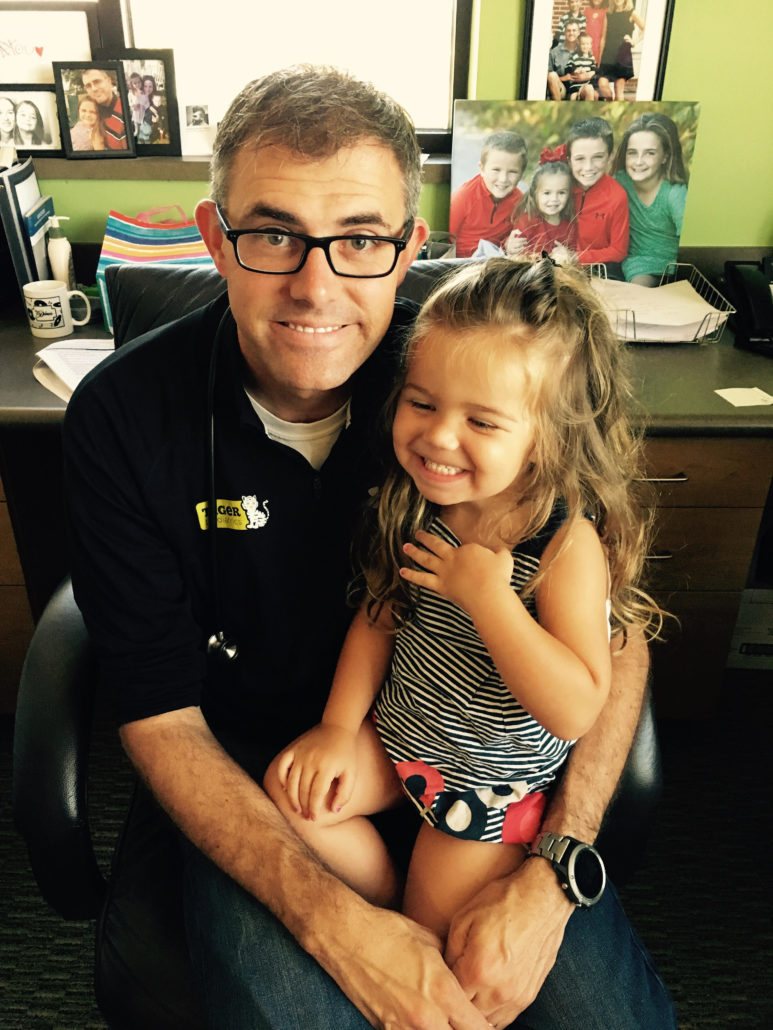
“We say that we have to be the biggest fish to avoid being eaten.”Dr. Wheeler
The next challenge could very well come from the University healthcare system, whose employees make up a large portion of the community. Dr. Pecorak said that a healthy percentage of their patients and income is tied to a healthcare plan that is exclusive to the University of Missouri employees. “They currently allow us to see their patients, but whether or not that continues is the big question mark that hangs over our head,” he said. “If they wake up one morning and change their minds, that’s going to pose a serious risk. Every fall, that contract is up for renewal. We hold our breath to see if we’re included in the narrow network and go from there.”
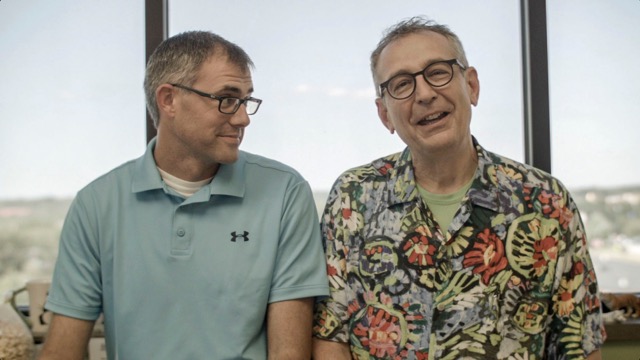
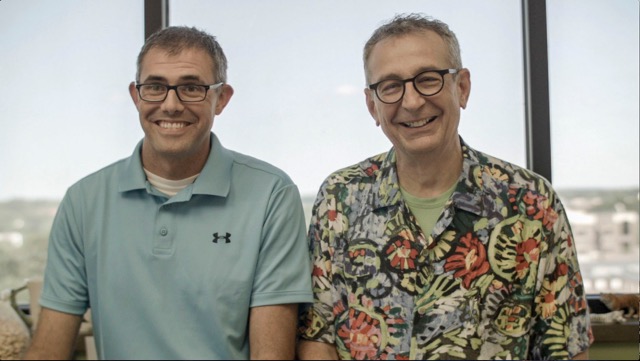
Other physicians in the area have realized the magnitude of the threat to private practice. Several physician groups have since joined together to form an Independent Physician Network (IPN) and Dr. Wheeler has been named the chief medical officer of the group.
“Our goal is to create a narrow network insurance plan that we can take to employers in the area to help save them money and receive better care,” said Dr. Wheeler. Although the group is still in the early stages, Dr. Wheeler said he’s hopeful about what they could do by working together clinically instead of in their own silos. “With this type of model, everyone’s interests are more aligned. Right now, I don’t know how much medication costs or what is the most expensive part of the care I provide. I don’t need to know. But having that knowledge and the financial incentive to make things more efficient is a really exciting possibility,” he said. He added that if they aren’t able to to create a viable insurance plan, the other groups in the IPN are likely to be bought out or go under.
While Tiger Pediatrics is currently a large, busy, and financially successful practice, both Dr. Wheeler and Dr. Pecorak see the mounting pressure from the two nearby healthcare systems as a continuous challenge to their ability to stay independent. “I can look out my window and see both of them every morning,” said Dr. Pecorak. It’s a good personal reminder that if I don’t mind my P’s and Q’s, I could end up becoming part of them.”
The numbers of independent physician practices in the U.S. has decreased to 38 percent as of 2014. Large healthcare systems, insurance companies, and federal legislation are dictating how healthcare will be provided in the future. Drs. Wheeler and Pecorak feel strongly that independent physician practices are still an integral part of the healthcare solution for patients.
Although Dr. Wheeler also feels the pressure, he said what motivates him to stay independent is the ability to provide better patient care for the community. “I strongly believe that having physicians with the ability to make real decisions at all levels of the organization results in the best care for patients,” he said.
“We say that we have to be the biggest fish to avoid being eaten,” said Dr. Wheeler. “Growth became a way to avoid being consumed by someone else. So far it’s been successful.”
Katy Demong has a B.A. in English writing from St. Lawrence University and an MFA in writing from Goddard College. She’s been writing about current issues in health care and health information technology for almost 10 years. She lives in Salt Lake City, Utah and loves playing tennis and hiking with her dog.
Pediatric care is complex enough — navigating for the future shouldn’t be a solo journey. Join host Chip Hart and learn from pediatricians, industry leaders, and policymakers who are shaping the future of pediatric care. Every episode, we explore their stories, their dreams, and the joy they find in medicine. Together, we’re charting the future of children’s healthcare.

The Independent Pediatrician is brought to you by PCC, which provides tools and services to help pediatricians remain independent and in control of their practices.
PCC itself is a fiercely independent business. As a Benefit Corporation, it puts the interests of its clients, community, and employees on an equal footing with those of its shareholders.


 Dr. Richard Schwartz on the Benefits of Thinking Big and Staying Small