A Tale of Two Pediatric Practices
How the South Carolina Pediatric Alliance reimagines independent practice.
South Carolina Pediatric AllianceColumbia, S.C.


Dr. Kevin Wessinger and Dr. Debbie Greenhouse have been called the yin and yang of pediatricians.
Dr. Wessinger, president of Sandhills Pediatrics, has business acumen and a strong interest in the financial side of pediatrics. Dr. Greenhouse, one of the owners of Palmetto Pediatrics, has one foot in the world of state policy and advocacy, and has built a practice around serving children with special needs. In the not too distant past, they were considered competitors in the marketplace of pediatricians in the Midlands region of South Carolina. Now, thanks to some out-of-the-box thinking and a willingness to take a risk to ensure their independent practices continue to thrive, they are collaborators and co-founders of a pediatric alliance they see as a model organization for all pediatricians in South Carolina.
The idea for the South Carolina Pediatric Alliance (SCPA) began percolating in the summer of 2014, when Dr. Wessinger attended a PCC Users’ Conference and, with his practice manager, attended a couple of sessions about closer collaboration among pediatric practices. Dr. Jill Stoller president and CEO of BCD Health Partners LLC, outlined a model called Group Practice Without Walls (GPWW), and Dr. Wessinger remembers being intrigued by the idea given his practice’s situation. The local hospital in the Midlands region of South Carolina was putting increasing pressure on Dr. Wessinger’s practice to join their accountable care organization (ACO), despite what he describes as little benefit to his own pediatric practice.
Dr. Greenhouse, who at Palmetto Pediatrics was receiving similar, repeated pitches to join the ACO, says that she also realized that “the two practices were much better off working together than trying to work separately to maintain our independence.”
Since Sandhills and Palmetto had previously formed a medical supply buying group to save money by achieving economies of scale, and the practices had long been working closely together in a statewide quality improvement learning collaborative, the kernel of a partnership had already been laid. A GPWW seemed like a good fit for the two largest pediatric practices in the area for several reasons: It allowed each practice to maintain its own clinical identity, while at the same time it helped them to work together on the financial aspects of pediatric practice.
Says Dr. Wessinger: “That’s the beauty of a group without walls. You get the added benefits of being larger but at the same time you get to keep your independent culture.”
Although a GPWW can vary based on the needs of a particular set of practices, it generally requires practices to have a shared tax ID number, a common master fee schedule and electronic medical record system, as well as a standard set of employee benefits including health insurance and retirement plans. The clinical “face” of each practice remains the same: Palmetto and Sandhills retain their identities as care centers, with patients seeing little to no difference when they visit their pediatricians.
For SCPA, this meant creating a central business office (CBO) that housed billing and insurance staff, as well as human resources personnel and referral departments. With Palmetto at the time boasting five offices with 50 or so employees and 16 pediatricians, and Sandhills bringing another five offices and 18 pediatricians into the fold, with a similar number of employees, this was no small undertaking.
After initial conversations between the two practices that cemented the plan for form a GPWW, and bringing in attorneys and a consultant, they set an aggressive timeline: The goal was to have the SCPA up and running in about five months, by January 1, 2015.
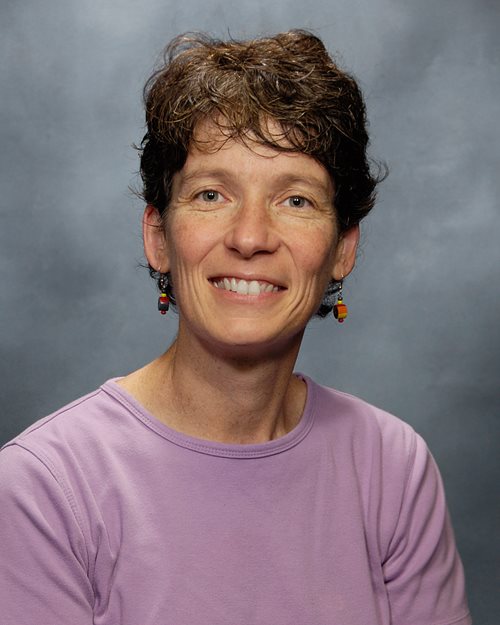
“You really do feel like you can make a difference here. Pediatrics in South Carolina is a pretty close knit group.”Dr. Debbie Greenhouse
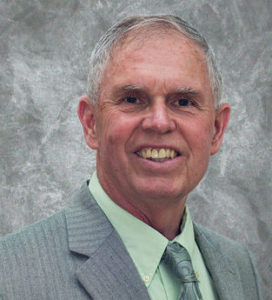
Ken Fenchel
Ken Fenchel, a practice administrator at Sandhills Pediatrics for 25 years, proved to be instrumental to the transition to a GPWW. He combined knowledge of the “boots on the ground” work that needed to be done to make the GPWW happen with a deep understanding of the landscape of pediatrics. He characterizes the effort to form the GPWW as a three-pronged approach: Dr. Wessinger and an appointed clinical director took the lead on clinical integration of policies and procedures. The chief financial officer (CFO) from Palmetto Pediatrics was appointed as SCPA’s CFO, and she headed up the transition of the group’s financial accounts and practices. Her financial skills were invaluable to cost-saving efforts. Fenchel handled everything related to vendor contracts for supplies and maintenance, as well as training for office staff for the entire organization. He also worked with a physician and a clinical coordinator from Palmetto to transition them to PCC for their electronic medical record (EMR).
As with any organizational change, there were bumps in the road, but Fenchel says that the two groups by and large remained committed to a larger purpose, which was to maintain the quality of care they were providing to their patients as independent practices, and use the savings they were seeing through bulk purchasing to expand offerings for their patients.
“Our whole goal when things were getting a little bit rocky was to make them look at the big picture,” he says. This, combined with an approach that involved everyone in the process, helped the team to create a common set of policies and procedures based on best practices gleaned from both Sandhills and Palmetto.
“People tend to respond best if they are in the information loop and they are given at least some explanation as to why you are doing things,” he says.
The complementary skill sets of Dr. Wessinger and Dr. Greenhouse – Fenchel calls them the “yin and yang” of pediatricians – also helped to keep efforts on track and moving forward. Dr. Greenhouse brought in-depth understanding of quality improvement work, while Dr. Wessinger had expertise in business. With a five-member board of directors governing the SCPA, they have an organizational structure that draws on a range of expertise. Fenchel took on the role of chief operating officer (COO) once the SCPA was up and running in January of 2015, but retired in December to co-found the Independent Practices Management Services Organization.
By all accounts, the alliance has exceeded expectations when it comes to finances. In the almost two and a half years since SCPA was formed, Dr. Wessinger says they’ve realized savings on clinical supplies and vaccines, as well as malpractice insurance.
“One larger than expected benefit was savings on health insurance for employees,” he says, since forming the alliance boosted them into a “large employer” tier that brought more inexpensive rates.
Dr. Greenhouse also points to the quality improvement work that the GPWW has helped to shepherd – work that was already in progress before the SCPA, courtesy of the statewide quality improvement learning collaborative – but is now buoyed by a shared name and mission. They’ve also been able to participate in the ACO by sharing their data in the name of quality improvement.
But instead of having the agenda set for them – a possible outcome, had they joined the ACO without the GPWW – the SCPA can collect and share data on terms that allows the group to “continue to focus on the things that would benefit kids” when it comes to quality improvement, says Greenhouse.
“By forming the group practice without walls, we were able to go back to the ACO and say, ‘Hey these are the things we want to focus on, and because we are now such a large group working with you, this is what we’re going to focus on,'” says Dr. Greenhouse.
The list includes issues that have been flagged by the American Academy of Pediatrics as being important nationwide, including childhood obesity, immunization rates, well child care rates, and mental health screenings. That data sharing relationship continues to benefit both the SCPA and the ACO – in fact, Dr. Wessinger now serves as the pediatric representative on the ACO’s board of advisors – allowing the organizations to collaborate to improve healthcare for children across South Carolina.
Another benefit the SCPA has afforded is one that is hard to come by for many independent pediatricians: time. Dr. Wessinger says that the GPWW has put them in a “much better position to be able to deal with new payment models,” as well as use the data they’re collecting in the service of planning for the future.
“As part of having the larger group structure it has allowed me to devote a full day a week to management time where I can spend time in meetings with insurers…where before it would have been very tough,” he says. “Now we can pull up numbers, we can move around reports and we can brainstorm. It gives us the ability to plan ahead and research what’s coming.”
As the CEO of SCPA, Dr. Wessinger has fielded calls from colleagues in different parts of the country interested in the GPWW, and he recently gave a talk at the 2017 Pediatric Supergroup Meeting (pediatricsupergroup.com) hosted by PCC, telling the story of South Carolina Pediatric Alliance and offering tips and advice for others looking to take this path.
“I think it’s the ideal model to move forward for pediatricians who are independent minded,” he says.
Dr. Kevin Wessinger speaking at the 2017 Pediatric Supergroup Conference.
For both Dr. Wessinger and Dr. Greenhouse, independent practice is key to how they serve their patients.
Dr. Wessinger, a South Carolina native, attended the Medical University of South Carolina, and did his residency at the Children’s Hospital of Alabama. In 1989, he was the fifth doctor to join the Sandhills Pediatrics. He’s seen the practice open satellite offices over time, and bring in additional pediatricians, but they’ve always remained committed to their overarching philosophy when it comes to patient care.
“We were always pretty fiercely independent and did not want to become hospital employees,” he says.
That same approach serves as the foundation for Palmetto Pediatrics and underlies Dr. Greenhouse’s history. After attending Clemson University on a fencing scholarship, Dr. Greenhouse attended Emory University School of Medicine – she met her husband on the first day of medical school – and then completed her pediatrics residency at Richland Memorial Hospital in Columbia and “never left.” She’s been practicing in the state for 25 years.
“You really do feel like you can make a difference here,” she says. “Pediatrics in South Carolina is a pretty close knit group.”
She points to her office’s location – a roughly five minute drive from the statehouse in Columbia – as helpful when it comes to her involvement in legislative advocacy for children in South Carolina. She also has the ability to teach medical students and residents: Every physician in Palmetto Pediatrics is on the faculty of the South Carolina School of Medicine. Sandhills is also highly involved in education through the medical school. Participation in research through the AAP is another focus – Dr. Greenhouse says being an independent pediatrician gives her the latitude to get involved in projects that make sense for her patient population. She sees a large number of patients with special needs, including cerebral palsy, autism, and Down syndrome.
“We can respond with no middleman and without anyone else telling us what we can and can’t do,” she says. “We are able to do what is best for our patients without having to ask anyone else’s permission.”
And then there are the relationships with patients that stretch across generations. This comes after over two decades practicing in the community, Dr. Wessinger says. He often sees former patients who now have kids of their own.
“I’ve seen a fair number from cradle through college,” he says. “If I’m going to see a first baby in the room the first thing I do is look at the demographics to see if I know one of the parents already. I’d say half the time I do.”
Moments when those connections shine through – when you can point out how much a child looks like her mom, for example – bring another dimension to the work.
“You say that and mom just beams,” says Dr. Wessinger.
Next up for the SCPA? A free-standing newborn and lactation support center, long a dream for both practices, but made possible courtesy of the broader patient population and pooled resources of the alliance. The South Carolina Lactation and Newborn Wellness Center – set to open in West Columbia in the fall of 2017 – is envisioned as a third care center for the Alliance and a resource for all pediatricians in the metropolitan area. The space will be set up specifically for new mothers to allow them to access resources and services in a “spa-like” and supportive atmosphere. Future possibilities for the building include a pediatric wellness center that provides nutrition services and obesity-related programming. Another goal for the SCPA is to offer additional pediatric mental health services – like many parts of the country, it is a dire need for their community – but they are still working on a staffing model that’s financially viable, says Dr. Wessinger.
Still, the GPWW gives the SCPA the latitude to continue to explore ways to meet their patients’ needs in new and exciting ways, including the possibility for the organization to expand into other areas of the state. As the SCPA forges ahead with their young organization, Dr. Greenhouse points to a conversation she had with her daughter, who is starting medical school in the fall, as a good sign for their venture.
“She said she could see herself joining a practice like mine, and being happy in a practice like mine,” says Dr. Greenhouse. “For someone who is about to enter the study of medicine to say that, in my view that tells us we are doing something right.”

“That’s the beauty of a group without walls. You get the added benefits of being larger but at the same time you get to keep your independent culture.”Dr. Kevin Wessinger
A resident of Burlington, Vermont, Erin Post has a B.A. in English from Hamilton College, and is a graduate of the writing program at the Salt Institute for Documentary Studies. She is currently working on her master’s in public health at the University of Vermont. In her spare time, she likes to bike, ski, hike, and generally enjoy the Green Mountains of Vermont.
Pediatric care is complex enough — navigating for the future shouldn’t be a solo journey. Join host Chip Hart and learn from pediatricians, industry leaders, and policymakers who are shaping the future of pediatric care. Every episode, we explore their stories, their dreams, and the joy they find in medicine. Together, we’re charting the future of children’s healthcare.

The Independent Pediatrician is brought to you by PCC, which provides tools and services to help pediatricians remain independent and in control of their practices.
PCC itself is a fiercely independent business. As a Benefit Corporation, it puts the interests of its clients, community, and employees on an equal footing with those of its shareholders.


 Springtime in Texas: A Husband and Wife Team Put Community, Family First