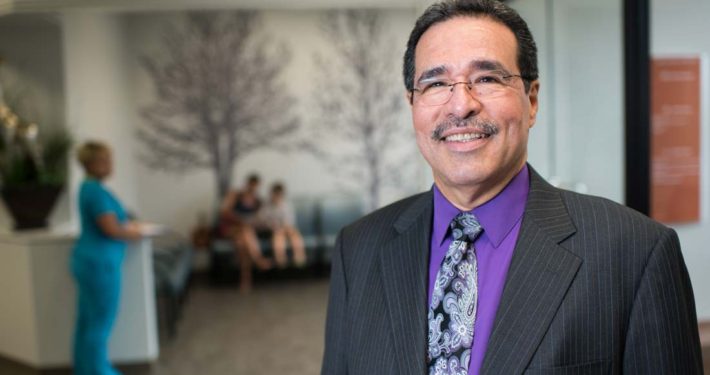
Dr. Nelson Branco
Dr. Nelson Branco has practiced pediatrics in a variety of locations since graduating medical school in the mid-1990s. He has provided care for the Navajo Nation in New Mexico through the Indian Health Service, in the Haight-Ashbury neighborhood of San Francisco through a free clinic, in Oakland at a Federally Qualified Health Center, and through his current practice, Tamalpais Pediatrics, in Marin County, California.
“The issues I’ve seen as I’ve grown up as a pediatrician have definitely shifted based on the communities I’ve worked in,” he says. “Socioeconomic status, the amount of trauma experienced, and family resources all play a role.”
Despite the distinct needs in each place, some concerns for adolescents stretch beyond state borders and life circumstances.
“I take care of a significant percentage of kids who are struggling with substance abuse or sexuality or mental health concerns,” he says. “It’s something that I’ve seen over the past five to ten years and it has become even more a part of what I do.”
At Tampalpais Pediatrics, one focus is on family education. Free group classes are designed to give parents and caregivers the resources they need to help their adolescents with a number of issues. Topics include gender-specific classes on anxiety and depression in teens and pre-teens; parenting children with ADHD; and nutrition classes for the high school athlete. The groups allow parents to connect with each other while also receiving high quality information and support.
“We try to get in front of [the issues] and help parents increase their ability to communicate,” says Dr. Branco. “Parents really appreciate having a resource and having someone to talk to.”
His practice has also partnered with two different therapy groups to co-locate mental health professionals onsite, a mix that currently includes two clinical psychologists, a social worker, a clinical counselor, and a marriage and family therapist. One goal for the practice is to work towards fully integrated behavioral health services.
When it comes to drug use – a perennial concern when caring for the adolescent population – Dr. Branco points to marijuana legalization in California and other states as a particular challenge. He says he’s concerned that an increasing number of teens may abuse the drug as a way to cope with stress and anxiety, as opposed to “working on other skills or ways to address the situation.”
“I don’t think that the availability [of marijuana] has changed significantly, but the stigma and the perception of risk has definitely changed,” he says.
Another change has been teens’ increased use of social media, with specific concerns for their developmental stage.
“The internet has turbocharged everything, even for adults,” he says. “You marry that cultural impatience with the impulsivity and the stress around social connectedness that is normal for adolescents, and it gets really hard for them.”
At the same time, there are positive effects from social media use, as he’s seen teens and tweens who identify as LGTBQ find community.
“We still see a significant number of kids who aren’t out or aren’t comfortable,” he says. “For the most part they do get to connect online and see that there is something more than what their day to day is now at their high school.”
For Drs. Alinsky, Schonfeld and Branco, working with adolescents centers on building trust and respecting their individuality. They see promise and potential in every young person, no matter their background or life story, while working to improve systems of care for their benefit.
“I try to understand where kids are coming from,” says Dr. Branco. “And I try to make no assumptions while at the same time I encourage kids to push past barriers.”