An Advocate and Innovator: Dr. Gail Schonfeld
East End PediatricsEast Hampton, NY



A letter posted in the pediatric residency director’s office at North Shore University Hospital led Dr. Gail Schonfeld to a 38-year career serving children and families in East Hampton, N.Y.
She was just finishing up her residency at North Shore and was looking to practice in a rural location. When she saw the letter, sent to the school after East Hampton lost their longtime pediatrician, she figured she may as well check out the opportunity.
“A few people in town banded together to recruit a physician,” she says. “[Someone on the committee] interviewed me, showed me the space, and gave me the job.”
Soon enough, Dr. Schonfeld was setting up her office in a building that still housed an ether machine in the attic and a small room upstairs for a nurse to stay overnight if necessary. Fresh out of residency, she was eager to dive in.
“I was so excited and so happy to own my own practice,” she says. “It was one of those moments of pure happiness and joy.”
Patients started showing up at East End Pediatrics almost immediately – the rural location meant families relied on the local pediatrician for a wide range of issues — and they had been without one for a year and a half. Although Dr. Schonfeld had confidence in her ability, it was a jarring transition to go from being part of a team of pediatricians during residency to acting as a solo practitioner.
“I remember the worrying I did about my patients,” she recalls. “I would think about them in the middle of the night.”
In the pre-internet 1980s, medical journal print subscriptions and textbooks gave her the additional information and the confidence she needed to treat the myriad ailments she would see in a given day.
“I hunkered down and started reading,” she says. “I taught myself what I needed to know.”
Over the years, Dr. Schonfeld has diagnosed Rocky Mountain fever and febrile seizures, treated fractures, tended to premature babies, and counseled teenagers about birth control and safe sex. In her embrace of comprehensive, family-centered care, she’s following in the tradition set by Dr. Emma Bellows, the first female physician in the Hamptons area. Dr. Bellows, born in 1896, served the community for over 50 years at a time when women physicians were rare. She went on to write a book, titled Memoir of a Town and Country Doctor, that documented the challenges practicing medicine in the early 20th century presented.
“It was just so eye opening to me, how hard it must have been for those physicians,” says Dr. Schonfeld.
Dr. Bellows died in 1990, eight years after Dr. Schonfeld moved to town and opened her practice. She credits Dr. Bellows with laying the foundation for her own practice, which has been focused on establishing long-term relationships with families.
“One of the nice things about being in the same community for a very long time – particularly a rural community – there’s a certain stability to the patient population,” Dr. Schonfeld says. “For many of my patients, I took care of their parents. I have taken care of them since they were born. They know me. They trust me. They’ve come to me when they were sick and injured and I have built up their trust.”
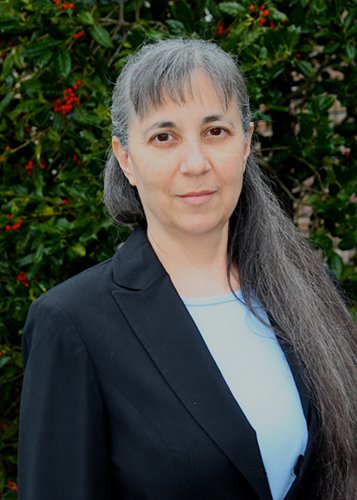
“I have leveraged my successes to my advantage. Part of being resourceful is understanding your tools and allies. Then align your goals and work in a collaborative fashion.“Dr. Gail Schonfeld
Dr. Schonfeld came to medicine early in life. She graduated high school in Freeport, Long Island, at the age of 17 and went right into a six-year program that combined undergraduate study at Boston University and medical school at Boston University School of Medicine. With her father a physician and her mother a nurse, the path seemed familiar, although she did briefly consider a career as a concert pianist.
“I realized I hated performing for other people,” she says with a laugh.
In medical school, she thought she wanted to become a surgeon, but wound up disliking the culture. During a third-year rotation in pediatrics, she immediately bonded with her preceptors and fell in love with the work. Soon, she abandoned her plans to go into surgery.
“I had a talent related to young children,” she says. “I changed my mind.”
Although she hadn’t necessarily envisioned running her own practice as she went through medical school and residency, the opportunity in East Hampton turned out to be the right choice, one that has led to over three decades of service and strong bonds with patients.
“If I can’t hold and cuddle a baby at least once a day I can’t sleep right,” she says.
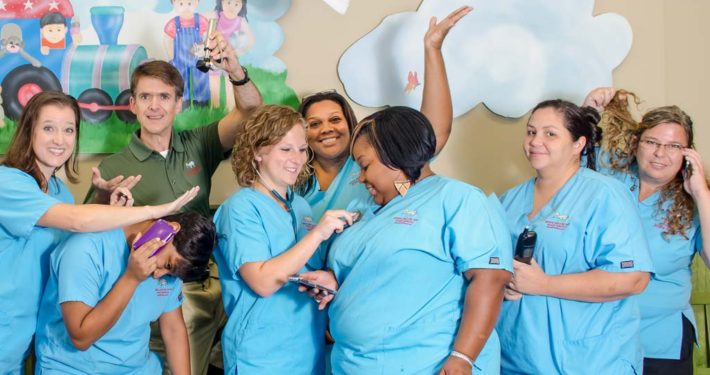
In 2002, she moved into a new office space that she designed from scratch, allowing her to expand her practice’s offerings. It now boasts a high complexity CLIA-certified lab, with an x-ray facility, and a pharmacy in the same building. She’s integrated mental health into her practice, added a dietician to her staff, and when the COVID-19 pandemic hit, was able to rapidly expand telemedicine. Now boasting three physicians, East End Pediatrics has become an essential part of the East Hampton community.
Her practice sees patient numbers balloon in the summer months as New York City residents head to the Hamptons to their summer homes.
“For half of my patients, I am not their primary care provider,” she says.
This means East End Pediatrics is often braced for urgent care visits and increased volume on holiday weekends like the Fourth of July and Labor Day. It also translates into a certain amount of flexibility: Dr. Schonfeld says they handle procedures that other practices may refer elsewhere, like suturing, stabilizing fractures, and IV placement for hydration. They offer same day urgent and emergency care appointments 365 days a year and have around-the-clock on-call availability.
“We have people visiting the area who request urgent care services,” she says. “Or they summer out here and they like the services we provide and become our patients.”
Over the years, she’s learned to use her connections in the community to advance the health of children. When she saw more and more children lacking access to dental care in the early 2000s, she formed a non-profit called the Pediatric Dental Fund of the Hamptons. Galas and events raised awareness and money, bringing families in the region together around the cause. The funds went to local pediatric dentists to help cover the costs of providing care to children in need.
“I have leveraged my successes to my advantage,” she says. “Part of being resourceful is understanding your tools and allies. Then align your goals and work in a collaborative fashion.”
One innovation she recently began piloting: mental health care integrated into the practice. Part-time mental health professionals, paid on salary, provide care. A patient’s insurance is billed through her practice, streamlining the process and allowing more immediate access. Established about five years ago, she’s still working through insurance-related challenges, but is optimistic that her efforts are filling an important essential service.
“I think there’s been a real awakening when it comes to teens in terms of being more forthcoming with their mental health problems in general, and specifically with their primary care provider,” she says.
During the COVID-19 pandemic, East End Pediatrics has had to quickly adapt to families returning to their summer homes to quarantine.
“Every year in July and August the population swells to three times normal and I have to accommodate providing care to a much larger population in the practice,” she says. “My volume literally doubles. Now it started in mid-March and is continuing through to the fall.”
This has meant setting up separate areas of the practice for well-child visits and COVID-19 related visits. They’ve expanded hours to allow for fewer people in the practice at a given time. Telehealth has also become an integral part of their approach; Dr. Schonfeld recently wrote an opinion piece for the AAP Voices blog encouraging routine and preventive care even during the pandemic, touting telehealth as one tool pediatricians should deploy.
“A parent shouldn’t be afraid of going to the doctor,” she says in the piece. “There are ways to deliver the care patients need and still be safe.”
“I will break down that wall.“Dr. Gail Schonfeld
Dr. Schonfeld is entering her sixth and final year as a member of the American Academy of Pediatrics Section on Administration and Practice Management (SOAPM) Executive Committee. She also serves on the Payor Advisory and Advocacy Committee.
Her motivation to serve is simple: she wants to connect, share information and advance the field of pediatrics. She calls these groups a “lifeline” when it comes to tackling challenges in her own practice and hopes to give back to others.
“I like to talk and vent and share and teach,” she says. “I am all about pediatricians remaining viable in independent practice, and I want them to have access to work I’ve already done.”
This includes her work on mental health integration. A grant allowed her to begin the pilot; now, about 90 percent of the program costs are covered by insurance. She continues to push commercial insurance companies to recognize the value of integrated mental health care for children, citing the SOAPM mantra, “No margin, no mission.”
“It’s a great mission, but you need to be able to have the margin or it just doesn’t happen,” she says. “I have been fighting that one in SOAPM fashion, trying very hard to negotiate appropriate contracts for appropriate payment so that I can afford to pay appropriate wages and recruit appropriate people.”
She’s presented on this and other topics at national conferences and continues to explain what she has learned in any way that she can. Dr. Schonfeld has shared spreadsheets, budgets and “deep dive financial analyses” on services she’s instituted, including the high complexity CLIA-certified lab and the mental health program, with colleagues through the AAP, in the hopes that independent pediatricians can innovate and stay competitive.
“A lot of people have given up and sold out, and that’s to the detriment of patient care and their own well-being,” she says.
Her engagement has earned her special recognition: she laughs that she once received a special “Razzy Award” congratulating her for having the highest number of posts on the SOAPM listserv. She calls the AAP a “lifeline” and the hundreds of pediatricians active on the listserv a “virtual group of friends.”
“SOAPM has provided major leadership at the Academy and helps them move in the direction of advancing the needs of pediatricians,” she says.
Dr. Schonfeld remains committed to moving forward with mental health integration and other initiatives, because she sees the need in her community and in communities across the country. When the system does a disservice to her patients, she’s going to continue to try to change it.
“This is how you provide cost-effective, high quality mental health services to patients,” she says. “It’s like hitting your head against a brick wall over and over. I will break down that wall.”
In her nearly four decades in practice, she’s seen the field of pediatrics evolve in positive ways, from the time of Dr. Bellows until now. Keeping an eye on the big picture – and working with the AAP to create systems of care that work best for children and families – has become her calling. And she’s just getting started.
“It’s taken 40 years to get to where I am. It doesn’t happen in a day,” she says. “I want to play some small role in moving things in the right direction.”
SOAPM membership is open to physicians, residents, medical students, non-physicians actively involved in the administration and practice of pediatric medicine, and non-practice administrators employed in a job related to pediatric practice management. To learn more and join SOAPM, visit SOAPM Membership Criteria.
A resident of Burlington, VT, Erin Post has a BA degree in English from Hamilton College, and is a graduate of the writing program at the Salt Institute for Documentary Studies. She is currently working on her master’s in public health at the University of Vermont. In her spare time, she likes to bike, ski, hike, and generally enjoy the Green Mountains of Vermont.
Pediatric care is complex enough — navigating for the future shouldn’t be a solo journey. Join host Chip Hart and learn from pediatricians, industry leaders, and policymakers who are shaping the future of pediatric care. Every episode, we explore their stories, their dreams, and the joy they find in medicine. Together, we’re charting the future of children’s healthcare.

The Independent Pediatrician is brought to you by PCC, which provides tools and services to help pediatricians remain independent and in control of their practices.
PCC itself is a fiercely independent business. As a Benefit Corporation, it puts the interests of its clients, community, and employees on an equal footing with those of its shareholders.


 Serving the Whole Family Through Developmental Pediatrics