Making Decisions Together: A Web-Based Approach to Screening and Early Intervention
CHADIS



In the early 2000s, Dr. Barbara Howard and her husband, Dr. Raymond Sturner, set out to harness the power of the internet to help pediatricians assess patients for mental health issues. Twenty years later, they’ve revolutionized how early screening and intervention unfolds in pediatric offices across the country by making available online more than 600 screening and diagnostic tools.
The approach centers on an evidence-based, standardized approach to screening. A web-based platform they developed called CHADIS, or the Comprehensive Health and Decision Information System, gives pediatricians access to screening, diagnostic, and data collection tools for a range of health issues, from autism and ADHD to depression and asthma. Families have the opportunity to identify goals and concerns ahead of an office visit, as well as fill out the appropriate screening tools online. When they come into the practice, they can have a focused and detailed conversation with their pediatrician based on those results, allowing for shared decision-making about treatment plans and further follow-up.
When it comes to screening, it’s important to shift the focus away from deciding if there is an issue based on “in the moment” conversations between a family and a pediatrician, says Dr. Howard, as research has shown that this type of interaction misses most children who could use additional help or treatment.
“When pediatricians simply ask, the parents may be rattled or they may not realize their kid has a problem,” she says. “It turns out that informal questioning is not accurate. And clinicians’ observations of children is also not accurate. If you really want to improve detection of these problems, particularly detection early when signs may be more subtle, you need to use a screening tool.”
The recommendation for early assessment and intervention comes from the national level: The American Academy of Pediatrics’ Bright Futures Guidelines advises a range of screenings at specific developmental stages throughout childhood. CHADIS includes all of the recommended screenings in the most recent edition of Bright Futures and many others.
Dr. Howard says the goal is to offer pediatricians the tools they need to address complex issues while helping them to make the most of the time they have with each family.
“We want to make it easier for pediatricians to provide evidence-based care for children, in particular for developmental and behavioral topics, because that’s an area where they tend to have less training than in other areas,” she says.
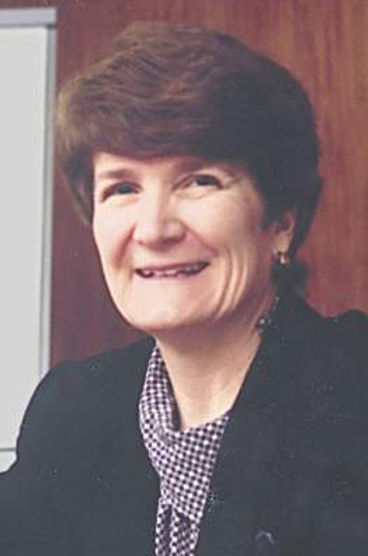
“We want to make it easier for pediatricians to provide evidence-based care for children, in particular for developmental and behavioral topics, because that’s an area where they tend to have less training than in other areas.”Dr. Barbara Howard
A legend in the field of developmental and behavioral pediatrics, Dr. Howard is an innovator and influential teacher. She earned her M.D. from Johns Hopkins University School of Medicine in 1975 and completed pediatric residency training at Children’s Hospital Medical Center in Boston. During her child development fellowship at Harvard, she trained with the late Dr. T. Berry Brazelton, the groundbreaking professor of pediatrics and researcher who developed the Neonatal Behavioral Assessment Scale and authored the classic book Infants and Mothers.
In the late 1970s, Dr. Howard returned to Johns Hopkins to lead the Center for Teenaged Parents and Their Infants and served as director of the developmental-behavioral resident training. As an assistant professor of pediatrics at Johns Hopkins, she is a sought-after public speaker. In October of 2019, she received the American Academy of Pediatrics’ C. Anderson Aldrich Award for outstanding contributions to child development, an honor that acknowledges her leadership as well as her passion for teaching and mentoring.
This focus on sharing knowledge – and listening to pediatricians and families – is at the heart of CHADIS’ continued success. Dr. Howard points to the development of a comprehensive asthma management system as one example of how feedback shapes the screening modules available through the portal.
“We found that most asthma care wasn’t happening at separate asthma visits,” she says. “It was happening as part of regular checkup visits.”
Based on this information from pediatricians, the CHADIS team created a functionality that allows parents to indicate whether their child has asthma on a “simple little questionnaire about chronic conditions,” says Dr. Howard. A “yes” answer automatically triggers the asthma follow-up questionnaire, so that the doctor coming into a well child visit, without having done anything extra themselves, has the ability to use validated information to determine how well the child’s asthma is doing.
Improving social determinants of health screening has also been a recent focus for Dr. Howard and the CHADIS team. Although national organizations like the American Academy of Pediatrics have consistently stressed how poverty and associated social determinants of health can affect long-term outcomes for children, Dr. Howard found through talking with pediatricians that many lacked access to a consistent, validated method to assess their patients for risk and act on results. CHADIS stepped into the void.
“We modified an existing social determinants screener and made it into something called the FASS, which is Family Assessment of Safety and Stress,” she says. “We found that practices actually detected all kinds of problems that they didn’t know existed before.”
Of course, once a problem is identified, pediatricians and families need support and resources to address it. A patient-specific template, or PST, is available for the FASS and other screening tools for ADHD, asthma, depression, and substance use prevention. These templates are pre-populated by the parent’s or teen’s questionnaire results. When there is a barrier to a needed health behavior change, the clinician can see a suggested motivational interview personalized by the results, prompting a conversation about how to best move forward. Dr. Howard emphasizes the importance of empowering families with the right information to make decisions. A MemoryBook Care Portal – accessible through the CHADIS interface – provides families thousands of high-quality resources automatically tailored to a child’s developmental stage and any concerns identified through screenings. It also serves as a place for parents to review milestones in a child’s life and get suggestions for stimulating activities to promote development.
“It’s valuable to clinicians because they want to do the right thing – they want to give [families] the resources. They just don’t always have time,” says Dr. Howard. “We’ve got over 20,000 resources in both Spanish and English in the CHADIS database.”
Pediatricians who screen patients using evidence-based tools – and document that work – also produce revenue. CHADIS automates scoring and generates billing codes so that screening is supported by payment.
“When it’s easier to do screening tools and they’re automatically assigned, you tend to do more screening tools, and that brings in income, on average between $15,000 and $38,000 a year,” she says.
Another way online screening and assessment can generate revenue is through providing the data for reports that help practices meet requirements for Patient-Centered Medical Home designation.
“This helps practices get the information they need in a seamless way for validation of their patient centered medical home status,” says Dr. Howard. “They get increased reimbursement for doing it that way, but most importantly they’re doing better care.”
While CHADIS provides tools in service to patient care, a different arm of the enterprise, called the Center for Promotion of Child Development Through Primary Care, focuses on research to validate tools and develop new ones in partnership with Total Child Health. An array of academic and commercial institutions have collaborated on many fronts: more than $24 million in federal and Foundation grants have flowed to the Center and to CHADIS, as well as 13 National Institutes of Health and Centers for Disease Control Small Business Innovation Research Awards.
One research project focuses on improving autism screening. It’s a critical challenge, as the average age of diagnosis is four years, says Dr. Howard, “well after the time that early intervention works the best.”
The project takes a set of 400 children who received an autism screening and diagnostic testing at 18 months-old as the foundation for the development of a machine learning-based questionnaire that selects the “best items in the best tools for each patient” to generate more accurate results.
“The algorithm is determined by the data we have already, but then when an individual patient’s parent, goes in and does the questionnaire, the next question they get depends on the last question they answered,” says Dr. Howard. “It’s individualized to each kid and their characteristics. That allows you to take advantage of the very best logic for scoring of all the questionnaires that went into making the tool.”
Total Child Health and the Center are currently focused on improving care for teenagers through two new modules in CHADIS. One, under development through a partnership with Harvard, aims to identify and prevent teen substance use. A patient who screens positive for substance use receives a series of questions about their life goals as well as what they view as the pros and cons of using. All of this information is funneled to the pediatrician before an office visit.
“Now the doctor is armed with this argument, this incentive,” says Dr. Howard. “When they’re working with the patient, they can see this information about the teen’s strengths and goals, and they can bring it up to motivate healthier choices, using a motivational interviewing process.”
The second module under development with a team from the University of Colorado uses a similar set-up to detect and manage teen depression. One goal is to use the time the pediatrician has with the patient to motivate them to follow-up on a referral for treatment.
“Often [patients] don’t take action to do something to resolve their depression, even though depression is extremely treatable,” says Dr. Howard. “The teleprompter uses the motivational interviewing style to help them choose to address the issue in ways that are acceptable to the teen.”
A chat bot follows up with the teen about the goals they set or about depression symptoms and gives them additional information on next steps.
A cluster randomized controlled trial is planned to study whether use of the system results in higher rates of screening, reductions in depressive symptoms, and higher rates of patients accessing treatment.
The anonymized data collected through CHADIS also serves as a “unique population health resource.” A 2017 paper published in Current Developmental Disorders Report, authored by Dr. Howard and Dr. Sturner, cites as one example the important role that data from CHADIS played when researchers sought to update the Pediatric Symptom Checklist to retain its recommended status as a psychosocial screen.
“The result provided the desired national recommendation for the test and a publication in the journal Pediatrics,” according to the paper. “This rapid access to data was at no cost to the authors and resulted in a much larger and more representative sample than had been obtained in all their prior studies.”
Now that CHADIS is in use in 46 states and nine countries, with over five million questionnaires delivered and more than 2,500,000 patients enrolled, Dr. Howard and co-authors point to the system’s vast potential to support a variety of important research reliant on large anonymous datasets.
Looking ahead, as the COVID-19 pandemic continues to rage across the country, Dr. Howard points to the critical role online screening can play in keeping kids as healthy as possible. The American Academy of Pediatrics recently issued guidance about supporting the emotional and behavioral needs of children and families during the pandemic, emphasizing how the public health emergency has “only exacerbated” the growing trend of behavioral and emotional challenges in children.
Dr. Howard worries about the long-term effects of delays in screening.
“Some kids who could have been picked up are now six months behind in getting their intervention or even detection,” she says. “And that doesn’t mean that they’re coming in tomorrow, because we’ve got this backlog.”
When patients and families can access screening tools from home, they’re less likely to fall behind.
“CHADIS is really perfect for the new climate of healthcare, which is more remote care,” she says.
Unfortunately, disparities in access to the internet mean that some families are being disproportionately impacted.
“Not everybody can afford a cell phone. Not everybody can afford a good broadband signal,” she says. “I’m really sad about the health inequities that already existed and that the pandemic has exacerbated.”
As the field grapples with all of these complex challenges, education promises to bring clinicians together to find solutions. In addition to a wide range of e-chapters, videos, and policy guidelines as well as a full textbook on behavioral and developmental pediatrics available through CHADIS, Dr. Howard points to the free monthly case conferences she co-moderates as a great learning opportunity. Offered on the third Tuesday of every month at 12:30 EST, they are open to pediatric clinicians across the country.
“We really enjoy it, and it seems like our participants enjoy it,” she says. “Some of them have become real friends as a result of the process.”
The goal is to support pediatric clinicians and the families they serve as together they tackle the complex challenges children face growing up.
“Behavior and development actually constitute 25 to 50 percent of the presenting problems in pediatrics,” she says. “And pediatricians have maybe one month of training on behavior and development [in residency]. These topics are difficult, and clinicians deserve some support to help deal with their challenging cases. We’re there to help them.”
A resident of Burlington, VT, Erin Post has a BA degree in English from Hamilton College, and is a graduate of the writing program at the Salt Institute for Documentary Studies. She is currently working on her master’s in public health at the University of Vermont. In her spare time, she likes to bike, ski, hike, and generally enjoy the Green Mountains of Vermont.
Pediatric care is complex enough — navigating for the future shouldn’t be a solo journey. Join host Chip Hart and learn from pediatricians, industry leaders, and policymakers who are shaping the future of pediatric care. Every episode, we explore their stories, their dreams, and the joy they find in medicine. Together, we’re charting the future of children’s healthcare.

The Independent Pediatrician is brought to you by PCC, which provides tools and services to help pediatricians remain independent and in control of their practices.
PCC itself is a fiercely independent business. As a Benefit Corporation, it puts the interests of its clients, community, and employees on an equal footing with those of its shareholders.


 Lessons from the Pandemic: Opening the Doors During COVID-19