Parental Choice, Public Health, and Vaccine Hesitancy in Tennessee
Plateau PediatricsCrossville, TN


In July of 2021, the Tennessee legislature mandated that the Tennessee Department of Health stop all vaccine outreach to children and adolescents, requiring that the DOH suspend sending reminder postcards to families about receiving their second dose of vaccine. How does this mandate impact independent pediatricians? And what are its implications for the relationship between the Tennessee legislature and the medical community? Dr. Suzanne Berman, an independent pediatrician in Crossville, TN, offers insights into the real conversations happening in her community.
Vaccine hesitancy, a phenomenon that is particularly prevalent in the U.S., has become a buzzword over the past months of the COVID-19 pandemic, capturing the complex cultural, political, and social forces at play during this moment. The state of Tennessee currently serves as a microcosm of this tension between vaccine hesitancy, public health guidance, and politics.
The Tennessee legislature, composed of twenty-seven Republicans and six Democrats, has become increasingly hostile towards vaccinations and the medical and scientific communities. In July, the legislature mandated that the Tennessee Department of Health (DOH) stop all vaccine outreach to children and adolescents, requiring that the DOH suspend sending reminder postcards to families about receiving their second dose of vaccine. The mandate also includes cancellations of vaccination events on school property.1
These restrictions don’t only refer to the COVID-19 vaccine; they also discourage public education events and outreach on the HPV vaccine and other vaccines administered to teenagers. While the Tennessee DOH COVID-19 webpage contains accurate information about the safety of vaccines, the agency has essentially canceled any vaccine communication that could be deemed “soliciting to minors,” according to an article in the Tennessean. That same article reports that Tennessee already, “lags behind most of the nation in the race to immunity. Only 38% of Tennesseans are fully vaccinated, and at the current pace the state won’t be 50% vaccinated until March 2022, according to health department estimates.”
Dr. Michelle Fiscus, the former medical director of immunization programs at the Tennessee Department of Health, was fired shortly after she claimed that conservative lawmakers “have embraced misinformation about the coronavirus vaccine.” Regarding her firing in July 2021, Dr. Fiscus later wrote: “My job was to roll out COVID-19 vaccine across the state and to make sure that that was done equitably and in a way that any Tennessean who wanted to access that vaccine would be able to get one. I have now been terminated for doing exactly that.”2
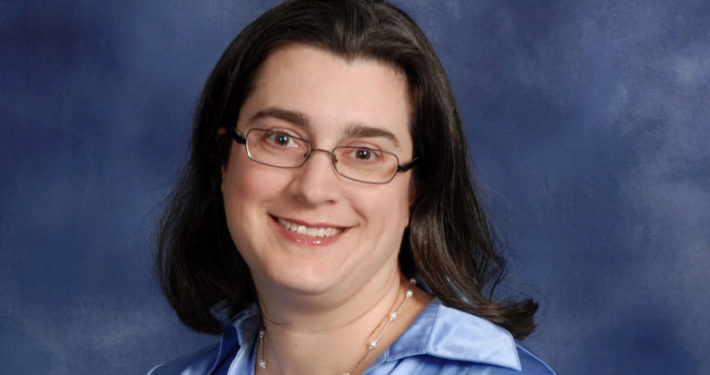
From an outsider perspective, Tennessee appears mired in misinformation and discord when it comes to COVID-19. However, vaccine hesitant families may be wary of the COVID-19 vaccine for reasons outside of popular discourse. And while these state-level mandates are troubling, they do not have the same impact on independent practitioners. Dr. Suzanne Berman is an independent pediatrician in Crossville, Tennessee, and offered her insights on how this climate affects private practices. Her experience working in her practice, Plateau Pediatrics, widens the lens on how independent pediatricians can contribute to keeping kids well and combatting vaccine hesitancy.
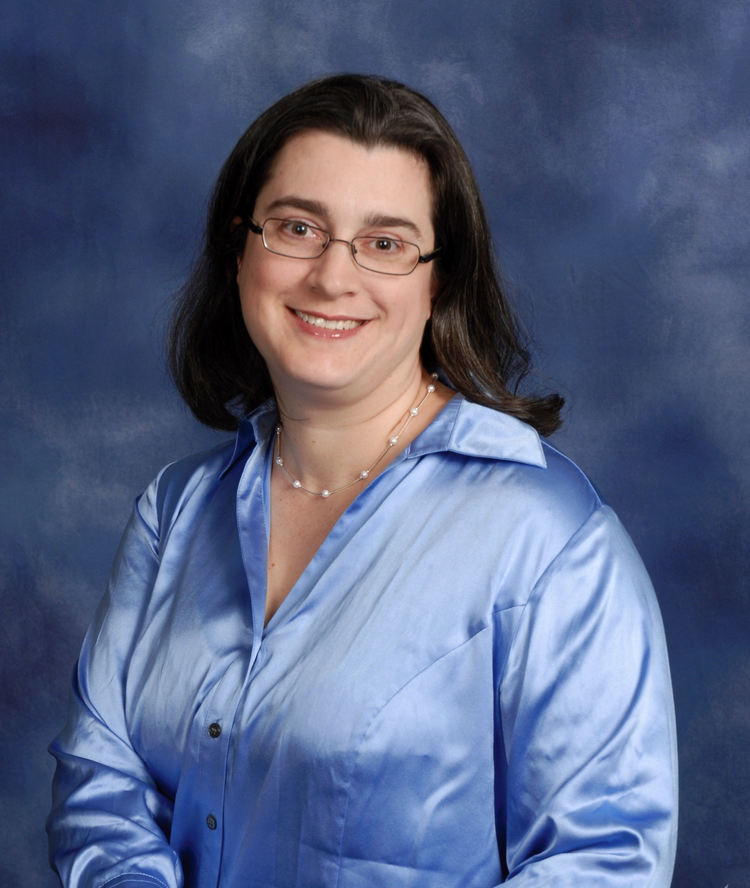
“It’s a lot easier to talk to parents about sensitive subjects, or subjects they feel hesitant about like vaccines, when you have a long standing relationship with them.”Dr. Suzanne Berman
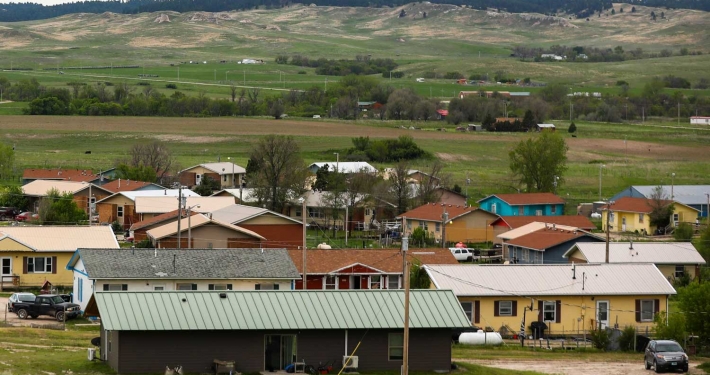
Dr. Suzanne Berman founded and operates Plateau Pediatrics with her husband, Dr. Robert Berman. “We’re in the middle of nowhere in the beautiful Appalachian foothills,” she says. Back in residency, she chose pediatrics because she is, “inspired by the longitudinal opportunity to connect with families.” She continues, “In the ER you see someone, you treat them, and then they go home, and you may never know if you were right. It’s a lot easier to talk to parents about sensitive subjects, or subjects they feel hesitant about like vaccines, when you have a long standing relationship with them.” Using the example of COVID-19 vaccine hesitancy, Dr. Berman says, “Our families know I’m appealing to them from a place of openness and honesty, rather than as a shill for the vaccine maker, or something like that.”
Prior to the COVID-19 pandemic, Dr. Berman and her husband had begun the process of opening a satellite practice nearby. With both the opening of this new office and the stresses of COVID-19, Dr. Berman reflects that, “The past 18 months have been exhausting and stressful. We know medicine isn’t a job for the faint of heart anyway, but at least when your basic household systems were in place [before COVID-19] as a health care worker you could go out to eat if you didn’t have time to cook, or get childcare if needed. But even those things have been up in the air for so many health care workers.”
As in many professions, the COVID-19 pandemic has led to a worker shortage, for myriad reasons. “It’s now very challenging to find folks who want to work the basic meat-and-potatoes job at the practice,” says Dr. Berman. “We’re struggling to find receptionists and LPN nurses. Retention now more than ever is super important, so we want to make sure we keep the existing staff that we have and take good care of them.” Despite the difficulties of staffing and opening a satellite practice, Plateau Pediatrics is busier than ever. Part of the uptick in patient volume has to do with some school districts’ COVID-19 testing requirements for children to return to school. “Our practice is currently administering over 100 Covid tests a day, which for our sized practice is quite a lot,” says Dr. Berman. “And the positivity rate is currently about 10% in our county.”
As of late August 2021, COVID-19 testing in Cumberland County, Tennessee, saw positivity rates as high as 27.8%. The highly transmissible Delta variant is also infecting children at a rapid rate. A September 2021 American Academy of Pediatrics (AAP) article reports tht, “Children ages 0-4 years have had the highest pediatric hospitalization rates since the start of the pandemic, and their weekly rate of 1.9 per 100,000 children in mid-August was nearly 10 times that of late June.” The Center for Disease Control (CDC) has found that, “adolescent COVID-19 hospitalization rates are highest among those who are not vaccinated and in communities with low vaccine coverage.”3 Healthcare professionals are debunking the popularly held conception that children are less susceptible to COVID-19 than adults. According to the AAP, 4.1 million children have been diagnosed with Covid-19 since the beginning of the pandemic, accounting for 14.3 percent of all cases. Dr. Berman adds: “Children have always gotten Covid—we’re just seeing higher rates of transmission now with schools opening, with some folks’ refusal to wear masks, and with the variants.”
“There has always been vaccine hesitancy everywhere. But in our neck of the woods, general vaccine hesitancy is not as bad as in, say, the upper-middle class white suburbs around Memphis. In rural Tennessee, people actually remember that grandma had polio and want to protect their kids.”Dr. Suzanne Berman
With all of this disturbing data, why are so many Tennesseans still wary of vaccinations? Dr. Berman explains that it’s important to avoid lumping in COVID-19 vaccine hesitancy with hesitancy towards vaccines more broadly. “There has always been vaccine hesitancy everywhere,” she says. “But in our neck of the woods general vaccine hesitancy is not as bad as in, say, the upper-middle class white suburbs around Memphis. In rural Tennessee, people actually remember that grandma had polio and want to protect their kids.”
“By vaccine hesitant, I mean people who are otherwise historically reasonable,” she adds. “People who are willing to have a discussion. Folks who think there are microchips in the vaccine or something like that… you just need to love on them and say, ‘see you next time.’”
While general vaccine hesitancy may be on the rise in affluent, suburban communities, rural America still lags in COVID-19 vaccine administration. The Kaiser Family Foundation COVID-19 Vaccine Monitor reported recently that rural residents, young adults, Republicans, and uninsured people lag the most in receiving COVID-19 vaccines. The hesitancy Dr. Berman is seeing in her community is specific to the COVID-19 vaccine, and the process of developing it. She says, “Most of the hesitancy around the COVID-19 vaccine is that it’s too new, and was emergency approved by the Food and Drug Administration (FDA). That is the number one concern that families bring to me—families who will parlay with me in what I feel is an honest manner.”
At the time of this article, only the Pfizer COVID-19 vaccine had received FDA approval. The timeline for the FDA approval of Moderna and Johnson & Johnson vaccines remains unclear. However, a long road to FDA approval is par for the course with vaccines. Dr. Berman often shares this information with families, and gives an example of her conversations with them: “See these other vaccines you’ve given your kids? Guess how long it took the FDA to approve those. Other vaccines can take ten or eleven months to approve.” Dr. Berman shares that people often do not know there is a lengthy approval process for vaccines, and can shift their perspective following deeper education. “I also tell people that while they are waiting for FDA approval, they are taking a big chance by not having the vaccine,” Dr. Berman says.
“But the biggest piece is that we must show our patients love and respect, no matter their perspective on the vaccine,” Dr. Berman says: “Shaming families is a surefire way to get them to walk out of your office.” This is where the power of the longstanding medical home comes into play. Dr. Berman values her relationships with families that have been built over time. “Trying to talk a family into something when you just met them—unless you’re super charismatic—is really hard,” she explains. “And I’m not that charismatic; I’m an overweight gal from the South with glasses and I don’t know how to dress!” Dr. Berman laughs. “But fortunately I can say, ‘Hey, I’ve known you for a long time. You know where I live, where I go to church, and where I work, and I can be straight up with you.’”
On a philosophical level, Dr. Berman works with families to help them verbalize their fears around the COVID-19 vaccine, and then go from there. “We are so much more motivated by fear than compassion,” she says. “When you have a fear and you can’t even describe it, it has so much power over you. When we can get those fears out in the open and talk them through to their logical end, people tend to shift their thinking.”
This approach, coupled with rising concerns about the Delta variant, is having an impact on vaccination rates. “Yesterday I counted 10-12 registrations for new COVID-19 vaccinations that were not from our patients. For our community size, that’s a big jump. So we see this as promising.”
Regarding the legislature’s mandate to halt vaccine outreach through the Tennessee Department of Health (DOH), Dr. Berman is quick to point out that “This directive has no impact on private practice. We are still outreaching to teenagers, as we’ve always done. I think the removal of public health reminders is likely affecting a large number of children, but it doesn’t impact my patient population, because mine is a medical home.”
“What this DOH mandate has done is crippled the safety net,” Dr. Berman explains, “Making it hard to access things like check ups or vaccinations administered at the health department. It has impacted kids who for whatever reason do not have a medical home. If you don’t need the safety net you might not notice these changes, but they are real.”
She continues, “For example, people experiencing homelessness in Nashville don’t come to my practice. Migrant workers in the Tennessee field don’t come to my practice. But those folks likely need access to the DOH… Shelby County Health Department provides a lot of primary care to women and children, and primarily to low income and BIPOC folks. They shut down for a time last year during the pandemic, and gave zero doses of measles, mumps, and rubella vaccines to local children. When things like this happen at the state level, we lose ground with public health that we may never be able to catch up.”
On the subject of the mandate that the DOH suspend sending vaccination reminders, Dr. Berman says, “I find it sad that sending reminders to adolescents for second doses of vaccines is seen as problematic by individuals in the legislature,” says Dr. Berman. “There are two or three state representatives who routinely sponsor anti-vaccine legislation. This legislature always fails, but they keep reintroducing it every other year.”
A perennial question arises here: why exactly has anti-vaccine rhetoric and legislation gained so much traction in recent years? In a brief survey of the issue, Healthline reports that “People may think the risks [of vaccines] outweigh the benefits. This is currently the biggest objection in the United States. Parents cite many medical risks, including autism, as potential consequences of being vaccinated.” Healthline also points to the vaccine hesitant’s mistrust of science and pharmaceutical companies.4
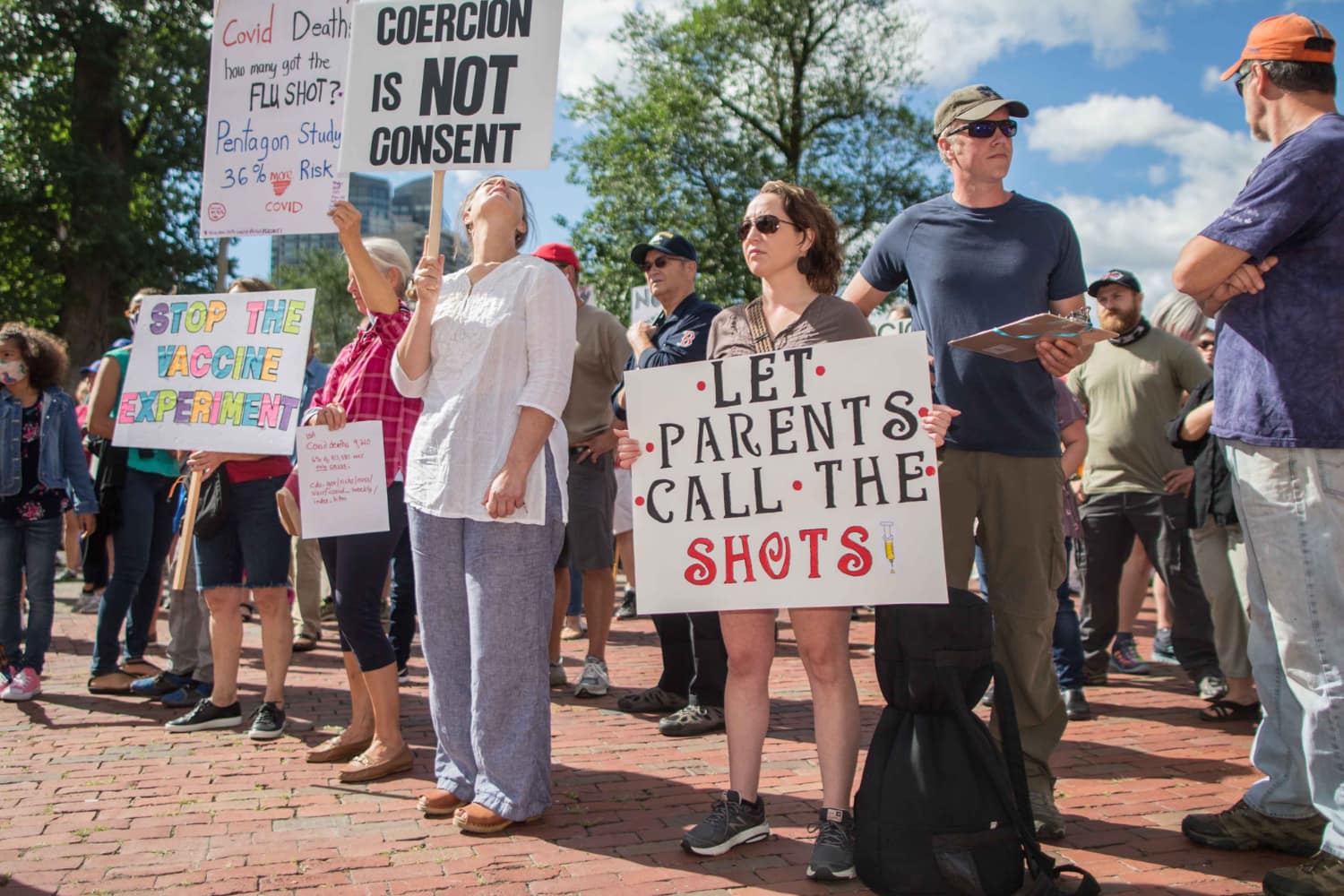
In terms of anti-vaccine legislation, Dr. Berman reflects that “[legislators] are primarily being driven by anti-vaccine professionals who go from state to state and shop around their model legislation couched in the language of ‘parental choice.’” Regardless of an individual family’s reasoning to avoid vaccines, “parental choice” is a politically charged term that could activate voters in this region towards an anti-vaccine stance. “In the South, parental choice, especially with what happens in schools, is sacrosanct,” Dr. Berman explains. “We see this with masks too. Folks don’t want a mask mandate because they don’t want the government telling parents what to do.”
In August, Tennessee’s governor Bill Lee signed an executive order allowing parents or guardians to opt out of schools’ mask requirements for their children: a textbook example of protecting parental choice to the detriment of public health. This order undermines school districts’ efforts to mitigate the risk of COVID-19 outbreaks in their schools, and is indicative of the discord occurring between state and local governments around the country.
“Can you imagine if in pediatric care we told every kid with a cough or a fever to leave and go to the ER? What kind of message would that send to families? That your doctor only wants to see you when you’re well? In my community, we are it. If our practice closed down there would be a crisis in our county.”Dr. Suzanne Berman
“The pushback to mask mandates gets back to the natural tension between safety and freedom that is a throughline in our country around so many issues,” says Dr. Berman. But in terms of engaging at a federal or state government level on these issues, Dr. Berman cautions that, “Physicians should speak out and influence policy only to the degree that they’re an expert on that subject matter.”
Dr. Berman is skeptical of the cult of personality that can spring up around practitioners who are quick to speak publicly on many aspects of healthcare policy. “Physicians can deepen their authority when they speak out on subjects that they know very deeply,” Dr. Berman says. “But we want to avoid influencing people through charm and influence when we don’t know what the heck we’re talking about.”
The way Dr. Berman sees pediatricians combating misinformation and a collapsed safety net is through expanding access to care. “Access to care is so abysmal right now that the way physicians can contribute is by supporting and seeing as many patients as we can,” she says. “During the pandemic folks in primary care have been working a lot harder than specialists, because specialists will reschedule their appointment if they have COVID-19.”
“We couldn’t possibly do that at my practice,” she continues. “Can you imagine if in pediatric care we told every kid with a cough or a fever to leave and go to the ER? What kind of message would that send to families? That your doctor only wants to see you when you’re well? In my community, we are it. If our practice closed down or sent patients elsewhere there would be a crisis in our county.”
Dr. Berman is firmly planted in the impact she can make in Crossville. “With the legislature, I will of course express my displeasure. But right now I’m called more to serve my patients than argue with the doofuses in Nashville. This is only one approach,” she adds, “and I’m grateful for pediatricians and the AAP working at the policy level.”
Dr. Berman’s approach to the tumult of the present moment is a comforting and sensible one: do exactly what you can do best, with those who are right in front of you. Despite a climate of fear and lofty rhetoric around vaccinations, she is still able to sit down with a family eye-to-eye, with the knowledge that they both shop at the same grocery store and go to the same church.
[1] https://www.tennessean.com/story/news/health/2021/07/13/tennessee-halts-all-vaccine-outreach-minors-not-just-covid-19/7928701002/ ↑
[2] https://www.nbcnews.com/news/us-news/fired-tennessee-vaccine-official-received-dog-muzzle-work-days-prior-n1274178 ↑
[3] https://www.aappublications.org/news/2021/09/03/covid-delta-variant-children-hospitalizations-090321 ↑
[4] https://www.healthline.com/health/vaccinations/opposition#common-reasons ↑
Emily Graf is a freelance writer, wilderness educator, and English teacher living in Colorado. She is passionate about telling stories that promote equal access to quality health care. She can be contacted at emgraf11@gmail.com for inquiries.
Pediatric care is complex enough — navigating for the future shouldn’t be a solo journey. Join host Chip Hart and learn from pediatricians, industry leaders, and policymakers who are shaping the future of pediatric care. Every episode, we explore their stories, their dreams, and the joy they find in medicine. Together, we’re charting the future of children’s healthcare.

The Independent Pediatrician is brought to you by PCC, which provides tools and services to help pediatricians remain independent and in control of their practices.
PCC itself is a fiercely independent business. As a Benefit Corporation, it puts the interests of its clients, community, and employees on an equal footing with those of its shareholders.


 Close Communities from Far Away: Glacier Pediatrics in Juneau, Alaska