As the director of the Division of Adolescent Medicine and in her role at the MUSC Health Center for Eating Disorders in Charleston, South Carolina, pediatricians are her eyes and ears in the community.
“We virtually never get referrals that aren’t appropriate,” she says. “And I think that there may be this fear – ‘I don’t want to make too much of this.’ If their gut is that there’s something concerning going on, they’re probably right.”
This work is especially important in the wake of the pandemic. The lack of opportunities for social connection for the past several years, combined with increased social media use, may all be factors contributing to the situation.
“A lot of teens in the setting of that really significant isolation — not being in school and maybe not doing the things they were used to doing, like playing basketball or being in theater — has led to a pretty substantial rise [in eating disorders],” she said.
This uptick in incidence, combined with a persistent misunderstanding about who presents with eating disorders, has meant more children being diagnosed late or not at all. White girls of high socioeconomic status have long been seen as the primary population affected by eating disorders, when about 25 percent of eating disorders develop in boys. Children from all different ethnicities and a range of backgrounds are affected.
“They are even more likely to be missed because there is still this misconception that there’s a certain population that’s affected by eating disorders,” she says. “We also know that LGBTQ kids and transgender youth are at particularly high rates, and again, a population that people don’t necessarily identify as having an eating disorder.”
When it comes to effective treatment, Dr. Wallis says for a long time there simply wasn’t enough research to support any particular approach. That has changed in the last 15 years, leading the MUSC Health Center for Eating Disorders and many other treatment centers to adopt family-based treatment (FBT) for children who are stable enough to receive outpatient care.
“The goal is to empower families to help their kid get back to a healthy weight,” she says. “One of the things we know about malnourished brains is that they don’t work very well and they can’t reason through things like the eating disorder.”
In FBT, parents or caregivers are partners in addressing the eating disorder, with an emphasis on proper nutrition so that the child’s cognitive ability is restored enough to handle recovery in the long term.
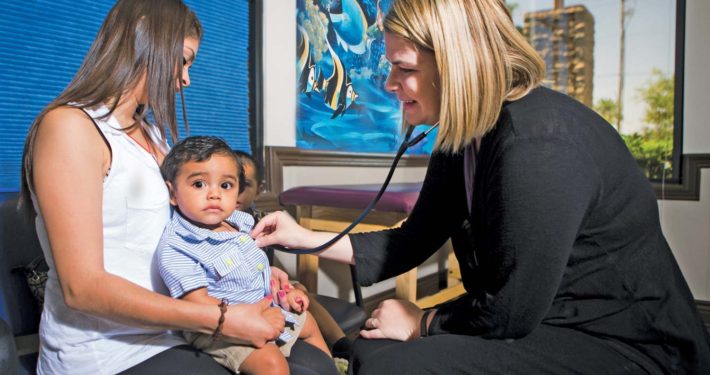
Dr. Wallis says she relies on pediatricians to identify children with eating disorders and to refer them as soon as possible to the best option for treatment in their area – whether that’s an adolescent medicine physician, dietitian, or full-fledged center devoted to eating disorders.
“We know that the sooner we treat kids, the less time they’re sick, the better their options in terms of a full recovery,” she says. “Pediatricians can be important partners in what I do, especially when primary care docs have such a long-standing relationship with families. Collaboration can be really helpful in getting families to engage and stick with treatment.”