On Her Own Terms
Union PediatricsUnion, Ky.

“My parents taught me to fight for myself from a very young age. That can be a good character trait or a bad one, depending on the situation.” As a solo practitioner, her independence and ability to advocate for herself have served her well. “I can determine my own path, choose what kind of things I want to focus on in my practice, and decide what kind of brand I want to portray,” she said.
In September 2007, Dr. Warner opened the doors of her own practice: Union Pediatrics in Union, Kentucky. Union is a small city of about 5,600 near the Ohio border and only 20 miles from Cincinnati. Dr. Warner is the only pediatrician in her zip code which helps new patients find her online. The practice is on the outskirts of town, close to both a country club and rural farm land, resulting in a demographically varied clientele. The newly remodeled office has a small, homey waiting room. There are no TVs because Dr. Warner said she thinks kids get enough screen time at home. Instead, there are lots of toys and puzzles. “I have a hard time getting kids out of the waiting room sometimes,” she said. There’s also a secondary waiting room for siblings if parents bring more than one child to the appointment, which is often the case.
In every detail of the practice, from the location to the design of the waiting room, Dr. Warner has made each decision thoughtfully and without having to get anyone’s approval. Nine years after opening she’s never looked back.
Dr. Warner didn’t always have the freedom to make these kinds of decisions. Before opening her own practice, she worked for a primary care group for seven years. The group mainly consisted of family practice doctors, with only two pediatric-specific offices out of fifteen.
“The administration did not understand the business of pediatrics,” said Dr. Warner. “All of the contracting was done based on the needs of the family practice doctors, and so we would accept lower payments for things like well-child exams and immunizations.” Because of the “eat what you kill” payment structure, Dr. Warner said these decisions primarily affected pediatricians in the group.
In addition to lower payments for staple pediatric services, continuity of care was often overlooked in favor of cost savings and convenience. Dr. Warner said that during her time there, the family practice doctors didn’t give vaccines to the pediatric patients they saw, but instead sent them to the health department for immunizations. “Vaccine administration was just not something that was very important to them,” she said. The group’s management also grumbled about the high overhead costs of vaccines and didn’t understand the importance of well-child care, said Dr. Warner.
Although she was frustrated with many aspects of the group’s management, Dr. Warner was not yet in a position to break out on her own. “I had a child who needed multiple surgeries and was in the hospital a lot. I didn’t have the extra energy to devote to running my own practice at the time,” she said. However, she quickly found her resolve when she fully understood how little her services were valued.
In May of 2006, the group’s new interim medical director came to the office and told them he planned to propose cutting ties with the pediatric offices. “He said he didn’t see the value in having pediatrics as part of the group since family practice doctors can see children, too,” said Dr. Warner. Although the measure was ultimately voted down by the board, Dr. Warner had decided it was time for her to go. She attended the American Academy of Pediatrics (AAP) National Conference & Exhibition that fall to arm herself with the knowledge she needed to open her own pediatric practice. Then in May of 2007, Dr. Warner gave her notice–just one year after she’d made her decision to leave. She opened her own solo practice a few months later.
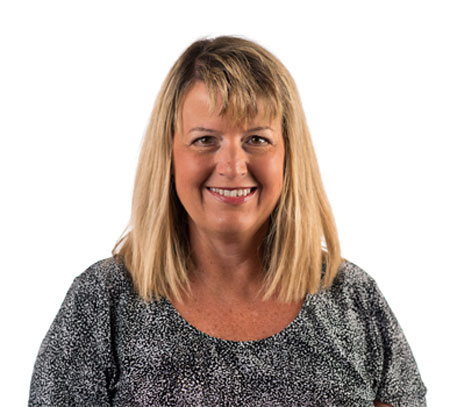
“I continue to feel this is the best decision I have ever made … I’m able to attend my kids’ events. I know my patients. I look at the lifestyle I have and I couldn’t be happier.”
Union Pediatrics is a small practice with about 700 active patients. Dr. Warner said she sees about 15 to 20 patients a day on average. “It’s not concierge, but it is what I would call a boutique-sized practice,” she said. The small size allows her to provide the kind of individualized care that’s important to her. “I am able to give care which is evidence-based, and I have the time to explain that evidence to families.” And, importantly for her, Dr. Warner provides care on her own terms. “I don’t feel pressured to call in antibiotics. I don’t have to see families who choose not to vaccinate. I am able to connect much better with my families. I know the patients, their history, and their social issues,” she said.
Having more control over decisions that affect her practice also translates into more responsibilities. Dr. Warner does all the billing herself, while her one employee handles all the scheduling. She said handling the billing has helped her become a better businessperson. “I know all the insurances. I can look for payment trends. I can talk to parents about deductibles,” she said.
She’s also adopted a minimum payment policy at the time of service for families with deductibles, which helps cash flow and helps educate parents about their insurance plan. “I explain to them that I’m providing a service today; I expect to get paid today,” she said, adding that she gets very little pushback. “You can’t eat at a restaurant or get your hair cut and expect to leave without paying. Plus, it’s a lot harder for parents to say ‘No’ in person than when they’re at home and get a bill in the mail, which they may never even open.”
“I don’t need to get anyone’s approval to buy a new computer, switch to a new EHR, drop an insurance plan, open on Saturday, or take a day off.”
Dr. Warner describes herself as tech-savvy. She has parents fill out developmental screenings online before the appointment in order to maximize her time with patients. She also uses the patient portal in her electronic health record (EHR) to communicate as much information as possible ahead of the visit, including sharing growth charts and other relevant educational materials. At times, she wishes practicing medicine was even more electronic. “Sometimes when I’m with a teenager and getting one-word answers, I wish I could whip out my phone and start texting them. I’d probably get a better response,” she said laughing. She’s always been an early adopter of technology that helps her run the practice more efficiently.
Dr. Warner is on her second EHR, having switched about five years ago to one that’s pediatric-specific and can run the customized reports she needs for her independent physician association (IPA). “When I was fed up with my previous EHR, I was able to make the decision to switch to a new one without having to consult with anyone or get their ‘blessing.’” The decision has proved to be a good one. In addition to being able to run the reports she wants, she described the transition to ICD-10 as seamless.
“I didn’t have to consult with partners about that decision or any others. I don’t need to get anyone’s approval to buy a new computer, switch to a new EHR, drop an insurance plan, open on Saturday, or take a day off.”
Still, running a practice as a solo practitioner isn’t without its challenges. Dr. Warner is always on call and taking a vacation involves coordinating with a large pediatric group nearby that sees her patients while she’s away. She encourages families to use her practice’s website and mobile app to find answers to common questions they may have after hours. “Parents appreciate that I am always available and try to call only if they are really worried. I do encourage them to call me if they feel their child can’t wait until the next day to be seen.”
Even though she’s independent, being a solo practitioner can be isolating at times. Dr. Warner said she relies on her professional network for support and friendship. Her network includes other users of her EHR as well as fellow AAP Section on Administration and Practice Management (SOAPM) members she sees at conferences. “I have a nationwide ‘extended’ family who is also only a phone call, text, or email away. We share best practices from a business standpoint. We bounce ideas off of each other. If I have an incredibly challenging day, for whatever reason, I know where to turn. And since we have the same EHR, we share ideas on how we make the system work best in our office.”
Although she sees the benefits of having a partner, Dr. Warner is committed to her decision to remain solo. “It just boils down to personality,” she said. For other pediatricians looking to start their own practice, she offered the following practical advice:
“You have to know what you’re getting into. You have to set up a tax ID and a corporation. You have to find the location and set up the building. You need plenty of parking. If you can, try to have your practice on the first floor. You need plenty of room for strollers. You need a vaccine refrigerator. You have to have a website and a social media presence. You need to hire a consultant to negotiate your insurance rates.”
She added that starting a solo practice may not be feasible for everyone, particularly those just starting out. “They have big loans. It costs more to go through medical school than when I did it,” she said. “And if you’re taking out loans to start your practice, you may need to start paying those back before the practice is up and running. You need cash reserves.”
In addition to the practical, Dr. Warner also offers some personal advice. “Don’t be disappointed or take it personally when a patient or parent doesn’t like you. You’re not going to be the right fit for everyone. You build up a thicker skin over time.”
Despite the challenges, Dr. Warner knows opening a solo practice was the right choice for her. “I continue to feel this is the best decision I have ever made. Yes, there are times when money gets tight, but my work-life balance is where I want it to be. I’m able to attend my kids’ events. I know my patients. I look at the lifestyle I have and I couldn’t be happier.”
Katy Demong has a B.A. in English writing from St. Lawrence University and an MFA in writing from Goddard College. She’s been writing about current issues in health care and health information technology for almost 10 years. She lives in Salt Lake City, Utah and loves playing tennis and hiking with her dog.
Pediatric care is complex enough — navigating for the future shouldn’t be a solo journey. Join host Chip Hart and learn from pediatricians, industry leaders, and policymakers who are shaping the future of pediatric care. Every episode, we explore their stories, their dreams, and the joy they find in medicine. Together, we’re charting the future of children’s healthcare.

The Independent Pediatrician is brought to you by PCC, which provides tools and services to help pediatricians remain independent and in control of their practices.
PCC itself is a fiercely independent business. As a Benefit Corporation, it puts the interests of its clients, community, and employees on an equal footing with those of its shareholders.


 FAQ: Pediatric Practices and the Patient-Centered Medical Home