Continuously Evolving in Independent Practice with Dr. Hiral Lavania
One Family PediatricsCumming, GA


When Dr. Hiral Lavania opened her independent practice, she put creating a positive work environment first. This approach has helped her maintain a thriving independent practice through the ups and downs of COVID-19 and healthcare worker shortages. She reflects on the importance of clear communication, work-life balance, and continuing growth and education as a pediatrician.
Dr. Hiral Lavania, founder of One Family Pediatrics in Cumming, GA, has prioritized building an independent practice where she would be happy to bring her own kids. “I wanted to create a space where I was accessible and where families felt heard,” she explains. “And I want to be able to support families with any issues, as much as possible, so they can stay with us for all of their care.”
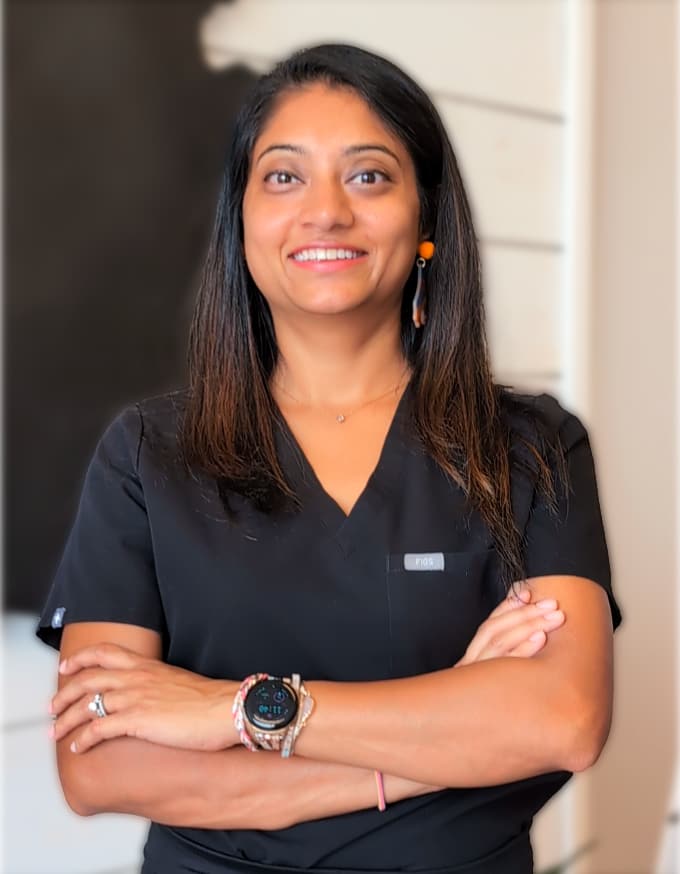
Dr. Lavania certainly offers a broad swath of support. She’s IBCLC certified and the Director of Breastfeed Atlanta, so she’s able to uniquely support new moms and newborns in breastfeeding. Additionally, she’s trained with the REACH Institute to serve as a resource for children’s mental health.
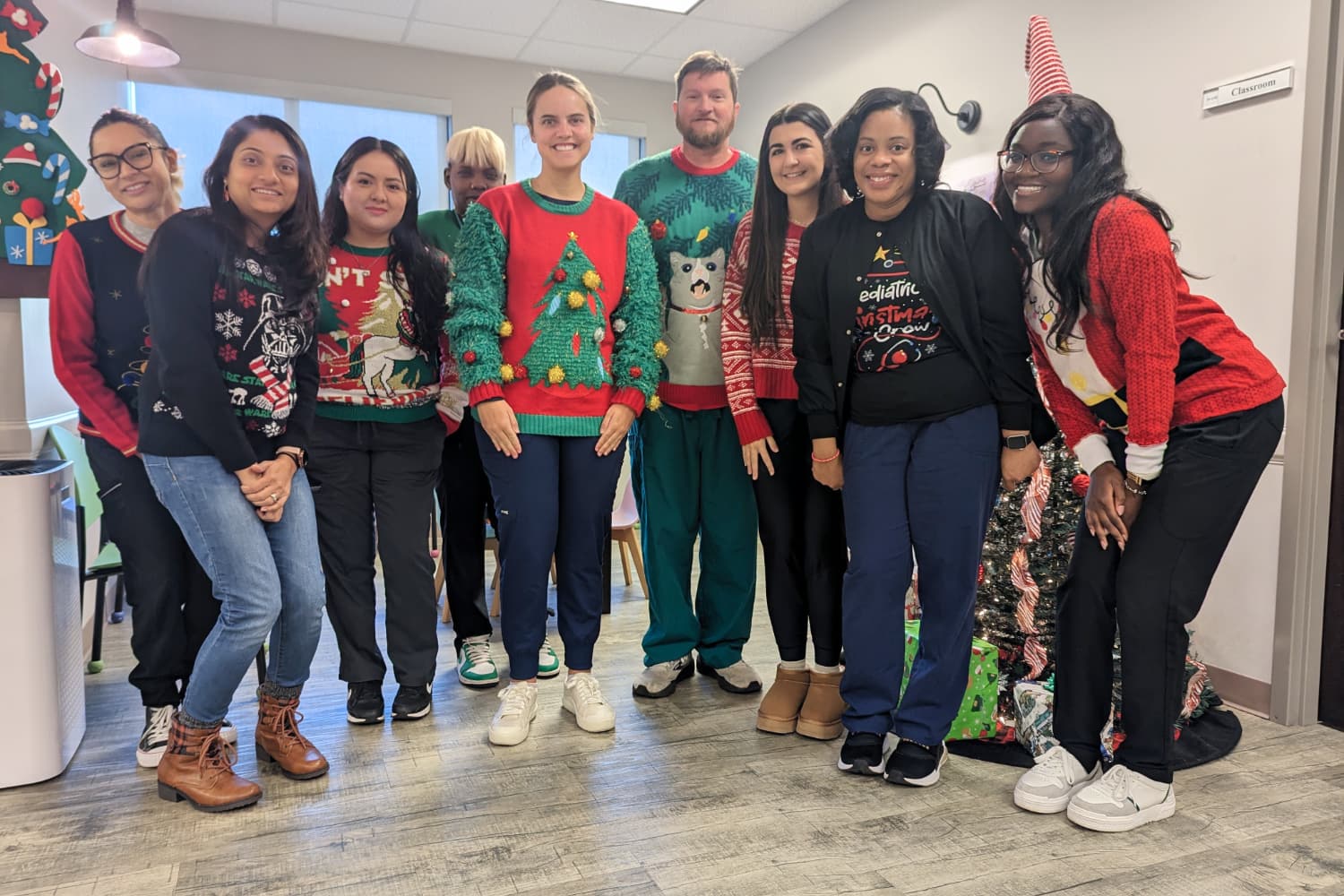
Alongside creating a welcoming space for her patients, Dr. Lavania’s primary goal has been to maintain a healthy, open working environment. This ethos does more than foster strong working relationships and staff retention; she believes a positive work environment supports great care for her patients. “Our team is tight-knit and dedicated, so our patients feel that personal touch and care from the front desk to the back rooms,” Dr. Lavania says.
Dr. Lavania began her journey towards independent practice by learning about what she didn’t want in a work environment.
“When I came out of residency I was in a small pediatric practice, and it was not my ideal place to work,” Dr. Lavania explains. “I wanted a place where we were constantly evolving and implementing the newest recommendations from the AAP to provide the best level of care, and I also just wanted a place that made me happy.” She continues, “I’d been in school for 29 of my years, and I wanted that payoff to be a happier experience, so I decided to open my own practice. I wanted a non-toxic working environment where everyone feels connected and we all work together to provide the best care we can for kids.”
For Dr. Lavania, that meant taking her matters into her own hands and starting an independent practice.
“When staff are unhappy, you start dreading coming to work. I’ve had to pay attention to that, do the work of tuning into what’s happening with my staff, and have those hard conversations proactively with people who aren’t meshing with the team.”Dr. Hiral Lavania
In a 2022 profile with the Independent Pediatrician, Dr. Lavania discussed staffing shortages in the wake of COVID-19. She’s happy to report that her practice is currently fully staffed and stable. And she’s learned a lot about building and maintaining a happy, well-functioning team over the last two years. One of her primary areas of focus is tuning into relationships between her staff members and intervening when communication breakdowns might be happening.
“When staff are unhappy, you start dreading coming to work,” Dr. Lavania says. “I’ve had to pay attention to that, do the work of tuning into what’s happening with my staff, and have those hard conversations proactively with people who aren’t meshing with the team.”
“It’s not that we haven’t hired people who don’t fit with our current practice,” she explains. “Sometimes people look good on paper, and then you hire them, and you don’t realize the toxicity they bring. But I realized I could make a difference in that and remove those toxic pieces of the puzzle, rather than staying above it all and letting relationships get progressively worse.”
By staying clear on her team’s values, Dr. Lavania has been able to retain staff and create a healthy work culture despite the crisis of a massive healthcare worker shortage in the U.S. Even post-COVID, this shortage continues to vex the healthcare industry; a 2023 study from McKinsey reported resignations among healthcare professionals leapt from approximately 400,000 per month in 2020 to 600,000 per month by May 2023. Dr. Lavania weighs in on this rapid drop-off in qualified healthcare professionals with equanimity:
“Right now we’re at a good place, but I know a lot of people are struggling with staffing,” she shares. “Of course, burnout during COVID-19 led to a lot of resignations. But now I think it’s a few things. Everyone wants to get paid more, and with good reason. There’s been a ton of inflation and people are working harder than ever. But the problem is insurance companies haven’t increased our payments since 2021.”
Additionally, Dr. Lavania cites the fact that in the industry at large, providers with less experience are being shunted into roles outside of their capacity, due to the departure of more seasoned staff. This rapid escalation in responsibility can lead to overwhelm and resignations. The McKinsey report supports this, asserting: “We project there will be one million additional nursing care jobs by 2031… outpacing the number of individuals expected to complete degree programs based on current capacity. Yet across the United States, educational institutions lack the capacity to close the gap.”
In terms of attracting staff to work in an independent pediatric practice, Dr. Lavania believes it’s essential to create a space where burnout is prevented through flexible policies and open communication, and where both staff and patients feel at home. “I want my patients to feel like family when they come here, and I also want my staff to feel like family,” she explains. “So that was kind of the base of the culture. If one of our nurses needs to leave early to pick up her kid, she’s able to do that. We work with people and do our best to create flexible policies that support everyone.”
Dr. Lavania admits she cannot match local hospitals in terms of salary, so she leverages her positive work environment in order to attract and retain staff—with great success. “Recently a position opened up and a former staff member who moved out of state and back immediately reapplied,” Dr. Lavania says. “It’s really heartwarming to know that people want to be here and want to stay.”
“When I was first dreaming up about this practice, I wanted it to be like Disney!” Dr. Lavania shares with a laugh. “As in, everyone’s going to love being here! And then I realized, okay, well we can’t all be Disney.”
Dr. Lavania continues, “We have to have some rules, otherwise our patients will walk all over us. They won’t pay their bills and all kinds of stuff. So I started framing it differently. I thought: as a pediatrician, what would be my ideal pediatric office for my kids?”
Dr. Lavania adds that her kids don’t receive care at her practice because of ethical issues. “But as a parent,” she says, “I would want my kids at a place where the pediatrician calls with lab results, a place where the pediatrician is always interfacing with the family. So at my practice, when a family calls, there’s no phone tree.”
At One Family Pediatrics, patients know that they will be able to talk to Dr. Lavania directly if they have a question or need to have further conversations. “Usually when they have a question they want to talk to me, not a nurse. So I do my best to be available for them in that way,” Dr. Lavania shares. Alongside being accessible to families, she ensures families know that she is available for open dialogue regarding different pediatric care questions.
For Dr. Lavania, creating an open, inviting, and collaborative environment for families begins with establishing herself as a trusted resource. This includes staying up-to-date on research and new evidence-based approaches to pediatric care.
“As pediatricians, we are the first line for educating families on how to care for their children’s health and how to parent,” she explains. “If we don’t have the resources for them, I think we’re failing them. For example, if you’re not reading up on what the latest research shows about the impacts of too much technology or the change in anxiety and depression in children, you might be missing out on getting critical information to your patients.”
Patient and family education is essential to how Dr. Lavania practices. “We harp on education,” she says. “The front desk will help families understand their insurance policies and what a deductible is and why they have a bill. They really help people understand in a nonjudgmental way.”
For her part, Dr. Lavania provides evidence-based information on common pediatric questions on her website and to all of her patients personally, and she’s not afraid to have dialogue on controversial topics. “Vaccines are always a big question for people,” Dr. Lavania explains. “Especially after COVID, people are wondering if vaccines are safe, and ‘should we be vaccinating?’ Usually with my current patients, the families already trust me. So they really appreciate me sitting down and explaining how vaccines work and answering their questions instead of just saying, ‘No, this is how it’s done.’” However, while she values answering questions compassionately, Dr. Lavania has become a bit more strict with her practice and is no longer accepting new patients who are unvaccinated.
“When we first opened, we used to take non-vaccinators in hopes that we could change their minds,” Dr. Lavania explains. “But when that group of people started coming to see me, they just didn’t believe anything I said—whether it be about breastfeeding or screen time or vaccines or anything. And I just realized it wasn’t just about vaccines. It’s a bigger cultural issue.”
The phenomenon of vaccine hesitancy is, of course, widely known and of major concern to most pediatricians. Following the COVID-19 pandemic, vaccine mistrust and misinformation has become more widespread, and that vaccine hesitancy has now spread to other vaccines. The decision to take (or not take) unvaccinated patients is a deeply personal and specific one for independent physicians. Most pediatric practices who do not take unvaccinated patients do so in an effort to protect newborns and children with weakened immune systems who might interact with each other in waiting or exam rooms. “When we realized we can’t change peoples’ minds, it became too much of a risk for us,” says Dr. Lavania.
Dr. Lavania has completed diverse training that helps her support families with a wide array of questions. As an IBCLC, she is able to help new parents with lactation, breastfeeding, and tongue-ties when they come to see her with their newborn. “I learned about breastfeeding in residency, but the IBCLC gives me a deeper level of knowledge and credibility with patients,” she says. “That way I can encourage them to look at lower-intervention options for things like tongue ties, and they really trust my advice.”
It’s important to Dr. Lavania to establish trust with patients through honing her expertise. So as she began to notice a surge in inquiries into children’s mental health and developmental issues, she decided to complete further training to better serve her patients in this area.
“I realized that a lot of the psychiatrists aren’t even touching their patients—they’re meeting with kids once or twice and then putting them on all these medications. They’re not following up on any labs or even getting vital signs on these kids. And so I started handling it myself as much as I could.”Dr. Hiral Lavania
“I feel like 30% of my day is mental health,” says Dr. Lavania. “We see a lot of ADHD, autism, anxiety, and depression.” In response to the need she saw in her patient population, Dr. Lavania participated in the REACH Program, which is an interactive training program in children’s mental health and psychiatric medicine.
“It’s funny because mental health and psychiatry were things I swore I wouldn’t do in residency, and now I’m such a big advocate for it,” Dr. Lavania shares. “I realized that a lot of the psychiatrists aren’t even touching their patients—they’re meeting with kids once or twice and then putting them on all these medications. They’re not following up on any labs or even getting vital signs on these kids. And so I started handling it myself as much as I could.”
“I will at least get baseline information: vitals, etc.,” Dr. Lavania explains. “We’ll do a bunch of screenings. I’ll talk to the families. I think part of the problem is it’s so expensive to get a psychological evaluation. So I can do it for them in a more affordable way.”
For Dr. Lavania, tackling imbalanced relationships with tech is often the first step in addressing kids’ mental health challenges. “One of the first things that I realized was some of these kids go through this kind of vicious cycle where they’re feeling depressed or anxious, so they get online on social media and it makes them feel better for a small period of time. But then that creates more anxiety and depression and it just snowballs.”
“One of the first things I suggest to families is cutting off social media and screen time for just two weeks,” Dr. Lavania explains. “Get outdoors, find some new activities to do. And a lot of times that makes such a big difference. Sometimes we can intervene with lifestyle changes and we don’t even need to put kids on medications.” Dr. Lavania shares that she sees great results with the approach, particularly for kids with ADHD.
However, with children on the spectrum, Dr. Lavania cautions that reduced screen time isn’t always effective for regulating symptoms. “Autism is really different because they’re just wired differently, right?” she says. “A lot of people that are on the spectrum tend to gravitate towards those kinds of careers, like IT and programming.” Dr. Lavania engages in a process of exploration with her families; the bedrock of trust and consistency of care helps her hone in on the plan that’s right for each patient.
“If there is an area of pediatrics that’s always interested you, don’t be afraid to go get further education! That’s what has kept me engaged in the field and in my practice.”Dr. Hiral Lavania
Dr. Lavania has found herself giving more talks of late. “I actually don’t love speaking to be honest,” she confesses with a laugh. “But I guess I’m bringing a certain knowledge base that’s helpful for people.”
“I’ve done a few talks with PCC,” she continues. “There’s this computer geeky side of me—I love our EHR and I try to use it however I can, and so sometimes I get creative and teach classes about how to utilize the EHR properly.”
She’s also offered some practice management talks. “We get nothing on the business side of things in our training as pediatricians,” Dr. Lavania explains. “So some people need help with understanding how to run a business: how do you pay your providers using simple math? How do you make sure you’re getting medical supplies at cost?” Most importantly, Dr. Lavania encourages her colleagues in independent pediatrics to continue learning and enriching themselves. “If there is an area of pediatrics that’s always interested you, don’t be afraid to go get further education!” she says. “That’s what has kept me engaged in the field and in my practice.”
While challenges persist in the healthcare industry, Dr. Lavania is focused on how she can positively impact her sphere of it. She’s doing this brick by brick, by building a healthy work culture, continuing her education, and sharing what she’s learned with other pediatricians. For pediatricians who are interested in diving deeper into her work, her talk “How Not to Be a Witch”, exploring dynamics and relationships between professional women, is available to watch for free on Youtube.
Emily Graf is a freelance writer, wilderness educator, and English teacher living in Colorado. She is passionate about telling stories that promote equal access to quality health care. She can be contacted at emgraf11@gmail.com for inquiries.
Pediatric care is complex enough — navigating for the future shouldn’t be a solo journey. Join host Chip Hart and learn from pediatricians, industry leaders, and policymakers who are shaping the future of pediatric care. Every episode, we explore their stories, their dreams, and the joy they find in medicine. Together, we’re charting the future of children’s healthcare.

The Independent Pediatrician is brought to you by PCC, which provides tools and services to help pediatricians remain independent and in control of their practices.
PCC itself is a fiercely independent business. As a Benefit Corporation, it puts the interests of its clients, community, and employees on an equal footing with those of its shareholders.


 Advice to My Younger Self: Independent Pediatricians Reflect on the Early D...