Community-Centered Care Is the Throughline: Dr. Jen O’Bryan on Independent Pediatrics in Times of Change

Memphis Children’s ClinicSouthaven, MS

Dr. Jen O’Bryan has been practicing independent pediatrics since 2005. She sheds light on the challenges and rewards of independent practice, the power of community-based pediatrics, and how to navigate a shifting healthcare landscape.

A rake creates fresh lines in a Zen-style sand garden

Community-Centered Care Is the Throughline: Dr. Jen O’Bryan on Independent Pediatrics in Times of Change

Memphis Children’s ClinicSouthaven, MS

Dr. Jen O’Bryan has been practicing independent pediatrics since 2005. She sheds light on the challenges and rewards of independent practice, the power of community-based pediatrics, and how to navigate a shifting healthcare landscape.

In a healthcare landscape where families are less likely to visit the pediatrician than ever before, Dr. Jen O’Bryan makes the case for community-centered care. With two decades of practice under her belt, she sheds light on the challenges and rewards of independent pediatrics, the power of patient relationships, and how she’s weathered changes in the market while building trust with her community.

Ready to Serve Her Community

Dr. Jen O’Bryan is a fierce advocate for kids, fullstop. From the early days of her education, she’s always known she wanted to work in pediatrics.

“Pediatricians tell stories of how they ‘always wanted to be a pediatrician,’” Dr. O’Bryan says with a laugh. “But that’s actually kind of true for me!”

“Kids are beholden to so many things they don’t have control over,” she explains. “My feeling was, I’d like to be able to advocate for them and guide them, particularly when it comes to their health and bodies.”

When it came to her medical education, Dr. O’Bryan found herself “being good at things I didn’t expect to be good at,” she says. “I enjoyed surgery and procedures, that sort of high intensity stuff, more than I thought I would. So at first I thought I might go into obstetrics or surgery.”

“But then I did my OB rotation,” she continues. “I would deliver the baby, and after the birth I’d just want to stay with the babies and support them,” she chuckles. “So that quickly pointed me back in the direction of pediatrics.”

Once Dr. O’Bryan finished her residency, she felt ‘done with schooling.’ “I didn’t want to do a fellowship, I just wanted to start working and serving my community. I didn’t want to do three or four more years of… all that,” she adds.

During her residency, Dr. O’Bryan spent a year at Memphis Children’s Clinic, where she “really enjoyed the continuity you would get from seeing the same patients and getting to know them over time.” Because she always worked on the same day of the week, Dr. O’Bryan began to establish relationships with patients who came in on those days for appointments. “That deepening of relationships was really what guided me towards general pediatrics,” she explains.

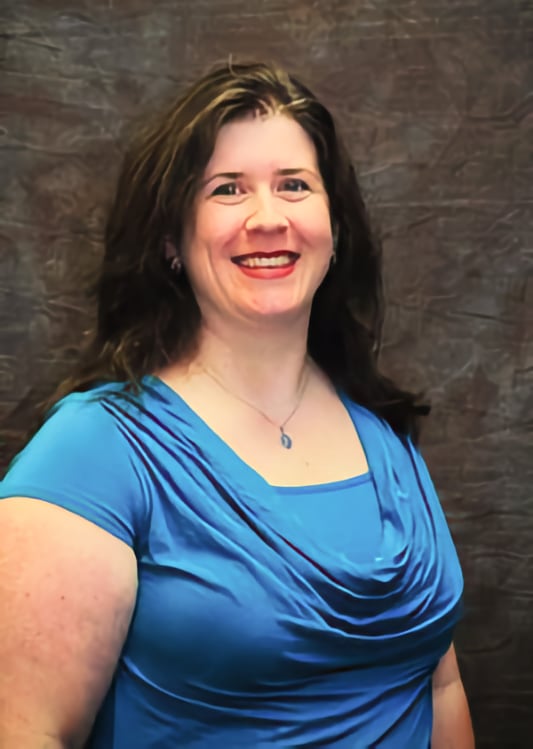
Dr Jennifer O'Bryan
“Kids are beholden to so many things they don’t have control over. My feeling was, I’d like to be able to advocate for them and guide them, particularly when it comes to their health and bodies.”

Dr. Jen O’Bryan

“I wanted to work in a practice where I can help folks from all socioeconomic backgrounds receive high-quality care.”

Dr. Jen O’Bryan

The Path to Independent Pediatric Practice

Dr. O’Bryan is from Memphis originally and attended UT Knoxville for college before returning to Memphis for medical school at UT Health Science Center. She met her husband while she was in residency, and they married shortly after she finished. They have three children, ages 15, 13, and 12. Dr. O’Bryan is certainly a Memphis gal, and through her practice has continued to deepen her roots there.

In 2005, Dr. O’Bryan joined Memphis Children’s Clinic in Northwestern Mississippi, a well-established independent practice.

“I was rolled into an existing community pediatric practice that had been operating for over 60 years, with a number of well-established locations and patient bases,” Dr. O’Bryan explains.

“The familiar appeals to me,” she continues, “Because I had gotten to know this office where I worked for my third-year residency, I knew a lot of the doctors and had relationships with them.” Dr. O’Bryan also liked that the practice still took Medicaid, which was decreasingly true for other independent practices in her area. “I wanted to work in a practice where I can help folks from all socioeconomic backgrounds receive high-quality care,” she says.

“I wanted to be my own boss. I didn’t want anyone to tell me what to do—I wanted to base my decision on my own knowledge of what’s right and my understanding of care,” Dr. O’Bryan asserts. “We get to do what we want with our practice—which has its advantages and disadvantages, of course,” she adds thoughtfully. “I got the advantages of an established practice and the advantages of a practice that manages itself, rather than one that’s managed by a corporation or something. But of course, there’s the trade-off of being a doctor and a business manager with all the extra work that comes along with that, which I tend to enjoy.”

Why is Independent Pediatric Practice Declining?

As the number of independent pediatric and family medicine practices declines nationally, Dr. O’Bryan’s kind of professional situation is increasingly rare. This decline is especially detrimental for children living in rural areas. Many pressures—mainly financial and regulatory—drive independent pediatricians to join with corporate or hospital groups, as outlined anecdotally in this Op-Med by Dr. Kimberly Clare for Doximity. Dr. O’Bryan and Memphis Children’s Clinic provide an example of true community practice, and the possibility of long term relationships between pediatricians and families.

“In 2005 when I started out, there weren’t that many practices that were owned by hospitals,” says Dr. O’Bryan. “That’s a phenomenon that has accelerated dramatically in the last 10-12 years.”

She attributes the changes to a few factors: “Reimbursement—margins are narrower and narrower,” she explains. “And running a business has become more and more expensive. Wages are going up appropriately for some in the medical field, but pediatrician wages are not. That’s because insurance companies have decided they’re just going to keep paying us like it’s 2008,” she adds with a sigh.

“For practices that have senior partners who are seeing their income dwindle as they’re nearing retirement, I think that’s scary,” Dr. O’Bryan concedes. While Dr. O’Bryan chooses to be independent, she understands why others might choose a different path. “A lot of practices that choose to sell are trying to just get what they can and turn over the running of the business… it gets difficult to keep everything going administratively.”

But, to Dr. O’Bryan’s mind, “You pay for it one way or another. There’s no such thing as a free lunch.”

“The reality is, you can only make so much more money by overworking people, by having your pediatricians see 40 patients a day instead of 30,” she muses. “At some point, I think hospitals that own practices are going to start cutting them loose. Or they’ll start swapping out pediatricians for other providers where they can pay them less to do the same work…” she trails off. “That’s a bit of gloom and doom. But it’s a good reason to stay in independent practice.”

Despite challenges in the healthcare industry at large, Dr. O’Bryan knows that families still see tremendous value in the small, family-centered independent practice. She sees this in her relationships with her patients, which have developed and evolved over years of visits.

You can’t send every depressed or anxious kid to psychiatry. It’s just not possible. So it’s now within the scope of care for us to manage this ourselves.

Dr. Jen O’Bryan

Building Trust and Long-Term Patient Relationships

Part of what has helped Dr. O’Bryan maintain long-term relationships with families is her commitment to whole-child care.

“I’ve really leaned into mental healthcare,” she says, “Not just focusing on kids’ physical health.” Dr. O’Bryan explains, “It wasn’t anything I did deliberately. But I personally felt uncomfortable managing these conditions I was seeing in my patients because I didn’t feel adequately trained or prepared for them.”

“I knew what SSRIs were, but I never had any training about basic outpatient mental healthcare for pediatrics,” she adds.

In early 2019, Dr. O’Bryan did a “mini-fellowship” through the REACH Institute, which educates providers who work in primary care on how to manage children’s essential mental health: mood disorders, ADHD, and even some more complex conditions like bipolar. “You can’t send every depressed or anxious kid to psychiatry,” Dr. O’Bryan asserts. “It’s just not possible. So it’s now within the scope of care for us to manage this ourselves.”

Her program with REACH involved a year of post-course sessions where providers met over a conference call and would present case studies to each other and then discuss solutions. She feels this education has been key in her supporting families with teens.

“I am gently—and sometimes not so gently—encouraging my partners to get on board,” she says with a laugh. “Like, ‘Hey, I don’t need to take care of all the teenagers with anxiety! You guys could take a share.’”

“But for real,” she continues, “I think one of the ways for privately owned pediatric practices to stay relevant is for the providers to be able to offer behavioral health support. That’s gonna be something that will set you apart in the healthcare market and allow you to build trust with families.”

“At this point there are a lot of things you don’t need to go to your doctor for anymore,” Dr. O’Bryan explains, her tone matter-of-fact. “You can go to urgent care and get a strep test. You can go to Walgreens and get a vaccine. So creating more dynamic, holistic care—including mental health care—is one way we can continue to build relationships with families.”

Standing Out in a Shifting Healthcare Landscape

Parents are indeed less likely to bring their kids to the pediatrician than they were a decade ago, with overall visits on the decline. The reasons for this shift are a mixed bag, according to a 2020 study from researchers at University of Pittsburgh. The trend could be attributed to families’ concerns about high co-pays, but an increase in preventative care visits may also be decreasing trips to the pediatrician for “problem-based visits” such as illness or injury. Another contributing factor could be, as Dr. O’Bryan notes anecdotally, that children are receiving care elsewhere: from urgent care, retail clinics, and telemedicine. Whatever the reasons, lead author of the report Dr. Kristin Ray hypothesizes that this trend is, “presumably resulting in fewer opportunities for the pediatrician to connect with families on preventive care and healthy behaviors, like vaccinations and good nutrition.”

Dr. O’Bryan is combating these challenges by developing a clear role and—as she puts it jokingly—a “brand,” in the community.

“People who like my brand come to me,” she shares with a laugh. “I’m straight up: this is how I am; this is the type of care I deliver. I don’t tell people what to do.” She continues, “I give them information and let them make their own decisions. I tell them when I think something is medically necessary. I don’t turn parenting advice into medical advice, which I think is something my forefathers did mistakenly. People used to say, ‘you have to let your kid cry it out.’ I say, ‘it’s ok. This is normal,’ and listen to the approaches they want to try. I try to support parents and assuage their fears.”

“I call my patient panel ‘granola-light,’” she laughs. “You know, they vaccinate, but they also breastfeed. They’re mildly crunchy.”

Practicing Community-Centered Care

In terms of the biggest issues she’s seeing in her patient population, Dr. O’Bryan is feeling optimistic about kids’ mental health. “That’s an area where we might be actually doing okay in my immediate community,” she shares, still a bit hesitant. “The problem is less now about availability—there are more and more counseling and therapy practices available. The main issue for families is cost. There aren’t as many Medicaid providers for counseling. But there are more options, which is great.”

What’s of more immediate concern to Dr. O’Bryan is “the lack of rehab services in school.”

She shares that almost none of her patients with autism are getting ADA accommodations at school. “My most severe cases might get some support, but sometimes it’s just way off,” she explains. “I have one patient with severe autism who gets 5 minutes of occupational therapy a month, according to his IEP,” she exclaims, clearly frustrated. Dr. O’Bryan makes sure to keep her patients’ IEPs in their medical files, so that there’s continuity of care between schools and her practice.

“The problem is that school systems are choosing to respond to this by telling parents that their children just don’t need these services,” she says. “I guess they don’t want to be caught saying ‘you need this but we can’t provide it.’” Dr. O’Bryan is seeing families caught in the bureaucracy of navigating public schools and testing for learning differences.

“So what do I do about it? There’s only so much one person can do,” she says, “But I try to intervene where I can. I put my families in touch with the Arc, an advocacy resource center.” The Arc is region-specific, with chapters around the U.S., and helps advocate for people with disabilities.

“Sometimes parents feel like they’re being too pushy with the schools,” Dr. O’Bryan continues, “And I try to take some of that concern off of them. If your kid couldn’t see, the school wouldn’t prevent them from putting their glasses on, right?” She continues, “Your kid needs these accommodations and support to get an equitable education. This is their right as a citizen of this country.”

For Dr. O’Bryan, it’s about helping families know where they stand. “Maybe your kid won’t get occupational therapy or an IEP, but at least you know they deserve it, and can be on the lookout for ways to help them,” she says. “Making sure families understand the basic rightness of this need is the first step.”


Dr. O’Bryan’s Advice to New Pediatricians

When it comes to entering the field of independent pediatrics, Dr. O’Bryan is clear in her advice. “Learn the business,” she says emphatically. “Learn what an RVU [relative value unit] is; learn how to read a P&L [profit and loss statement].”

“If you want to be in a privately-owned practice, you need to learn how to run a privately-owned practice,” she says. “If you want to be a partner, you need to know what a partner does.”

“We’re really taught nothing about this at all in medical school,” Dr. O’Bryan laments, “And then we’re taken advantage of by insurance companies, hospitals, corporations, buying groups… The people with all the money say, ‘We’ll do everything for you!’ and then they’re like ‘just kidding,, you’ll have no vacation days!’” She laughs and goes on, “But seriously, learn how to read a contract. Know what a non-compete is.”

Dr. O’Bryan feels strongly that newer pediatricians continue the legacy of community-centered practice. But to do so, she thinks they need to stop worrying about being polite and ask hard questions when seeking jobs out of residency.

And pediatricians tend to be nice,” she says, “Which contributes to us getting taken advantage of. We need to know how to look out for ourselves, we need to make our own informed choices, just like we coach our patients to do.”

For Dr. O’Bryan, it’s all about empowerment through understanding. “If we clearly know what we’re walking into, whether it’s independent practice or hospital-based, we can make career decisions we’ll hopefully be proud of down the road.”

Emily Graf is a freelance writer, wilderness educator, and English teacher living in Colorado. She is passionate about telling stories that promote equal access to quality health care. She can be contacted at emgraf11@gmail.com for inquiries.