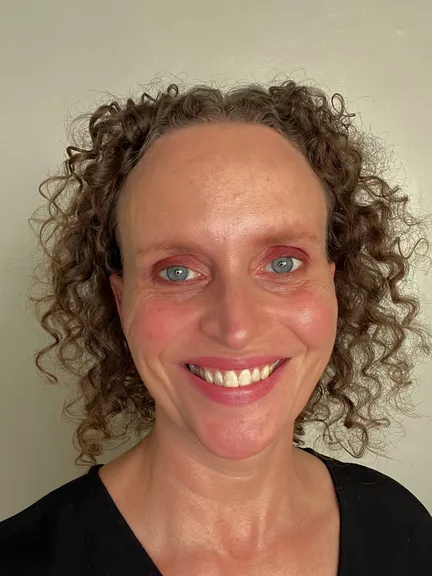
Dr. Gigi Youngblood on Independent Pediatrics in 2025: Politics, Vaccines, and Showing Up for Families

Tots 'n' Teens PediatricsBirmingham, AL

Dr. Gigi Youngblood reflects on staying focused on local care and meeting families where they are in a time of instability and political polarization.

Dr. Gigi Youngblood on Independent Pediatrics in 2025: Politics, Vaccines, and Showing Up for Families

Tots 'n' Teens PediatricsBirmingham, AL

Dr. Gigi Youngblood reflects on staying focused on local care and meeting families where they are in a time of instability and political polarization.

Measles Outbreaks and Political Lines

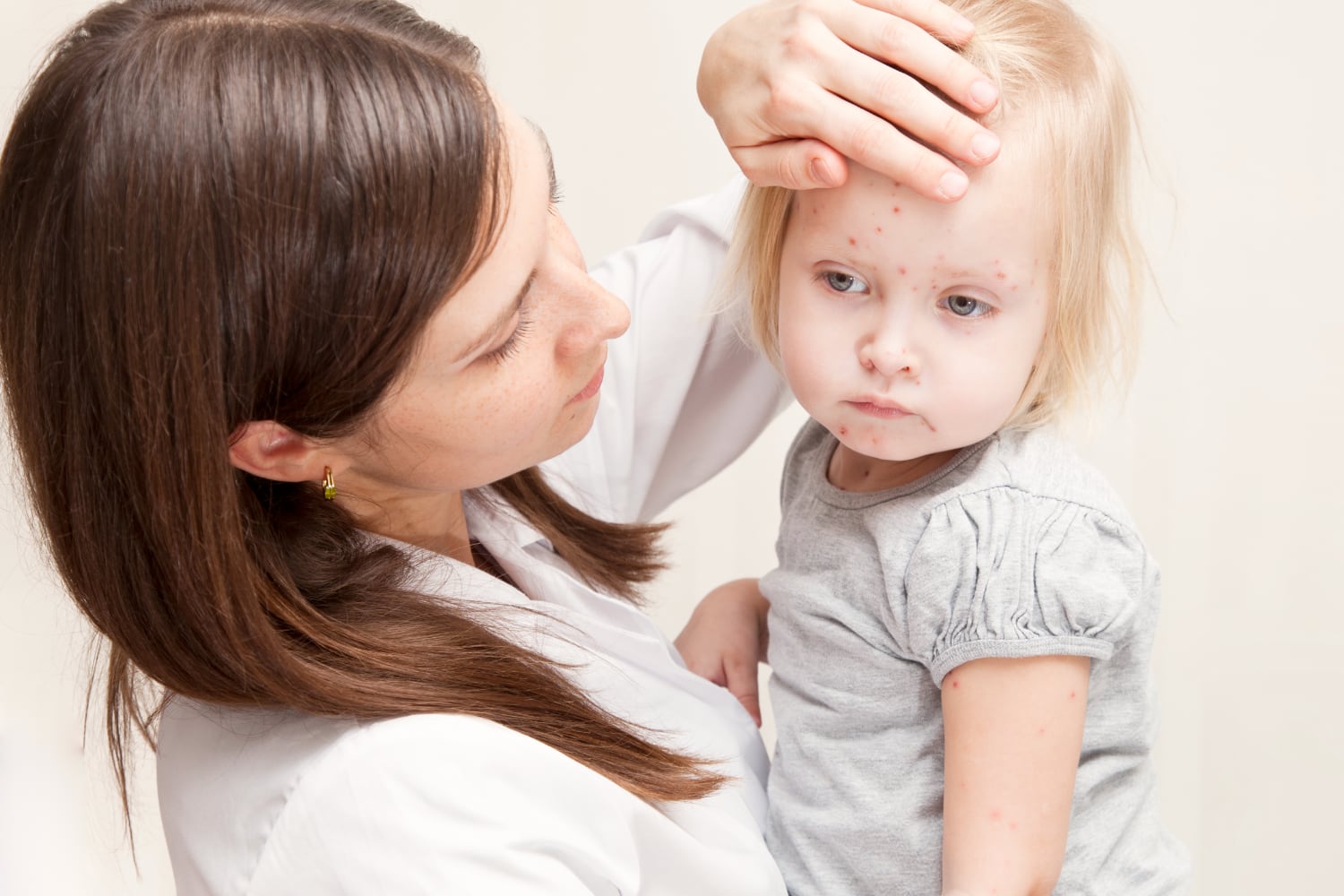
“Well, I just got off a call trying to determine an outpatient protocol for measles,” Dr. Gigi Youngblood shares with an incredulous laugh. While she leads with light-heartedness, Dr. Youngblood is very clear on the gravity of the situation. “I’ve never had to do this in my career, for measles that is,” she explains. “This feels like COVID except this time it’s for a real stupid reason. I’m going into this one just angry.”

While there aren’t yet confirmed cases of measles in Alabama where Dr. Youngblood practices as an independent pediatrician, she thinks “it’s just a matter of time.” In March of 2025, Dr. Youngblood sat in on a meeting of the committee at Children’s of Alabama that has begun developing ER protocols and inpatient protocols for measles. She’s now part of the conversation on how to develop a community pediatricians protocol.

“What I’m worried about right now is out in the community people panic, understandably, and don’t know how to get testing done,” says Dr. Youngblood, “So they just send everyone to the ER. But we can’t do that in this situation. If that kid is well-appearing and they go to the ER, they’re going to expose so many more people. We need community providers to have the resources to point people in the right direction.”

Dr. Gigi Youngblood
If you asked me what a sick kid with measles looks like, I wouldn’t know because this disease was essentially eradicated in the year 2000.

Dr. Gigi Youngblood

Dr. Youngblood explains that most pediatricians have never seen a real case of measles. “If you asked me what a sick kid with measles looks like, I wouldn’t know because this disease was essentially eradicated in the year 2000,” she says.

Dr. Youngblood practices in a suburb of Birmingham, Alabama, near the largest children’s hospital in the state, Children’s Hospital of Alabama. Despite their metropolitan location, she asserts that vaccine hesitancy is growing in the community.

“We used to see vaccine hesitancy more with West Coast hippies and deep red rural areas, but that’s changing now,” she explains. “We saw it increase during COVID, and we’re seeing another one of those sharp increases since November, especially since Kennedy was appointed as health secretary.”

Europe experienced a surge of measles cases in 2018, an issue that research indicates was directly correlated with low immunization amongst certain communities. In 2014 and 2015, a measles outbreak in California rattled public officials. In the U.S., the roots of vaccine hesitancy can be traced back to 1982 and the release of a film called DPT: Vaccine Roulette. While pre-COVID precedents certainly exist for vaccine hesitancy, the surge of these attitudes over the last five years has been staggering, with much of their proliferation attributed to social media. In 2024, the rate of kindergartners with complete records for the measles vaccine declined from around 95 percent before COVID to under 93 percent. Immunization rates against polio, whooping cough, and chickenpox also fell.

Reduced perception of a contagion’s danger, ethical or religious qualms, and the fear of Adverse Events Following Immunization (AEFIs) seem to be the main arguments against childhood vaccines. These views also tend to fall along political lines, with official vaccine exemptions rising most rapidly in states that voted for President Donald Trump in November. Given that Mr. Trump won Alabama, it’s no wonder that Dr. Youngblood is encountering these challenges in her community, although they’re proliferating in blue states like Colorado as well. “Vaccination has nothing to do with identity, but unfortunately it’s become that in our culture,” Dr. Youngblood says. “Many of my patients who are aligned with RFK feel it’s part of their identity.”

Dr. Youngblood is quick to add, “There’s plenty of what he says that I agree with. Yes, let’s eat healthy! Yes, let’s get chemicals out of our homes. It’s not either-or. I try not to align my identity with a certain group, but rather align with what I know is best for kids.”

“If you have questions, if you haven’t made up your mind, if you’re worried, If you’re scared, I’m happy to have that conversation all day long. And sometimes that’s about how long the conversation lasts—all day long.”

Dr. Gigi Youngblood

Meeting Families Where They Are

In terms of addressing vaccine hesitancy as pediatricians, she says, “We’ve got to function within the current culture and meet people where they are.” Dr. Youngblood knows that dialogue is needed to support families in understanding vaccines. “In our local group of pediatricians, most of us still have vaccine requirements in our practices. That said, we’re trying to wrap our heads around this and move towards a more flexible space.”

Dr. Youngblood describes two different schools of thought on vaccine mandates within pediatrics. “One says, you need to keep these folks around to keep the conversation going,” she explains. “The other says, you’ve got to keep your office a safe place. For the first year of life babies have no measles protection, along with everything else. It’s not safe for them to come into an office with unvaccinated kids. This is the perspective that I hold.”

When Dr. Youngblood engages families in conversations around vaccines, she has learned to establish some ground rules. “When I have parents that are hesitant, I open by telling them that we have requirements to be a patient in our practice. And what I’ve finally learned to do is lay the groundwork. I totally get it if you’re worried—there’s a lot of scary, compelling presentations of information out there. But if you’ve already made up your mind that you definitely don’t want vaccinations, then we probably don’t need to get into a deep discussion. It’s probably best that you find a better fit,” she says. “If you have questions, if you haven’t made up your mind, if you’re worried, If you’re scared, I’m happy to have that conversation all day long. And sometimes that’s about how long the conversation lasts—all day long.”

“It’s hard to find the balance between time and education,” Dr. Youngblood continues. “You’re in a twenty minute appointment slot where we’ve spent thirty minutes just talking about vaccines, and we haven’t even touched on how your baby’s eating.”

One aspect of this education process that’s frustrating for Dr. Youngblood is that this counseling period is essentially uncompensated time. “So you’re either going to charge that family for that counseling directly, which doesn’t go over well as one of the narratives is that your pediatrician just wants to give you shots to make money. Or you’re trying to bill insurance companies and they don’t recognize codes like ‘under-immunized, parental concern…’ they don’t pay for those things consistently.”

Ultimately, Dr. Youngblood asserts that, “To really do a good job with vaccine education requires a lot of time with patients. And it’s time we don’t always have.”

Finding Her Way to Pediatrics

When Dr. Youngblood started medical school at the University of Alabama, she thought she’d become an adult subspecialist. “I was looking at physical medicine and rehabilitation,” she says. “Then I did my pediatric rotation as a third year and absolutely loved it. I tried to keep an open mind the rest of my rotation but I knew early on in my third year that I wanted to do pediatrics.”

After her residency in Seattle, Dr. Youngblood knew she didn’t need to do a three year fellowship. “I knew I could be really happy doing primary care,” she says. So following her residency, Dr. Youngblood returned to Birmingham and worked as part of a hospital pediatric group.

“I learned a lot in that environment, and learned a lot about practice management and sustainability,” she says. “But eventually it got to the point where I felt frustrated. I got more confident in what I was doing but I still had to go and ask essentially for permission every time I wanted to do something.”

“I don’t mind someone saying ‘no’ when there’s a good reason, but a lot of time it was just ‘No, because we don’t do that,’” Dr. Youngblood continues. “Sometimes I advocated for changes that I knew would be best for the patients but I’d get a ‘no’ because it might require some financial risk up-front.”

Then, things changed drastically for Dr. Youngblood during the COVID-19 pandemic. “I had always felt like the hospital was my safety net,” she says. “I felt like it was okay that the finances didn’t always add up in terms of my compensation because if anything bad ever happened the hospital would take care of us. Then something bad happened and they said, ‘Take care of yourselves.’ I felt like I’d made an investment in the hospital, and that investment didn’t pay off.”

Dr. Youngblood and her hospital colleagues worked in a productivity model, with part of their salaries generated from patient visits. Criticism of this structure, and how it can incentivize quantity over quality, is widespread. For Dr. Youngblood, the model did not stand up to the changes wrought by COVID-19. “The way we practiced totally changed,” she says. “We weren’t doing well check-ups, but our pay structure stayed the same. So we had to take these massive pay cuts. I felt like I’d invested into this organization and now they’re like, ‘Sorry, good luck.’”

“COVID was the darkest time in our lives, and it felt like we had very little support,” Dr. Youngblood says. She found herself looking “At least another twenty years of work,” and she knew she wanted it to be different. In a time where many physicians were questioning their profession or leaving the healthcare field entirely, Dr. Youngblood decided to search for out-of-hospital work.

She eventually found an opening with an independent practice in her community, Tots n Teens Pediatrics. “I didn’t want to leave my community and my patients,” she says “So I sought out a practice nearby. I have a significant Medicaid population too, so I wanted to end up somewhere they could come see me. And I did, about a mile and a half from my old practice.”

“There were of course some growing pains moving over, but now we’re in a very good spot,” says Dr. Youngblood. “I feel I’ve been able to bring in a growth mindset, which has been very rewarding.”

“This is a political statement these days, I understand that, but it’s also not a political statement: everyone should have access to healthcare. Whatever your politics, people need healthcare.”

Dr. Gigi Youngblood

Patient Relationships in Challenging Times

“What I love about primary care is building relationships,” says Dr. Youngblood. “I’m now reaching a point in my career where I’m taking care of kids whose parents I saw as teenagers, which is just so cool.”

In a healthcare environment that’s increasingly fragmented and digital, where many Americans do not have a primary care provider, it is a rare gift to engage in years or decades-long relationships with families. “The relationships are what sustains you when things are hard,” she continues. “Look, none of us got into pediatrics for the money. I really think it’s those family relationships and being able to help people in a way that feels super tangible. There’s nothing glamorous about general pediatrics—the relationships are what gives it the most meaning.”

Because she has developed such close relationships with her patients, Dr. Youngblood is thinking about their long term wellbeing. She views her relationships to her patients through the lens of advocacy, which is why she has her eye on government programs and funding right now, in particular the March 2025 proposed cuts to Medicaid.

“I’m super worried right now about funding to ensure we have equitable access to care,” she explains. “This is a political statement these days, I understand that, but it’s also not a political statement: everyone should have access to healthcare. Whatever your politics, people need healthcare.”

While Dr. Youngblood believes all families should have access to care regardless of income, she is also a strong advocate for balanced and fair compensation for pediatricians. “I don’t think the answer is that pediatricians should work for free if they take care of a certain population,” she says. “To have a healthy society everyone needs to be taken care of, including the healthcare providers.”

Dr. Youngblood wishes those making decisions in Washington D.C. could see the impact of their policies on the ground. “Part of me wants to say, ‘Okay, I need you, government official, to come to my clinic and watch me turn this person away!” she says. “I need you to be part of that aspect of this process.’” As she observes changes unfolding in government, Dr. Youngblood expresses the feeling that “we’re nearing a crisis point.”

“As a community in Birmingham, if Medicaid gets gutted, if CHIP gets gutted, we need a plan to keep taking care of people and keep our practices financially sustainable,” she says.

At Dr. Youngblood’s practices, approximately 25% of patients are on Medicaid. “We can’t just start seeing 25% of our patients for free,” she says with a sigh. “Maybe things will eventually get fixed, but if funding is suddenly stripped, what do we do tomorrow? Where will these families go for a year or two while our leaders figure it out?”

Dr. Youngblood also speaks to what she perceives as a cognitive dissonance amongst some of her patients. “It’s very interesting to live in an area where people actively promote worldviews that will, if enacted, directly harm them,” she says. “It’s so frustrating to hear people saying they don’t want ‘illegals’ to have Medicaid, but to know they’re here today because they themselves have Medicaid. Sometimes I’m shocked at what even well-educated people do or do not understand.”

Still, Dr. Youngblood is looking ahead for creative solutions. “I’ve been wondering if there’s a way to do a volunteer clinic with a group of local pediatricians, perhaps with a philanthropic sponsor,” she says. “I know our community is strong and we can come together to take care of each other. This is going to have to be a very local effort.”


Advice for New Pediatricians

As a pediatrician who has managed to stay flexible and creative in the field since 2008, Dr. Youngblood’s advice to new pediatricians is relevant now more than ever.

First and foremost, she recommends that young pediatricians “find a good mentor,” and continue their professional development. “Go to the conferences!” she urges. “Go to AAP. If you’re with PCC, go to the Users’ Conference. You’re going to learn so much, but even beyond what you learn, it’s going to give you energy and get you excited about the work you can do.”

She also strongly advocates that pediatricians educate themselves about the business side of running a practice. “You don’t learn anything at all about billing in residency,” Dr. Youngblood says, “So if you’re going to make a career of this and be able to pay your staff a living wage and not get burnt out, you’ve got to put time and effort into learning how to code and bill—or hiring someone who can do those things well.”

Reflecting on staying in the field long term, she asserts the importance of engagement and excitement. “Find ways to stay passionate about the work. It can be easy to find yourself in a rut. Find ways to keep your passion alive, but also protect yourself as a human.”

Dr. Youngblood is 46, and designates herself squarely as part of Gen-X. “My generation is still of the mindset that you don’t complain, you suck it up, you push forward and sacrifice everything for your work,” she says. “I feel like the generations after us have started thinking about work-life balance. They don’t want to work themselves literally to death, and I’m happy to see this. Protecting ourselves, our health and well-being, is an essential part of delivering good care.” With 55% of pediatricians reporting burnout in 2024, a shift in medicine’s culture from one of grinding to one of balance is essential for the continued health of children and the population at large.

At the end of the day, Dr. Youngblood affirms that pediatrics is all about helping others. “Medicine should never just be a paycheck, there are so many easier ways to get a paycheck,” she says with a laugh. “Staying connected to your why is everything.”

Resources

Emily Graf is a freelance writer, wilderness educator, and English teacher living in Colorado. She is passionate about telling stories that promote equal access to quality health care. She can be contacted at emgraf11@gmail.com for inquiries.