Springtime in Texas: A Husband and Wife Team Put Community, Family First
Springtime PediatricsKaty, Texas


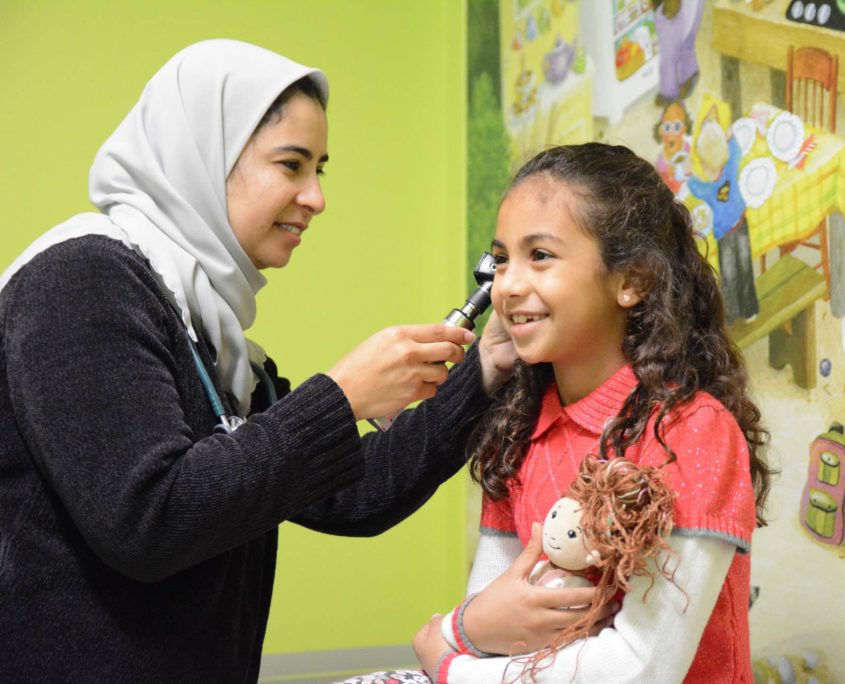
In the growing community of Katy, Texas, Dr. Yasmine Monib, and her husband, Ahmed, are building a practice focused on meaningful connections with patients and an expansive view of what is possible for a family-run business. Patients find in Dr. Monib a compassionate pediatrician who takes the time to answer all of their questions. And in Ahmed Monib, the practice’s office manager, they find someone willing to try out what may seem like unorthodox ideas to make sure they have the best experience possible.
Both Ahmed Monib and Dr. Monib are second generation Americans, with their parents hailing from Egypt. They also both come from families of engineers – all four of their parents work in the field. They met through their fathers, who became friends working for the same company. After years of knowing each other and “never really talking about their kids,” laughs Ahmed Monib, the fathers thought to bring their son and daughter together to meet. The Monibs married while Yasmine was in her last year of medical school. Ahmed Monib had just finished his graduate degree in engineering. Dr. Monib, who grew up in a small town in Oklahoma, followed the family tradition and majored in chemical engineering at the University of Oklahoma, but always had her sights set on medicine. She graduated from the University of Oklahoma School of Medicine in 2001, and completed her residency at the University of Texas Southwestern Medical Center in Dallas three years later.
The idea for Springtime Pediatrics began percolating for the Monibs in 2014, when a demanding work schedule for Ahmed Monib required frequent moves. As a member of the management team for an international engineering and construction firm, he would spend a few years at a time on various projects all over the world. Over the course of about nine years, the Monibs lived in Las Vegas, Maryland, and Dubai – this as Dr. Monib was finishing her residency in Dallas in 2004 and just entering the practice of pediatrics.
It was fast-paced, exciting work for Ahmed Monib, but increasingly exhausting for the family, which soon grew to include three daughters. When he was assigned to a project in Houston, Texas, in 2013, the family heaved a collective sigh of relief. Dr. Monib’s parents lived in the area, and it seemed like a place they could put down roots. “The impetus for starting the practice was really work-life balance,” says Ahmed Monib.
Dr. Yasmine Monib worked for about two years for a pediatric practice as they continued to fine tune their plans. The couple spent the bulk of 2015 conducting research – deciding on a good location in the booming Houston metro area, working with a consultant on the details of starting a business, and hashing out what they hoped their practice would look like.
After one lease deal fell through, setting them back by about eight months, they opened Springtime Pediatrics in January of 2016. Ahmed Monib kept his position at the engineering firm for about a year as the practice built a patient base, and then came on as office manager. The business now employs four people. They just recently brought on a second physician, Dr. Aisha Khan, with plans to add two medical assistants to their ranks in the not too distant future.
With Dr. Monib seeing about 25 patients per day, and a panel size of about 1,400 patients, the pace is certainly busy but not overwhelming. This is important for the Monibs, as they want to get to know their patients in ways that go beyond physical health.
“We don’t want to be just somebody’s doctor in the office. We want to really be part of families’ lives.”Ahmed Monib
Sure, some families are focused on convenience – checking off those vaccinations, or that school year physical – but others seek out Springtime Pediatrics because they’re looking for physicians who are invested in the health of their children.
“We get patients who are here because they love that personal relationship,” says Ahmed Monib. “And our doctors are so sweet. People instantly enjoy having them as their pediatrician.”
For Dr. Monib, the bond she forms with her patients is rooted in making sure kids and their family members feel heard. “I think I’m a decent listener,” she says. “I tend to listen before I talk.”
No matter the nature of the visit – from complex, chronic conditions to the common cold – she says she wants the family to feel like they are part of the health care team, and that they have a key role to play.
Ahmed Monib points out that families leaving the office with this understanding doesn’t necessarily mean more time in the exam room with the doctor. “When Dr. Monib sits quietly and lets them talk until they’re done asking every single question they have, it’s only a matter of another 30 seconds,” he says. “It’s quality time and people appreciate it.”
Springtime Pediatrics works hard to fulfill a common request from families: No wait time when they come to the office for an appointment. In a small practice, making good on this might be a tall order, but not for Springtime. Ahmed Monib says he is proud of their many five-star reviews on Google, many of which mention how quickly their children were seen once they entered the waiting room.
There’s a method to this efficiency. Ahmed Monib has parlayed his experience coordinating multi-billion dollar construction projects into experimenting with and fine tuning how Springtime Pediatrics is managed. Through his previous career, he had the opportunity to run a Lean Six Sigma and Innovation program, the legendary methodology popularized by former General Electric CEO Jack Welch that focuses on data-driven strategies to improve business processes. As a Six Sigma Corporate Master Black Belt, he was responsible for deploying Six Sigma and supporting improvement activities worldwide, as well as mentoring others. Ahmed Monib has found much of what he learned can be applied to the pediatric practice.
“Every day, at the end of the day, we ask ‘what went right, what went wrong, why did this person wait, what we can do better?’” he says. “And we make adjustments.”
He continually modifies the practice’s schedule template to better match patients’ needs and to maximize the time of Dr. Monib and others on staff. This has meant scheduling new patients at certain times of day, and instituting evening hours once a week to allow more people to take advantage of that coveted after school slot for physicals.
Sometimes he’ll take time out of his office to sit in the waiting room and observe: What is happening as patients check in? Where are they gravitating in the waiting room? How do they spend their time? He also learned how to develop surveys during his Six Sigma training, and he’s been able to use this tool to make important improvements to Springtime Pediatrics. After every patient visit, families receive an electronic survey. Those who fill it out are entered into a raffle for a prize. Not only do patients feel like they have a voice, they come up with some good suggestions.
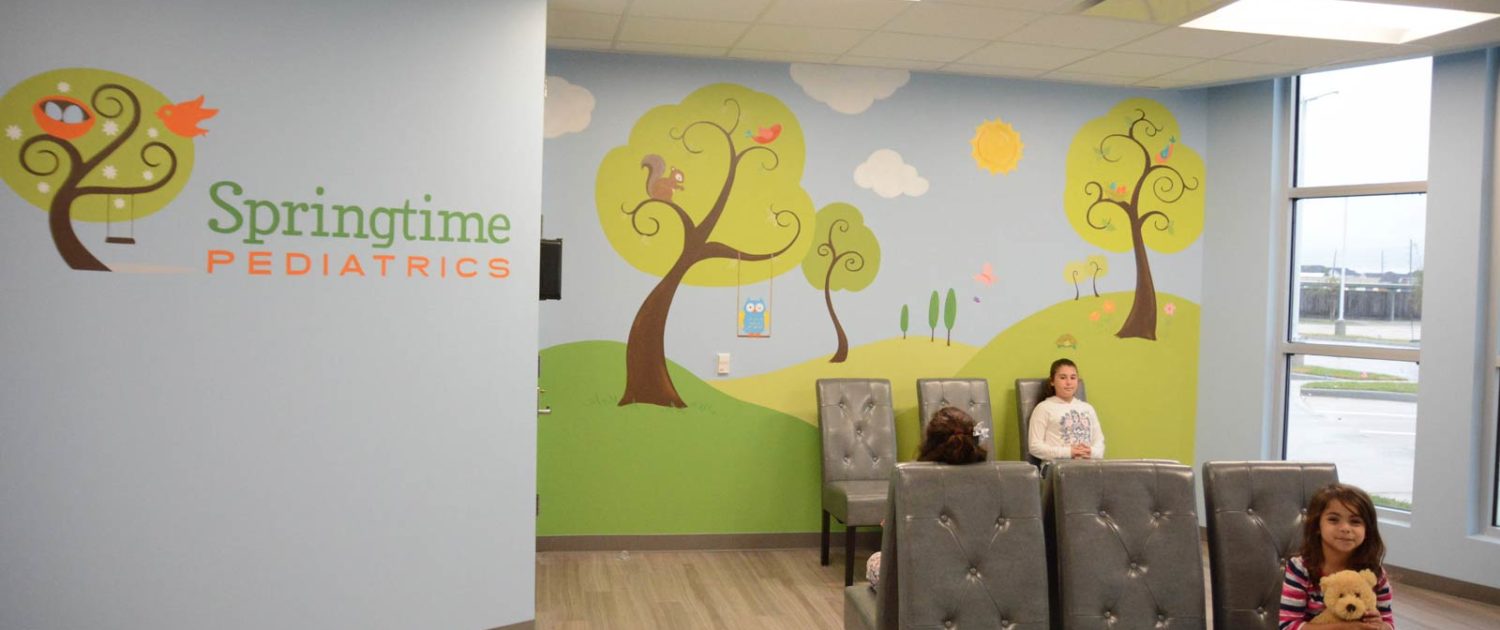
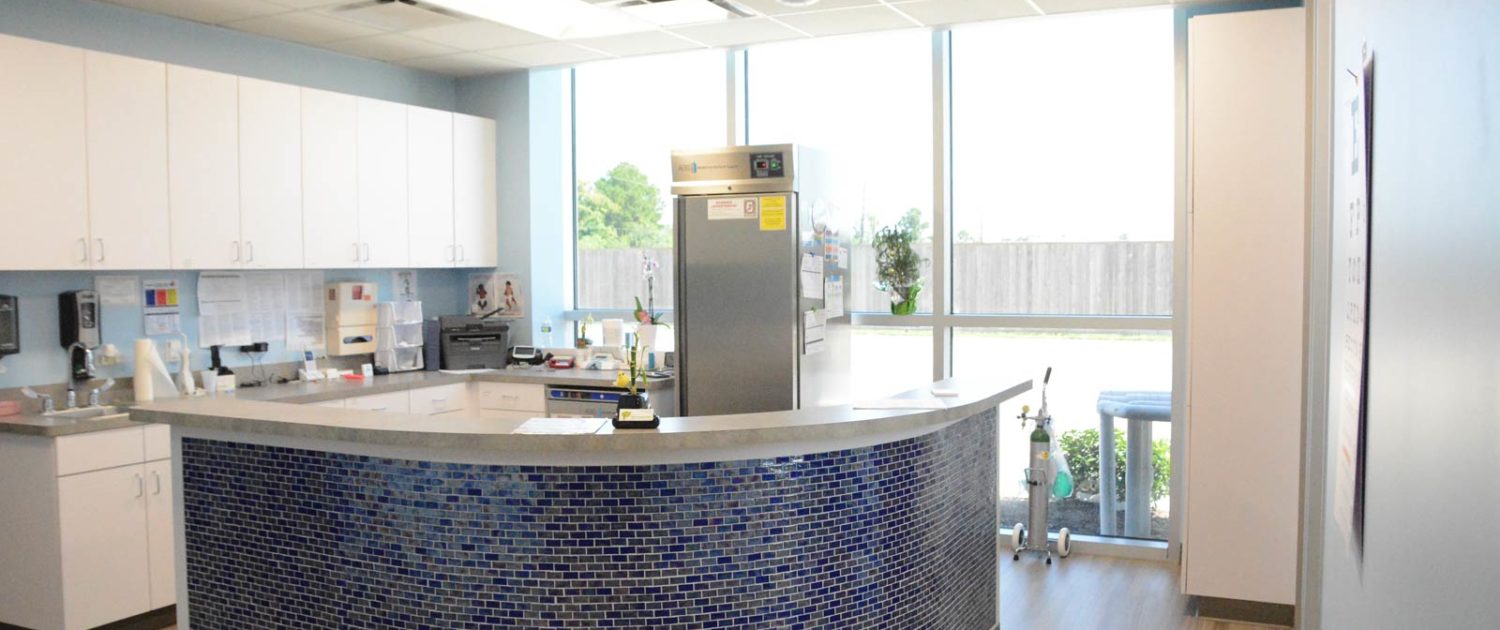
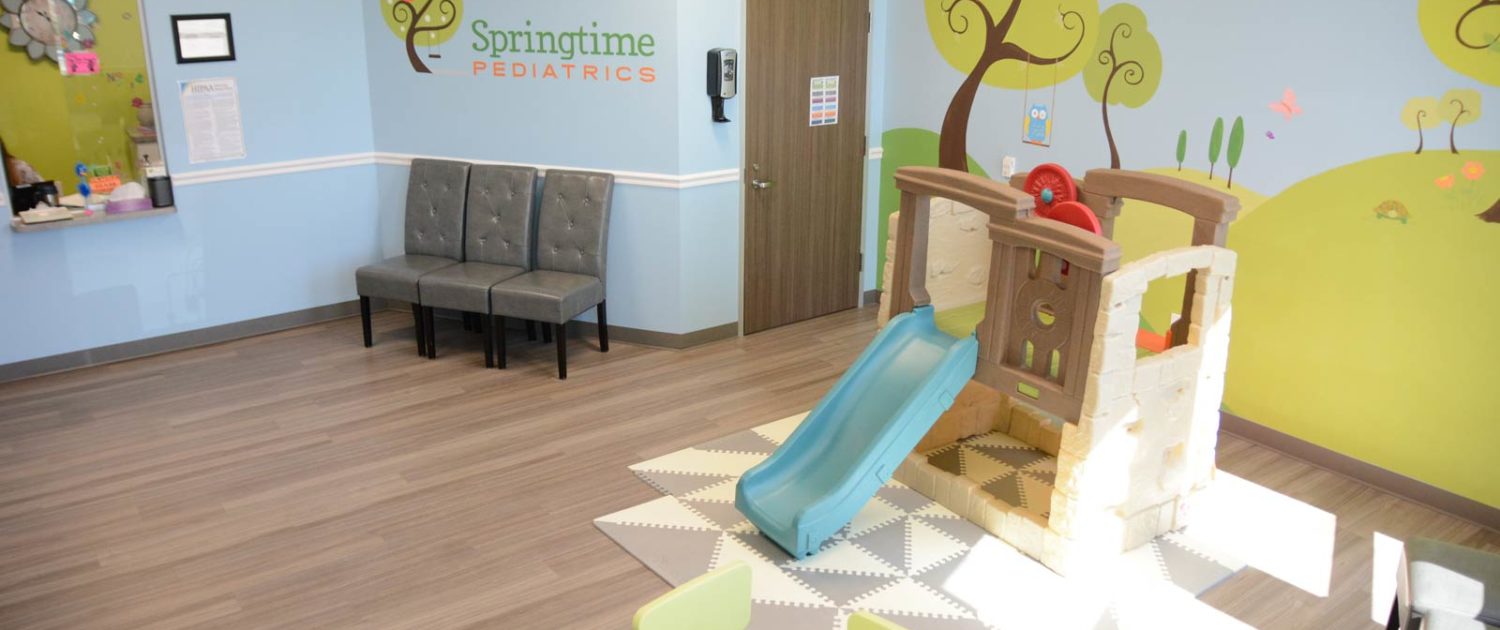
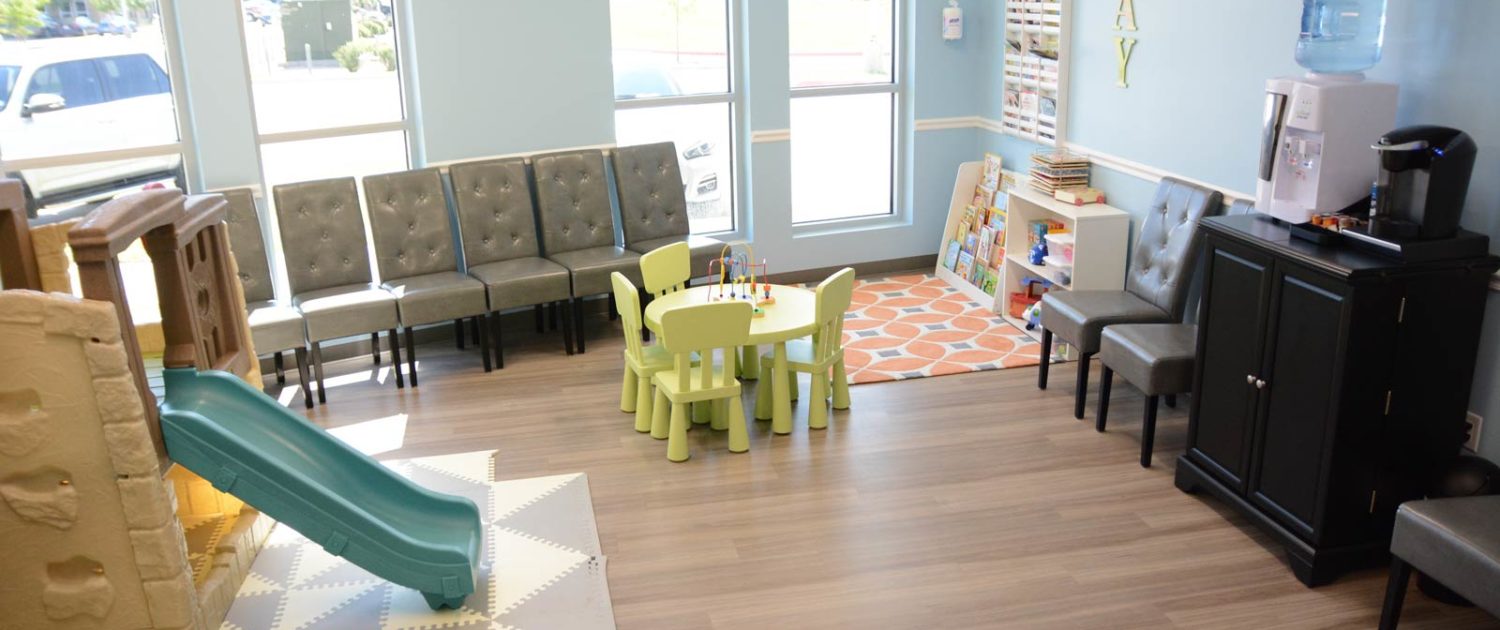
Ideas the Monibs have implemented as a result of patient feedback include the addition of in-office lab work such as hemoglobin and lead testing, and the introduction of a very popular play slide in the waiting room – so popular, in fact, that kids sometimes stay after their appointment to visit it again.
In addition, Springtime Pediatrics created a Facebook group as a result of survey feedback, allowing parents to connect with each other. It’s also a communication channel for the Monibs. They often ask families for their opinions – one recent post brought in ideas for new books to purchase for the waiting room – as well as share the reasoning behind some of the decisions they make for the practice.
For example, when the suggestion came up multiple times through survey feedback to add a television to the waiting room, Ahmed Monib was able to respond in a thoughtful way via the Facebook group. “It gives us an opportunity to explain our viewpoint,” he says. He used the group to acknowledge the request but to also explain that as a pediatric office, “we’re not going to encourage more television watching in this day and age.” Families appreciated the honest answer, and many came around to understand the rationale.
Although some ideas that families have drummed up via the survey haven’t happened yet, the Monibs aren’t entirely ruling them out for some point in the future. The list includes a lactation consultant, nutrition consultant, teen counseling, a mobile vaccination clinic, and a pick up/drop off service for kids. For Ahmed Monib, the possibilities to innovate are part of the fun and the challenge of running a small practice.
“For me, it is like a big sandbox,” he says. “We’re hoping that it’ll be a unique, very patient-oriented, customer-oriented place.”
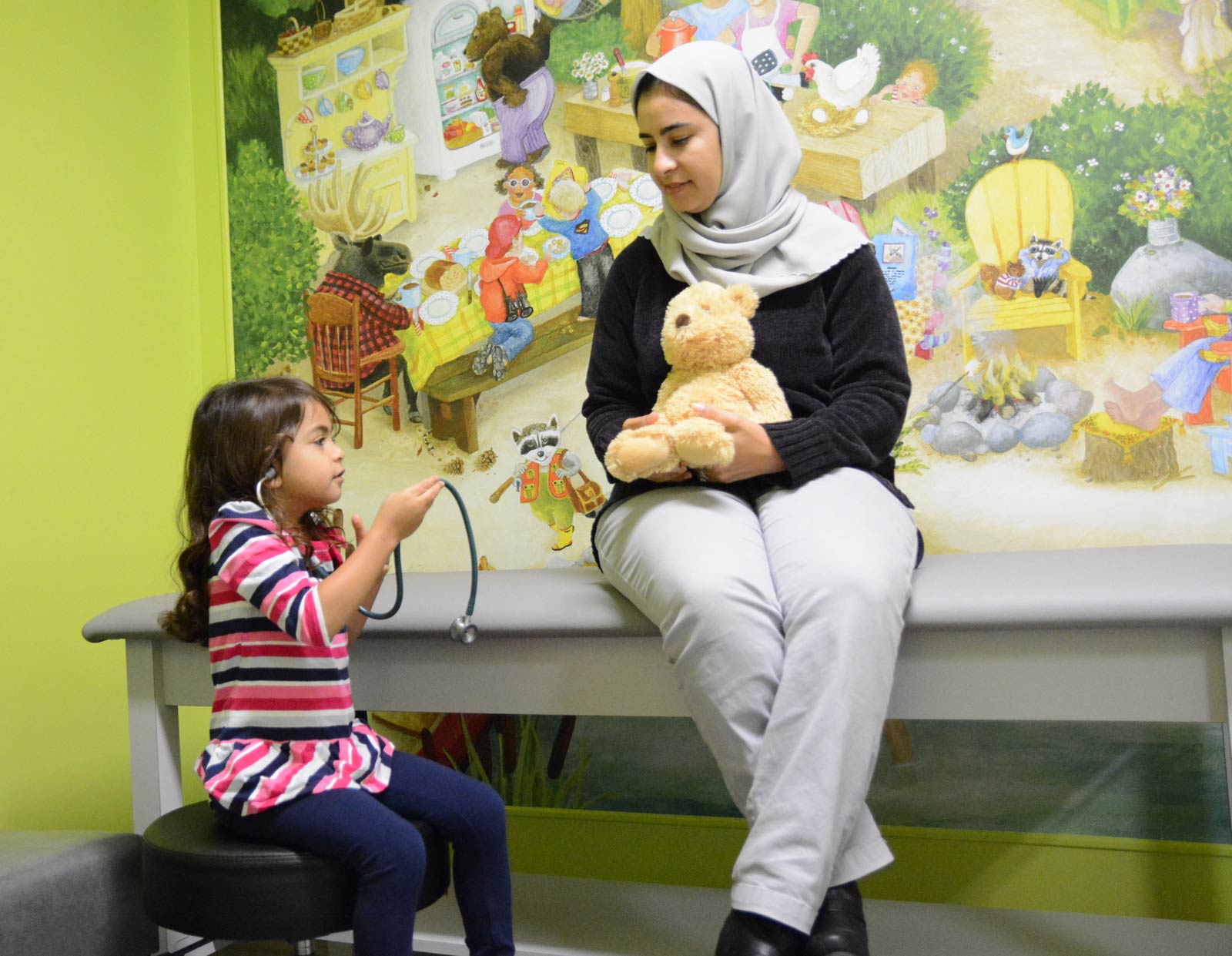
“I have patients from all over the world. I have patients from all different countries in Africa, all different countries in Asia, all different countries in Europe, all different countries in South America.”Dr. Yasmine Monib
In building Springtime Pediatrics, the Monibs have leveraged their personalities and skill sets. For Dr. Monib, pediatric primary care gives her the chance to follow children’s development over time and to contribute to all aspects of a child’s health and well-being. This has meant a focus on building relationships.
“I like really getting to know the families,” she says. “The visits are not just medical visits. There’s a social aspect to them too.”
Ahmed Monib draws heavily from his background in business strategy and process improvement. During his time in the construction field he held a variety of roles in addition to his Six Sigma work, including management roles for huge projects that took years to complete. The construction was on a scale that brings a certain scope of responsibility.
“Every project is its own company,” he says. “When you’re building an airport that’s a multi-billion project, it’s pretty much a company. But it’s a company that has a definitive start and definitive end.”
That translated into a finely tuned knowledge of business start up: what works, what doesn’t, and what you need to be prepared for, including developing the habit of looking ahead not just one year, but maybe five or even ten years, to have the processes in place to scale up when the time comes.
“It taught me the importance of setting things up right when you’re small,” he says. “If you weren’t thinking like a 4,000-person company when you were a 10-person company, you had a lot of problems.”
For Springtime, this means a focus on workflow, and developing procedures in the office to makes sure that time with patients is maximized. Every staff member knows who is responsible for which tasks, laying a solid foundation for future growth.
“Not because it’s a big deal now, but it may become a big deal,” says Ahmed Monib.
Katy, Texas, is certainly a good location to entertain thoughts about business expansion. As a growing suburb of Houston, families are attracted to the area for the robust job opportunities: Over 200 corporations have headquarters in the area. With a median age of 34.5, the population in the Katy area is also relatively young, which for a pediatrician means patients, and a potential need to fill.
The Monibs considered these demographic factors in making their decision to open Springtime Pediatrics in Katy. Another draw – they can be home from the office in 15 minutes (30 during rush hour). They now live in the same neighborhood as Dr. Monib’s parents, a fact they don’t take for granted after so many moves over the years.
The booming area also brings into Springtime Pediatrics an unparalleled diversity of patients.
“I have patients from all over the world,” says Dr. Monib. “I have patients from all different countries in Africa, all different countries in Asia, all different countries in Europe, all different countries in South America.” And since Katy is the first major city coming into the Houston area from the west, they also bring in patients from more rural locations, adding a dimension of geographic diversity as well.
Although this diversity brings some challenge – including the occasional language barrier – this is eased by multiple languages spoken at the practice. Dr. Monib, Ahmed Monib and one other staff member speak Arabic; another staff member speaks Spanish, and Dr. Khan, the second physician they just brought on, speaks Urdu.
In the end, Dr. Monib points out that many families are looking for the same things when they come to the pediatrician. This includes top notch health care, but also a personal connection.
The Monibs try to make these moments count. One example: If Dr. Monib does happen to be delayed in getting to an exam room to see a patient, they’ll offer the family refreshments while they wait. Ahmed Monib has also loaned out his office to a family in the waiting room on the phone with their insurance company, giving them a more comfortable location to talk.
“Just that little gesture completely changed their demeanor,” he says.
As the Monibs look to the future of Springtime Pediatrics, they’re faced with a balancing act.
“We are looking to expand but at the same time we’re trying to remember we started this business for work-life balance,” says Ahmed Monib.
Adding a second physician who has the same values and caring approach to patient care was a challenging but good first step –Dr. Monib says they never intended Springtime to be a solo practice for long – but the rest will come as they continue to negotiate between their family’s needs and the opportunities their location affords.
“I think part of the challenge is how to limit growth,” says Ahmed Monib. “How do you grow the way you want to grow with the demand coming in so steadily? I don’t know the answer to that yet.”
The Monibs continue to think big when it comes to future possibilities. Although telemedicine isn’t something Springtime Pediatrics will be taking on in the immediate future, it is on the horizon for the field as a whole, says Ahmed Monib, both in terms of delivering healthcare remotely and connecting data and devices to in-person care.
“Customer experience is the buzzword these days,” he says. “From the minute they turn on their phone to schedule an appointment, until they come in for a follow up, what is their interaction with us?”
Someday, says Ahmed Monib, maybe this will include pediatricians offering taxi or ride share scheduling, or using apps to monitor health and nutrition goals like exercise or fruit and vegetable intake, and linking that data back to electronic health records.
“That’s the future beyond even telemedicine,” he says. “When you go to a doctor, what are all of the things that you have to do, and how can your physician help you through that whole health stream?”
With so many possibilities percolating, and the practice still so young, one of the Monibs’ new-found challenges is turning off talk about work at home. Hopefully that will dissipate as the “newness” wears off, laughs Dr. Monib.
It has also meant a shift for Ahmed Monib: He jokingly refers to himself as “Uber Dad” for the amount of daily driving devoted to bringing his kids to and from various activities and events.
“I enjoy the time with my kids but it’s a different kind of stress,” he says.
As their practice – and their work together – continues to evolve, they know their first priority is keeping that connection with their patients.
“Continuity is the biggest thing,” says Dr. Monib. “Parents call me and I know exactly who I’m talking to. I know what happened. I know the story. That is what I really appreciate. Even when you grow, you want to try to keep that base.”
A resident of Burlington, Vermont, Erin Post has a B.A. degree in English from Hamilton College, and is a graduate of the writing program at the Salt Institute for Documentary Studies. She is currently working on her master’s in public health at the University of Vermont. In her spare time, she likes to bike, ski, hike, and generally enjoy the Green Mountains of Vermont.
Pediatric care is complex enough — navigating for the future shouldn’t be a solo journey. Join host Chip Hart and learn from pediatricians, industry leaders, and policymakers who are shaping the future of pediatric care. Every episode, we explore their stories, their dreams, and the joy they find in medicine. Together, we’re charting the future of children’s healthcare.

The Independent Pediatrician is brought to you by PCC, which provides tools and services to help pediatricians remain independent and in control of their practices.
PCC itself is a fiercely independent business. As a Benefit Corporation, it puts the interests of its clients, community, and employees on an equal footing with those of its shareholders.