Collaboration and Cooperation: Integrating Mental Health Care into a Pediatric Practice
Parker Pediatrics and Adolescents | Upper Valley Pediatrics



About ten years ago, Dr. Jay Rabinowitz noticed an uptick in the number of children and adolescents with conditions like depression, anxiety, and ADHD. A pattern emerged: He’d refer the patient to a mental health professional, but the family would often have difficulty getting an appointment or never follow through with making one. Then, there was the challenge of tracking down insurance companies to confirm that they would cover treatment. Even when those hurdles had been successfully navigated and a patient made it in to see a therapist, following up on treatment recommendations would become an equally burdensome maze of missed phone calls and incomplete information.
Instead of bemoaning the situation and continuing with the status quo, Dr. Rabinowitz took a leap into the unknown. He brought licensed mental health professionals into his own practice, Parker Pediatrics and Adolescents in Parker, Colorado.
“[Finding mental health therapy for patients] was difficult; it was taking a lot of time, and it was frustrating. And it seemed like we could do a better job,” Rabinowitz says. “So we did.”
The integrated mental health service has grown from just one psychologist to three psychologists and a licensed mental health counselor. With some part-time schedules, the ratio works out to about one full-time mental health provider per three pediatricians.
“Their schedules stay full,” he says. “Sometimes there’s a waiting list.”
Across the country in rural Vermont, Dr. Mark Harris took a similar journey in the mid-1990s, when he started to read more in the pediatric literature about the responsibility pediatricians have to provide holistic care. He began screening for behavioral and mental health conditions, which prompted thoughts about whether his practice could offer mental health therapy in-house at Upper Valley Pediatrics.
He created a unique service that not only brings licensed mental health counselors into Upper Valley Pediatrics as employees but provides a training ground for them to launch their own practices in the community.
Drs. Rabinowitz and Harris are at the leading edge of addressing one of the most vexing challenges in pediatrics: How to make sure children receive the mental health care they need. According to the American Academy of Pediatrics, although one in five children in the U.S. suffers from a diagnosable mental health disorder, only 21 percent of affected children receive appropriate treatment. The AAP advocates for federal policies to increase the number of child and adolescent mental health specialists, as well as to improve school-based mental health services and support pediatricians in identifying and treating conditions.
As legislation is introduced and winds its way through Congress, some pediatricians, like Dr. Rabinowitz, continue to forge ahead for the good of their patients. Although Dr. Harris retired in 2017, the service at Upper Valley Pediatrics continues under the guidance of Dr. Rebecca Yukica. She’s embraced the model as one that best serves her patients.
“Mark recognized 30 years ago that to be a good pediatric practice you need to meet the needs of the community, including treatment of chronic illness,” she says. “What are the chronic illnesses of the community that can’t be met? That’s mental health.”
The volume of patients seeking mental health care has stayed constant throughout her 11 years with the practice. She took over as a partner in ownership three years ago before becoming sole owner less than a year ago.
“We treat a lot of ADHD and not just the simple, but the complex,” she says. “We treat a lot of depression, a lot of anxiety, a good number of bipolar. If you build it, they will come.”
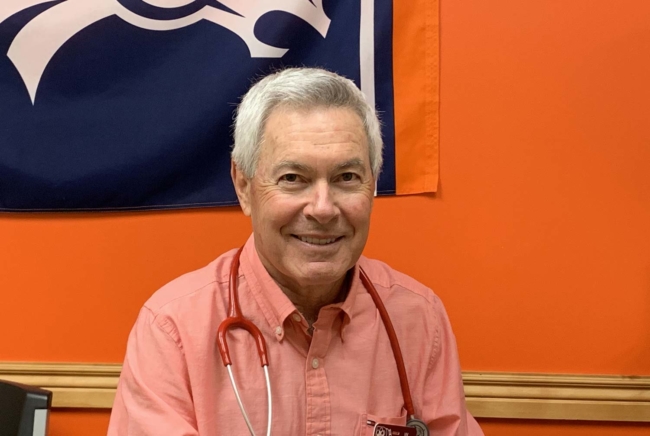
“[Providing mental health therapy] is good for the patient. But it’s also good for the providers. It makes life much easier for them. I call it a lifestyle change. It’s less stressful for the providers knowing they can refer in-house instead of having to go through all of the hurdles.”Dr. Jay Rabinowitz, Parker Pediatrics and Adolescents
One current challenge: Finding mental health clinicians with expertise in pediatrics, says Dr. Yukica.
“That’s not unique to us,” she says. “That’s the entire area where we practice – it’s very hard to find behavioral health providers.”
It’s a problem that existed even when Dr. Harris launched the service in the 1990s. His solution: Bringing in mental health providers who had graduated from degree programs but had not yet finished the 3,000 required hours of supervised work. The practice’s first mental health clinician – a master’s level licensed social worker – provided that supervision. She stayed with the practice for over 20 years. When she left, the practice hired someone else who could supervise new practitioners seeking their hours. It allowed Upper Valley Pediatrics to stay in the black and accept patients with Medicaid.
“That was one of the real keys that made the program work,” he says.
At one time, Dr. Harris had five part-time mental health providers onstaff, with weekly meetings between pediatricians and mental health providers the standard operating procedure. That system continues at the practice’s offices in Bradford and East Thetford, although Dr. Yukica is looking to rebuild the program after some recent retirements and departures.
“It’s still incredibly collaborative,” Dr. Yukica says. “We’re the ones managing the meds, while they’re the ones who get the better vision into what’s going on. Collaboration is key to everything.”
Sometimes the most valuable moments happen on the fly, like when Dr. Yukica and the practice’s psychologist were recently in the office at the same time. They saw each other at the end of the day and talked through concerns for three or four patients. No phone calls, no emails, no missed messages: One simple chat and they could continue on with their work.
Dr. Rabinowitz in Colorado points to this ease of communication as a benefit for Parker Pediatrics as well.
“[Providing mental health therapy] is good for the patient,” he says. “But it’s also good for the providers. It makes life much easier for them. I call it a lifestyle change. It’s less stressful for the providers knowing they can refer in-house instead of having to go through all of the hurdles.”
With a wealth of graduate degree programs in mental health in his area of Colorado, he hasn’t experienced the same provider shortage as Drs. Harris and Yukica in rural Vermont. He hires a mix of doctorate-level psychologists and master’s level licensed therapists.
“We fortunately haven’t had much trouble finding people because it’s really nice for them,” he says. “They’re going to come in and they’re getting a salary. They’re going to get a full patient schedule. We pay for their insurance. They just come to work.”
There has been a learning curve for some mental health providers when it comes to the norms of a pediatric practice, including the rarity of cancellations and the expectation that notes are to be completed the same day as an appointment.
“They weren’t trained to work in medical offices,” he says. “It’s new to them, too. They have to get used to our systems.”
Still, the integration has been a benefit and although the service isn’t a huge revenue generator, it is sustainable thanks to negotiations with the state on Medicaid payments and a solid knowledge base when it comes to private insurer policies and procedures (See “Payment in Practice for Mental Health Care”).
Dr. Rabinowitz has hosted several presentations at AAP meetings on the topic of integrating mental health care in a pediatric practice, including a joint session with one of his practice’s psychologists at the AAP’s 2019 national conference in New Orleans. Billing is always a topic that yields many questions.
“It’s not the same profit margin as you’d have with your physician seeing four patients an hour,” he says. “But there are other advantages to having this in your office that is not just for the money.”
For both Upper Valley Pediatrics and Parker Pediatrics, the decision to integrate mental health care into the practice was not without risk. Dr. Harris says a $10,000 grant from the AAP provided a financial buffer as he hired providers and got the service up and running. Called the Community Access to Child Health Program (CATCH), the grants are designed to support pediatricians as they “collaborate within their communities to advance the health of all children.”
He also attended a federally funded program at Dartmouth-Hitchcock Medical Center that brings area pediatricians together with child psychiatrists to discuss current cases and concerns, as well as general trends and topics in the field.
“I went on a regular basis for 20 years,” he says. “It’s still ongoing.”
Sometimes mental health providers from his practice would also participate, allowing them to pose questions and learn from other professionals.
Another key support that began during Dr. Harris’s time and continues to present day: Through a grant from the state of Vermont, a child psychiatrist visits Upper Valley Pediatrics one afternoon per month. Especially for challenging cases, having that child psychiatrist on-call can give providers the confidence they need.
“We do everything we can for a patient,” says Dr. Yukica. “If we get to a point where we’re really uncomfortable or we need help with a diagnosis or medication management, we’ll ask him to come and weigh in as a consultant. Our behavioral health providers can ask for these appointments and our providers can ask for these appointments. Ideally, we all come to them together.”
For Dr. Rabinowitz, it was helpful when his practice first began integrating mental health care to set parameters for the types of conditions they would treat in-house.
“You have to decide what you’re going to do and what your counselor is comfortable with,” he says, “and things you’re not going to do.”
For highly complex disorders like schizophrenia, bipolar disorder, and other diagnoses that are likely to require long-term care, Parker Pediatrics refers out to specialists. For the conditions they do treat – such as behavioral addictions (to video games, for example), adjustment disorders, anxiety, and ADHD – the goal, when appropriate, is to see a patient for no more than 20 sessions.
“We don’t do educational testing; the schools do it for free and they do a good job,” he says. “We’re also in an area with a lot of good institutions that diagnose and treat autism, so if there’s a better place to receive treatment for their condition, we’ll send them there.”
The overall approach to their service, he says, is to fill gaps in care for his patients while making the best use of resources already available to families.
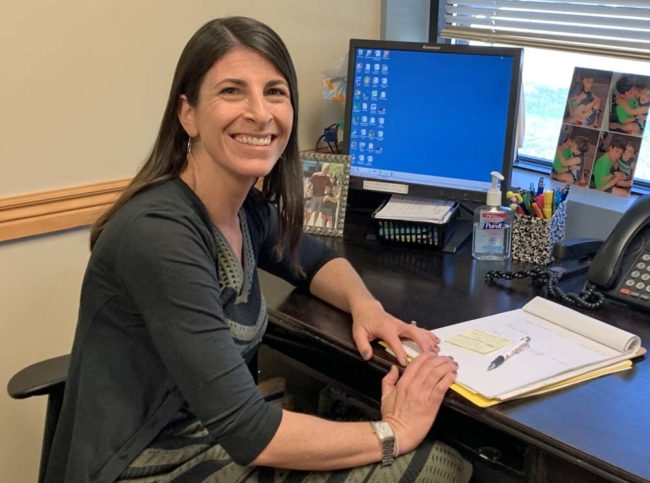
“We treat a lot of ADHD and not just the simple, but the complex. We treat a lot of depression, a lot of anxiety, a good number of bipolar. If you build it, they will come.”Dr. Rebecca Yukica, Upper Valley Pediatrics
By all accounts, the integration of mental health care has been a benefit to patients at both Parker Pediatrics and Upper Valley Pediatrics.
“We’ve done a satisfaction survey specifically for psychology,” says Dr. Rabinowitz. “[Respondents] were happy that it was co-located and thought it was beneficial.”
The most recent patient survey showed satisfaction at 96 percent. The return rate for a second visit after the initial intake was also well above the national average, at about 95 percent. The biggest complaint, he says, was limitations on appointment times because visits require taking children out of school.
At Upper Valley Pediatrics, families appreciate the service for how it normalizes mental health treatment for their kids. Since patients all come in the same door, their privacy is protected and mental health care simply becomes part of a visit to the pediatrician, like vaccinations or height/weight checks.
“It has removed some of the existing stigma about being seen for mental health problems,” says Dr. Harris. “They don’t have to go to the community mental health center. They are able to come to the pediatrician’s office, and somebody seeing them come in doesn’t know if they are coming in for a rash or some type of mental health issue.”
Another way Upper Valley Pediatrics is integrating mental health care: Sending one of their providers to area schools to see patients when possible. Although it’s not appropriate for all conditions, Dr. Yukica says the option has been valuable for some families.
“If we have a handful of kids in one school, we can schedule them back to back,” she says. “That can really help with compliance.”
And then there’s the network of mental health providers that Upper Valley Pediatrics has set up for success. Many have stayed in the area and know Dr. Yukica’s patient population, about 60 percent of whom receive Medicaid. She often refers patients to former trainees, as they are committed to taking care of kids regardless of available resources.
“The people who have trained with us and gone on to do private practice, we still have really good relationships with them,” she says. “That has been tremendous.”
The next innovation for Parker Pediatrics may be offering appointments via telemedicine. Virtual visits stand to help compliance as well as open the service up to more children and adolescents, says Dr. Rabinowitz.
“One of the biggest problems is taking the kids out of school,” he says. “If they could do a virtual visit they still have to miss some school but it would only be about 50 minutes as opposed to driving there and back.”
Since the state of Colorado allows a telemedicine visit to be billed as an office visit, the next step will be to work with a software company to set up a secure system for the visits. Dr. Rabinowitz anticipates that they’ll begin testing out the telemedicine service within the next year.
By seizing opportunities to innovate, the hope is that quality, accessible mental health care for children and adolescents will result in improved well-being as they grow up. Independent practices like Upper Valley Pediatrics and Parker Pediatrics are leading the way to better integration of mental health services into primary care.
“If you’re part of a hospital group, they’re not going to want to get into this,” says Dr. Rabinowitz. “They’re going to say it’s not enough profit for them. I think the independent doctors – we are really here to do what we can for our patients.”
It’s clear that integrating mental health care into a pediatric practice is good for patients and providers. But the question looms large: How do you pay for it?
Dr. Rabinowitz has fielded this question many times through his work with the AAP. (Read an interview with him in Contemporary Pediatrics and another one in Pediatric News.)
“The biggest reluctance is people are uncomfortable with how to bill,” he says. “They ask: ‘Are we doing this right? Is this illegal? Is this allowable?’”
His biggest tip for pediatricians ready to add mental health services to the practice: Don’t underestimate your ability to negotiate with insurance providers. When Parker Pediatrics first began offering mental health services they didn’t accept patients on Medicaid because of concerns about billing. But after Dr. Rabinowitz talked with the state’s Medicaid director at a conference and explained his situation, he wound up receiving written permission to bill mental health visits “incident to,” allowing payments to be processed as an extension of the physician’s work. With a billing process that adequately compensates the practice for the service they are providing, many more patients have gained access to mental health care.
“[The state director] saw the importance and saw that our program had been working,” he says. “We’ve been fortunate.”
Dr. Rabinonwitz’s experience is not necessarily an anomaly. PCC Pediatric Solutions Consultant Jan Blanchard, CPC, CPEDC, has seen communication with insurance providers yield results if it’s done in the right way.
“We spend a lot of time here at PCC convincing people that they can negotiate,” she says. “We want to give them tools and support.”
She emphasizes that the first step is to know the policies your carriers have; find your contracts and review them. And then think about why the change you’re looking to make stands to benefit the carrier as well as patients.
“Frame it in a way that can help the carrier see cost savings that is also in the best interests of the patient,” she says.
States have such vastly different requirements that it’s difficult to give blanket recommendations regarding coding for mental health, says Blanchard. She notes, however, that some CPT codes are what she called “electrified,” as in, carriers are likely to question their use if the physician isn’t licensed in a psychiatry subspecialty.
“There’s a difference between psych codes and office visit codes,” she says. “Carriers may or may not pay psych codes when the service is rendered by a clinician who is not credentialed for psych.”
Same goes for ICD-10 codes: Some may trigger review. Again, this is where knowing your contracts is important.
“If you saw a patient for suicidality and continued to see them for it, that may throw up a red flag for some carriers if you didn’t refer them to a psychiatrist or recommend that they transport to the ER or an acute care facility,” she says.
Dr. Rabinowitz says some practices may choose to credential their mental health providers through their behavioral insurance plan, which would allow the use of these psychotherapy codes for billing. But the reimbursement rate can be subpar.
“This is not a big profit maker, but you can’t do it if you’re going to lose money,” he says. “You have to at least break even and look at it as more of a benefit to your practice overall.”
Federal legislation related to mental health parity provides some protections, says Blanchard, although there are exceptions and its implementation across states varies.
Even if a provider isn’t quite ready to make the leap into integrated mental health, there are actions all pediatricians can take to support their patients’ mental health. Blanchard encourages providers to follow the AAP Bright Futures Guidelines for depression and ADHD screening beginning at 12 years old. Don’t forget to bill for that service. Same goes for post-natal depression screening: All new moms should be screened, and that service should be billed.
Appropriate screening combined with innovative approaches, like telemedicine, could help bridge the gaps in care.
“Mental health care in some areas is nonexistent,” says Blanchard. “Telehealth could make that care available to patients for whom it would otherwise be out of reach.”
A resident of Burlington, VT, Erin Post has a BA degree in English from Hamilton College, and is a graduate of the writing program at the Salt Institute for Documentary Studies. She is currently working on her master’s in public health at the University of Vermont. In her spare time, she likes to bike, ski, hike, and generally enjoy the Green Mountains of Vermont.
Pediatric care is complex enough — navigating for the future shouldn’t be a solo journey. Join host Chip Hart and learn from pediatricians, industry leaders, and policymakers who are shaping the future of pediatric care. Every episode, we explore their stories, their dreams, and the joy they find in medicine. Together, we’re charting the future of children’s healthcare.

The Independent Pediatrician is brought to you by PCC, which provides tools and services to help pediatricians remain independent and in control of their practices.
PCC itself is a fiercely independent business. As a Benefit Corporation, it puts the interests of its clients, community, and employees on an equal footing with those of its shareholders.


 Rural America’s Invisible Patients, Part I: The South